Affiliate links may be included for your convenience. View our privacy and affiliates policy for details.

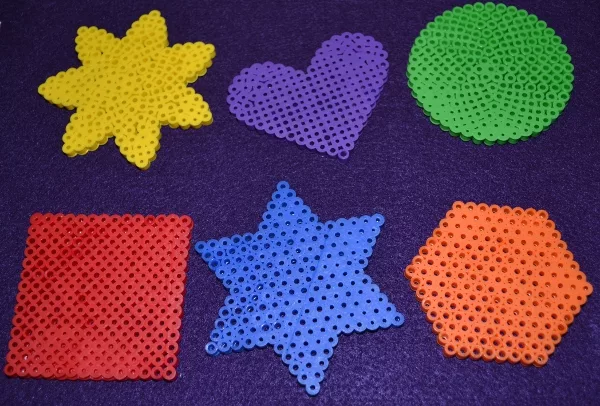
I love a good project that can combine crafting, playing and learning all in one, like these learning with Perler beads activities. These shapes made with Perler beads (or fuse beads, or iron beads, as they might also be called) are really easy to make and can be used in all sorts of ways depending on the age and skills of your child.
Safety Note
Perler beads are rated for ages 6 and up, but I think that’s mostly because an iron is involved. I made the shapes while my three-year-old was not around and feel safe having her play with them. If you have an infant or young child who puts things in his or her mouth, you might want to put off making this craft because it’s possible some of the beads could break off, causing a choking hazard.
How to Make Perler Bead Shapes
If you’ve never worked with fuse beads before, it’s really pretty simple. The beads are available at craft stores and stores like Wal-Mart and Target, where you can buy sets of beads as well as peg boards of different shapes.
To make a shape, place a bead of the color of your choice on each peg. It’s really tedious to do this, so you might want to work on this project in front of your favorite TV show after the kids go to bed.
Once you have all the pieces on the board, use the enclosed ironing sheet and a hot iron to melt the beads together. This will take about 20 seconds. Allow to cool some and repeat on the other side.
Colors and Shapes

If you have a child who is learning shapes and colors, make a few solid-color pieces in basic shapes. You can use them to help your child learn the colors and shapes, and then test them by asking them to point out, say, the red square or the blue star.
Counting and Matching
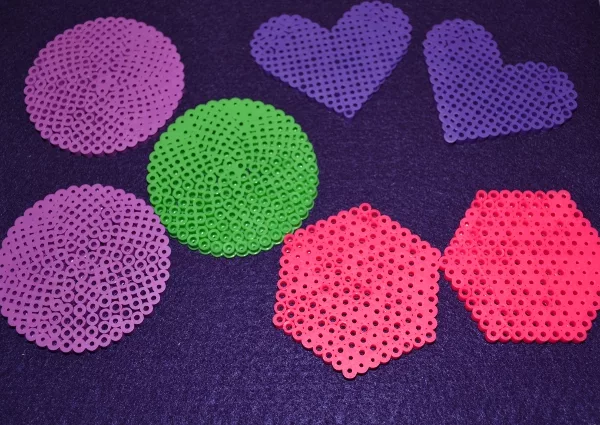
Make a few pieces in the same shape (in the same and/or different colors). Count the pieces of each shape, as well as how many you have of each color. If you make two or more of the same color, you can also match colors, or just match shapes.
Repeating Patterns/What’s Different?
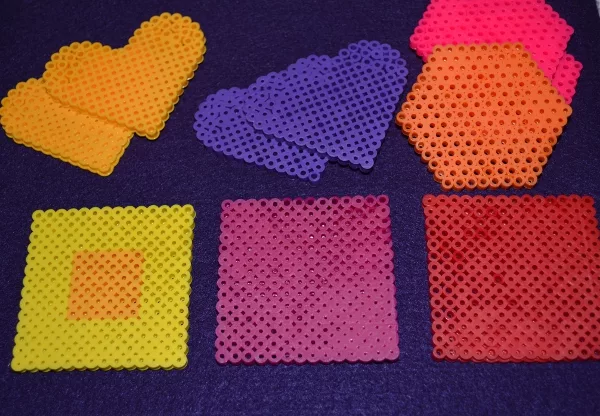
Make some pieces with different colors and see if your child can match them. Or make slightly different variations on the same shape and color pattern and see if your child can spot the difference.
With some of the basic shapes like squares and circles, it’s easy to make shapes of different sizes, too, so you might try making, say, a small, medium and large square and talking about the differences. You can also buy a plain peg board and make similar shapes of different sizes, or let your child direct how they’d like to design a shape if they’re not old enough to do it themselves.
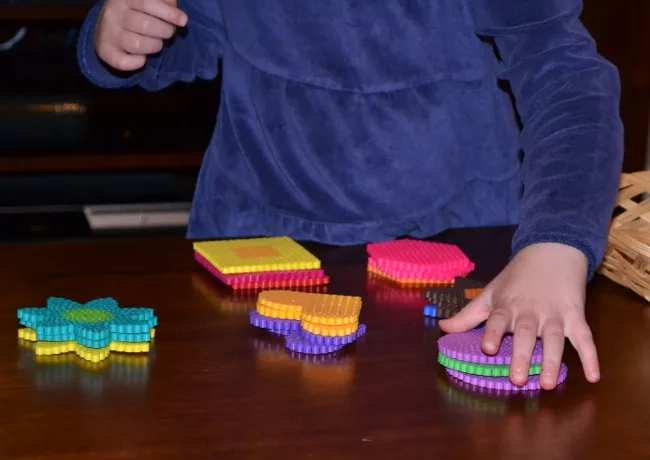
My daughter immediately started stacking when I gave her these to play with.
Learning with Perler Beads: Activities for Older Children
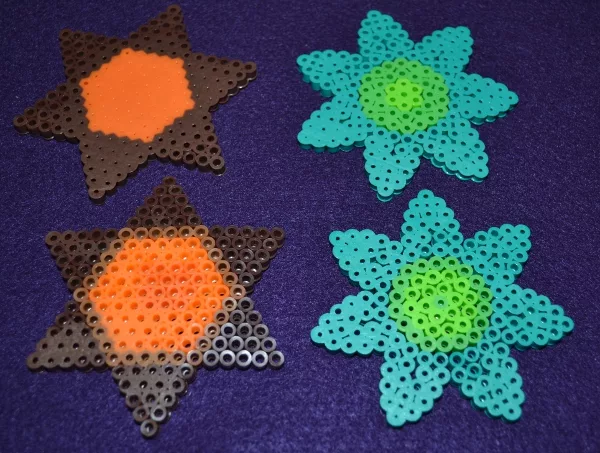
It takes a bit of dexterity to load up a peg board with Perler beads, so younger kids can direct you how they want their shapes designed, while older kids can make designs themselves. Encourage them to go beyond the basic solid color shapes and add stripes, color blocks and other designs.
Once your child is old enough to design on her or his own, you’ll want some of the plain blank peg boards so they can create favorite characters or anything they want. It might be fun to create alongside your child, each of you with a peg board and a jumping-off idea (like flower, heart or dog) and see how you each interpret it in different ways.
Perler crafts are also great for holiday gifts for grandparents and others who like homemade things from your kids. Just stick a hook in and you’ve got an almost-instant Christmas present.
Do you use Perler beads? I’d love to hear how you and your kids create with them and what learning with Perler beads you do!