Affiliate links may be included for your convenience. View our privacy and affiliates policy for details.
I’ve been hearing about snow washing sweaters for years, and we finally got enough snow for me to learn how to snow wash sweaters!
What is Snow Washing?
Pretty much like it sounds, snow washing involves putting your wool (or other animal fiber) sweaters (or other garments) out in fresh snow, then sprinkling (or covering, depending on how thorough you want to be) the garment with snow and letting it sit for a while.
It’s said to be popular in Nordic countries where it is used as a safe, easy way to clean knits and other wooly items without using electricity or detergent.
Why Snow Wash Sweaters?
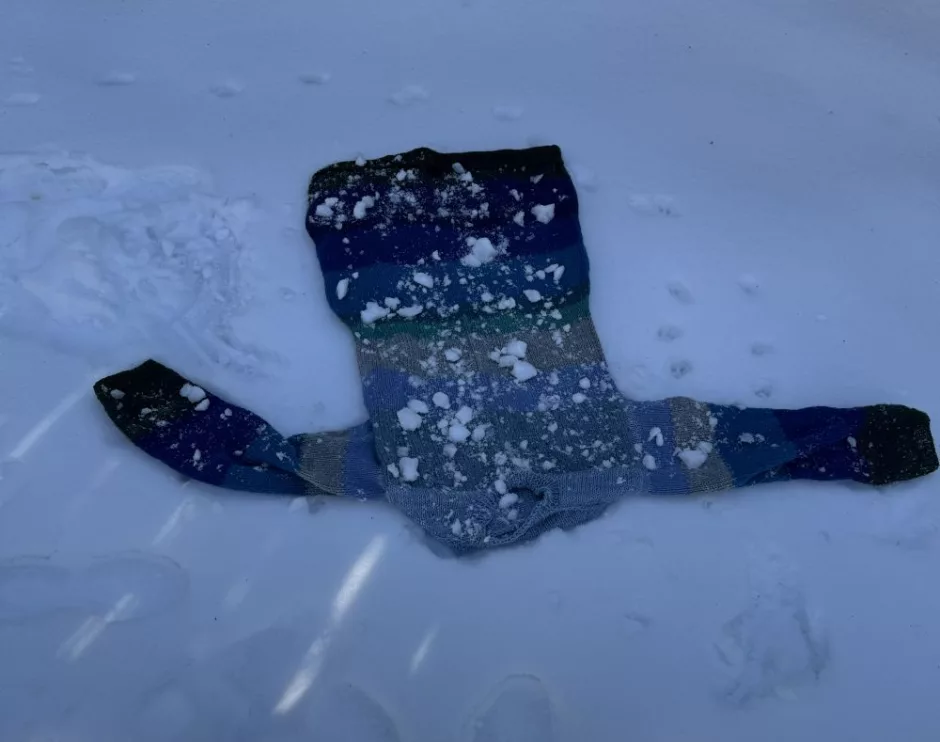
Wool and other animal fiber garments don’t need to be washed that often because wool naturally repels dirt and odors. But they do need to be washed sometimes (and I always try to wash my sweaters at the end of the season to remove skin cells that can attract moths).
And some people are afraid to wash wool sweaters, sure that they will felt. (They won’t if you do it right. Please do not dry clean your sweaters.)
Snow washing is a way to refresh sweaters without danger because they’re not being washed with harsh detergent (or even gentle wool wash) or agitated in any way.
How to Snow Wash Sweaters
The type of snow that’s best for snow washing is soft, powdery, deep and fresh. You need enough snow to cover the ground totally, and powdery snow is best if you want to totally cover your garments.
This snow was not ideal because there was ice underneath, so it’s a little harder than the nice soft powder that is best for snow washing sweaters. But when you live in Arkansas you take what you can get.
First, lay out your garments in a patch of fresh snow. Here I have a knit dress (probably mostly wool and wool blends), which is too big to wash in the bucket I normally use for hand washing, and two sweaters, one alpaca and one a mix of fibers.
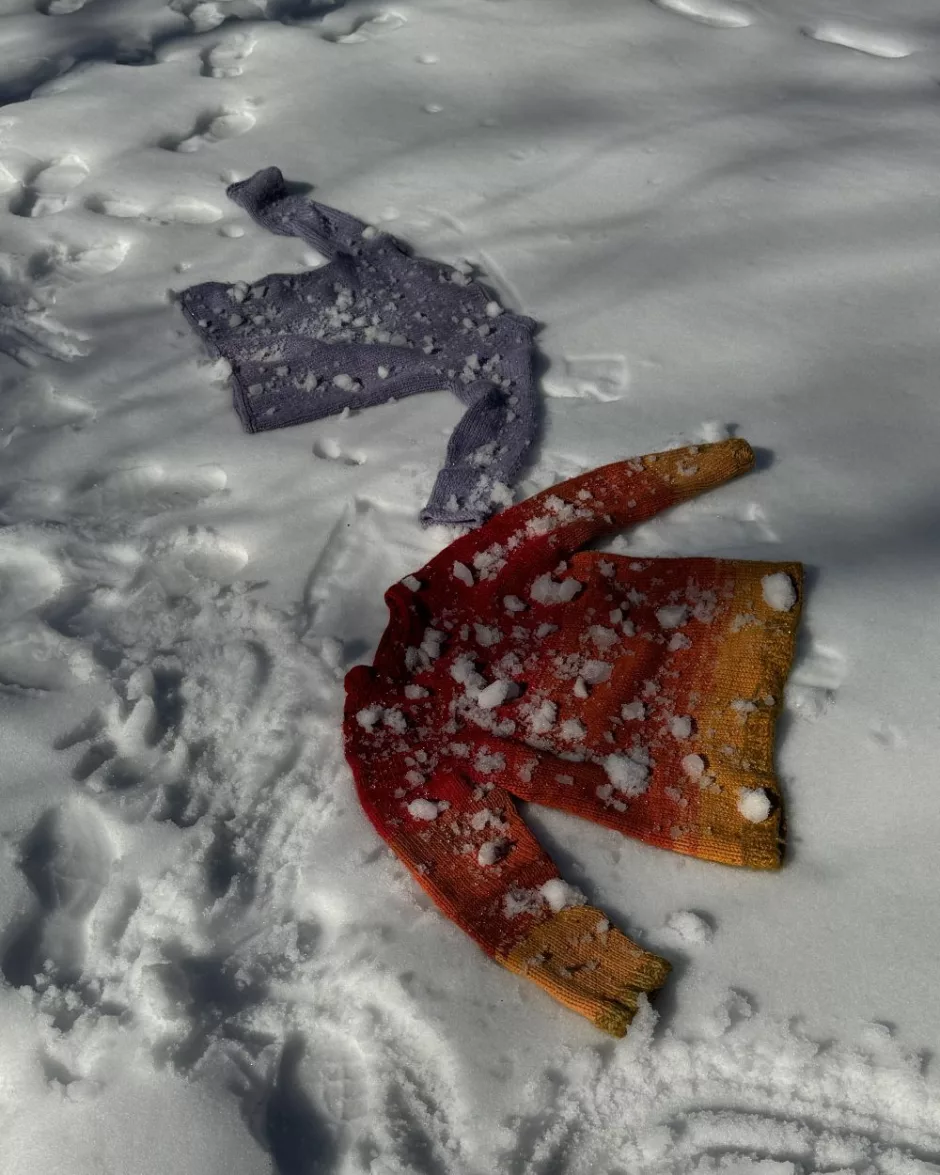
Sprinkle or cover the garments with snow. There are conflicting accounts on best practices for how to snow wash sweaters. I went with a decent sprinkle like putting cheese on a pizza. Since the snow wanted to clump when I picked it up, total coverage wasn’t really an option. If your snow is fluffier, feel free to cover more.
Let sit for 15 to 20 minutes.
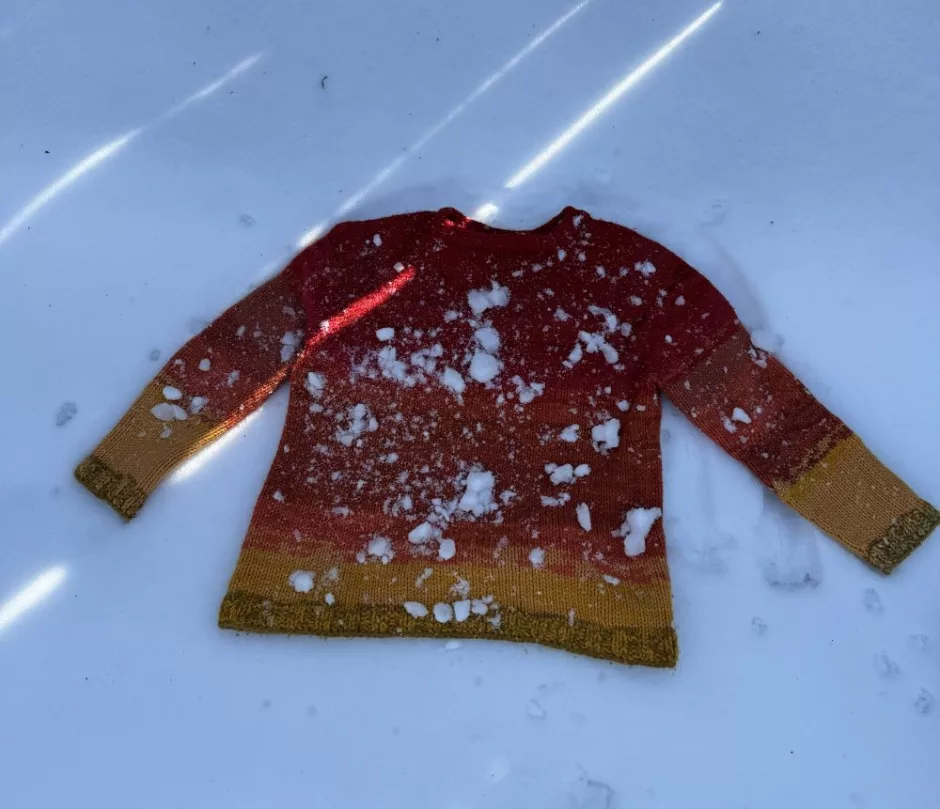
Flip the garments over and cover the other side. If your snow is fluffy and the sweater is fully covered, flipping might not be necessary. But this snow was hard (the sweaters left imprints in the snow) so I felt like it needed more thorough coverage on the other side, too.
Let sit another 15 to 20 minutes. You can of course leave them longer, and some people say a few hours is better, but I didn’t want to forget mine so I didn’t leave them that long.
Shake or brush off as much snow as you can.
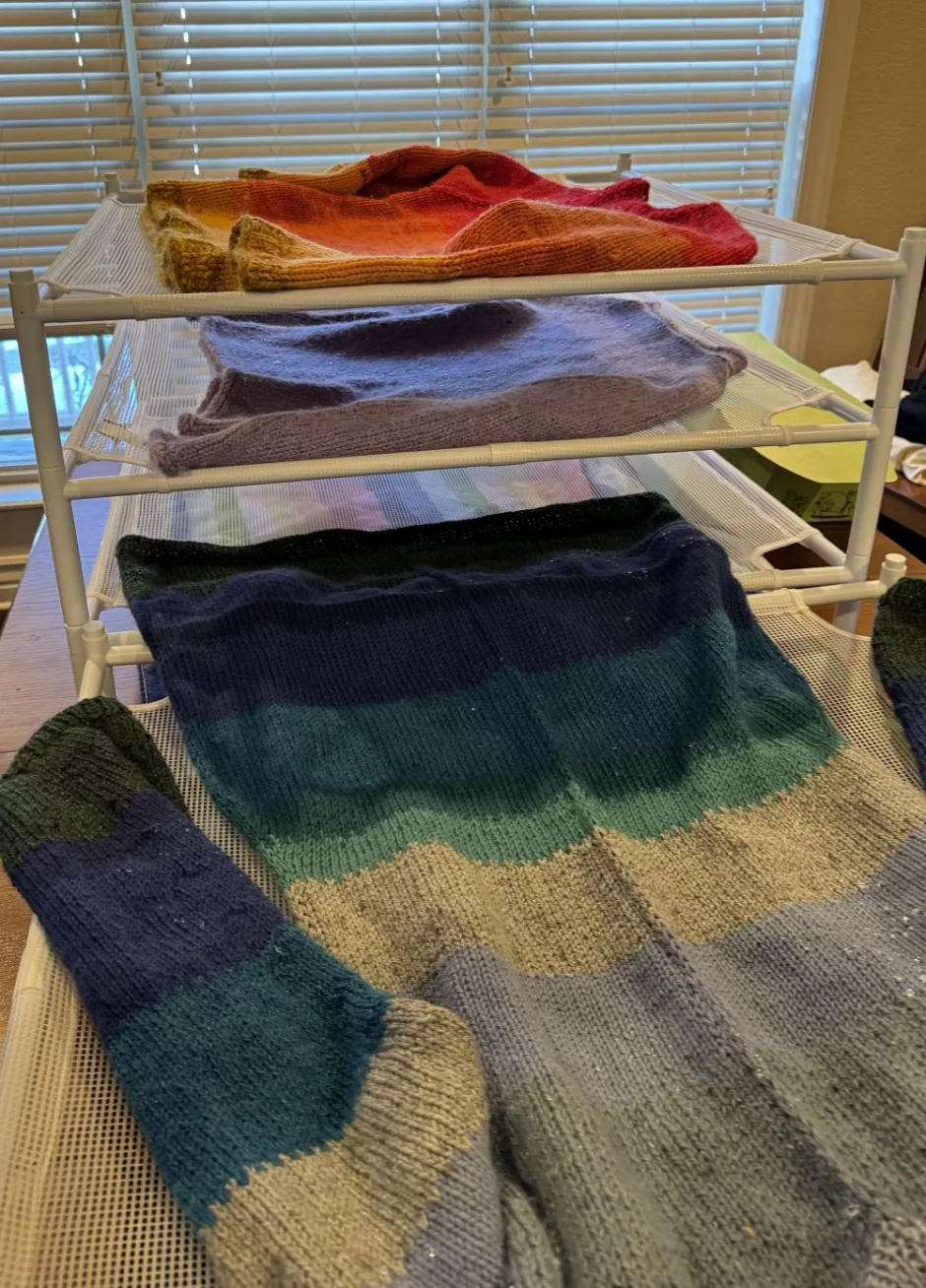
Bring the garments inside and allow to dry. I put mine on drying racks with a towel underneath just in case, but they aren’t super wet after that treatment.
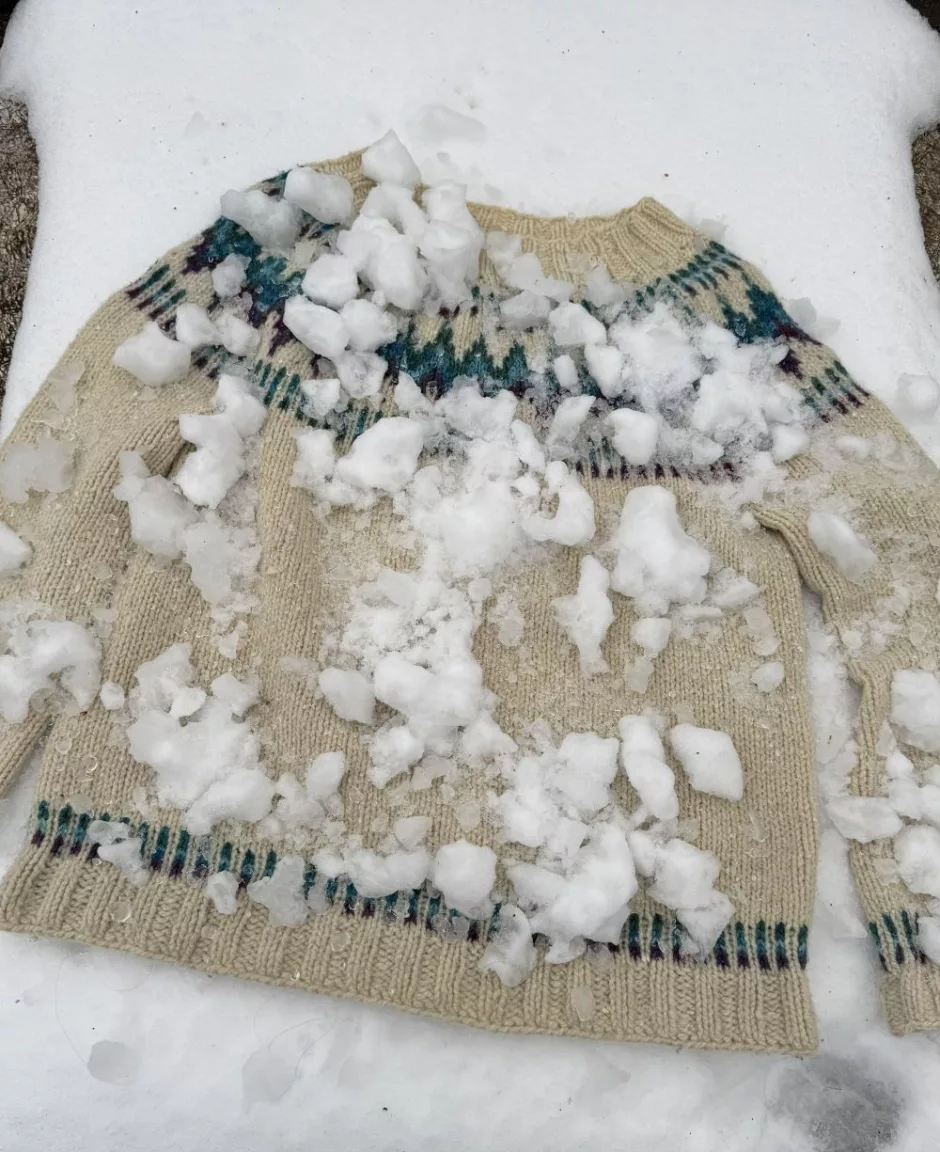
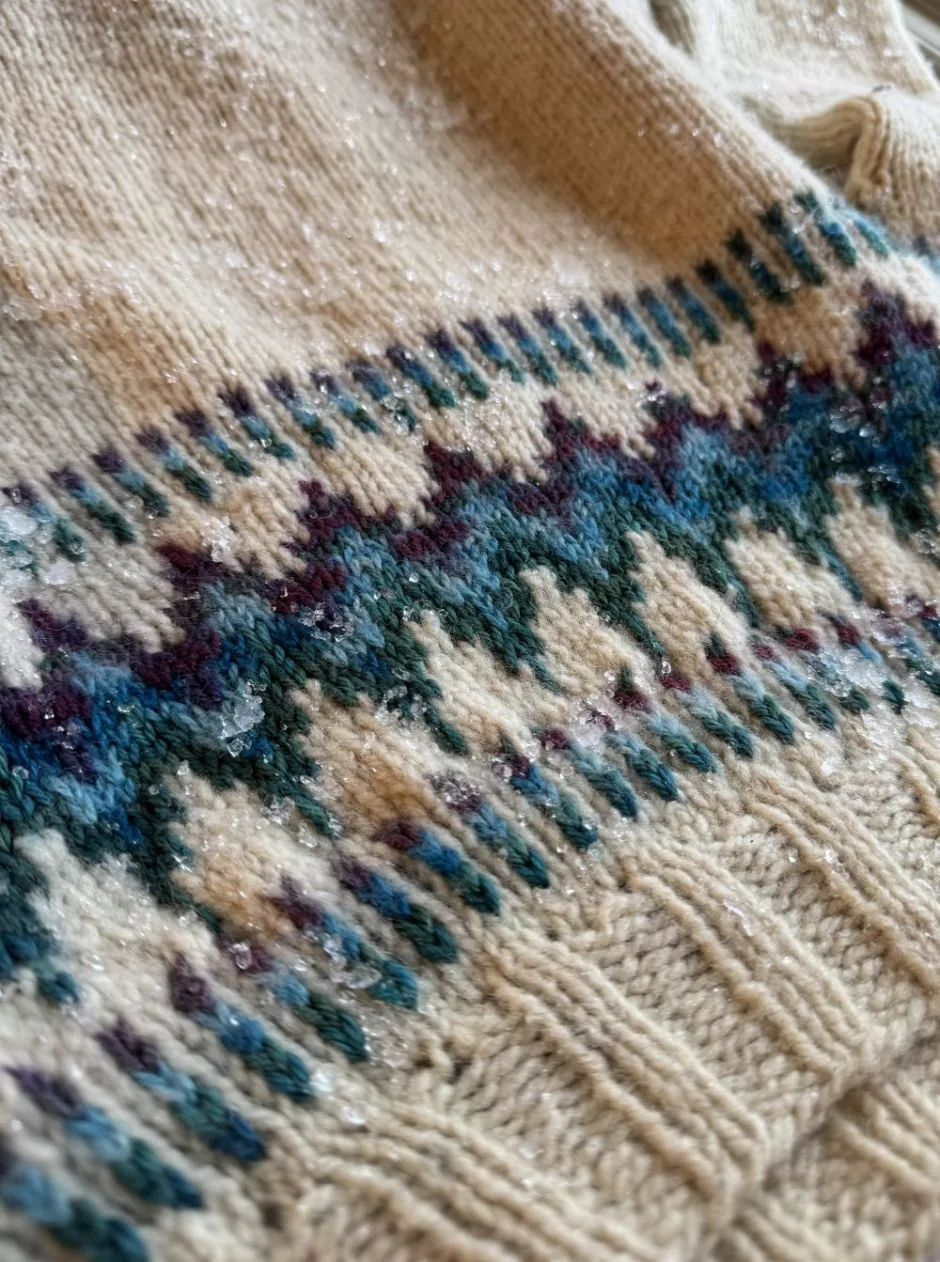
After doing this first set I thew out another one that’s a really rustic wool to see if it felt softer after a snow wash. I tried to cover it a bit more and left it out longer (about an hour).
What Does Snow Washing Do?
Proponents of snow washing say that it leaves sweaters feeling fluffier and like new, even better than when washed with wool wash or however you normally treat your sweaters.
It’s said to help gently remove dirt and odors (I even saw a video where someone said snow washing got rid of mothball smell, which is amazing!).
Some say that the freezing temperature of the snow helps kill bacteria that might be on your sweater, as well as moth larvae, which makes sense because freezing is a way to treat knits and yarn when you’ve had a moth infestation.
The sweaters also dried a lot faster than traditionally washed sweaters because the fibers weren’t completely saturated.
Once they were dry, I think they did feel a little fluffier and nicer than before. The rustic wool one feels softer and less scratchy. I have always insisted on wearing a long-sleeved shirt under this sweater but now I feel like it’s tolerable directly against my skin. Amazing.
I probably won’t get a chance to snow wash sweaters very often because we just don’t get that much snow. But it is a fun way to clean your garments and it’s great for things that are too big to wash traditionally. You can also do this with big blankets, rugs and other natural fiber things that aren’t generally washable.
Have you ever done snow washing? Would you give it a try? I’d love to hear your thoughts!