Affiliate links may be included for your convenience. View our privacy and affiliates policy for details.
If you have some mystery yarn that you want to knit or crochet with, measuring its wraps per inch is a good way to figure out the weight of yarn you are dealing with.
What Is Yarn Weight?
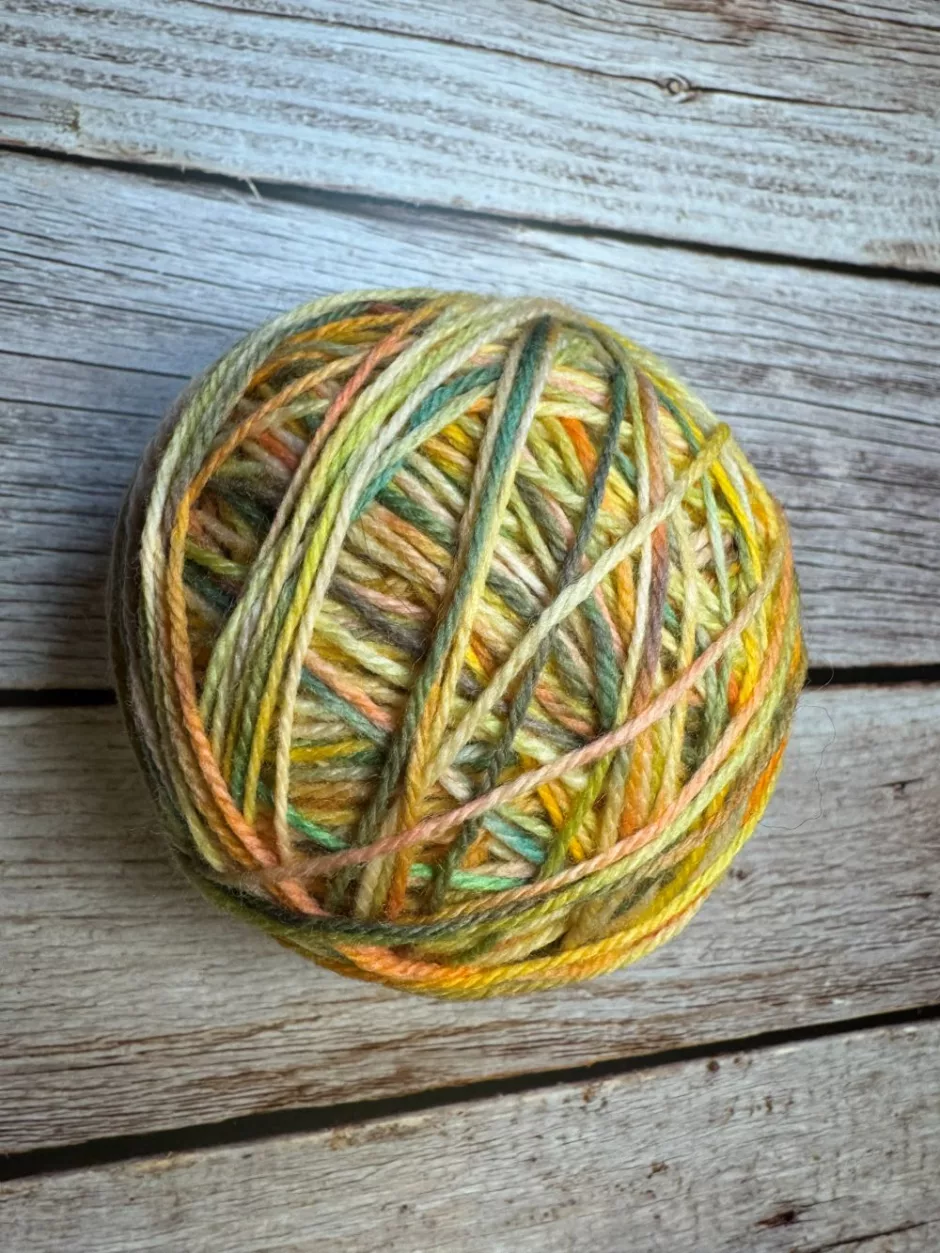
Yarn weight doesn’t mean how heavy the yarn physically is. Instead it’s a measure of the circumference of the yarn. Yarn weight determines generally what size knitting needles or crochet hook you should use with the yarn, as well as how many stitches and rows per inch/2.5 cm you should achieve working with that yarn and hook or needles.
In the United States, the yarn weight system is a scale of 1-7, with smaller numbers being finer yarns and larger numbers being heavier or thicker. The standards for different weights of yarn are established by the Craft Yarn Council, but of course it’s a voluntary program and yarn from other countries may not follow these standards.
Sometimes yarns are described with words that imply their weight such as sport, DK and worsted. Generally these correspond to standard yarn weights in the US, but not always.
And while these guides are helpful, if you’re working with yarn you bought directly from a spinner or dyer, or with odd balls that are no longer labeled, you need another way to figure out your yarn weight. And that’s where wraps per inch comes in.
What is Wraps Per Inch?
Wraps per inch is a measurement that comes from weaving, and it’s just what it sounds like: a count of how many wraps or strands of yarn will fit into an inch measurement.
There are specially made wraps per inch tools you can use to determine the wraps per inch of a yarn, or you can use other objects, as we’ll see below.
With wraps per inch, the smaller the number the heavier the yarn. The finest lace yarn might have as many as 40 wraps per inch, while a super bulky yarn might have only 5 or 6.
The Craft Yarn Council has a standard for wraps per inch as well, but you’ll see lots of ranges (and the numbers tend to overlap) and it’s really just a way to get an estimate of what your yarn weight might be.
How to Measure Wraps Per Inch
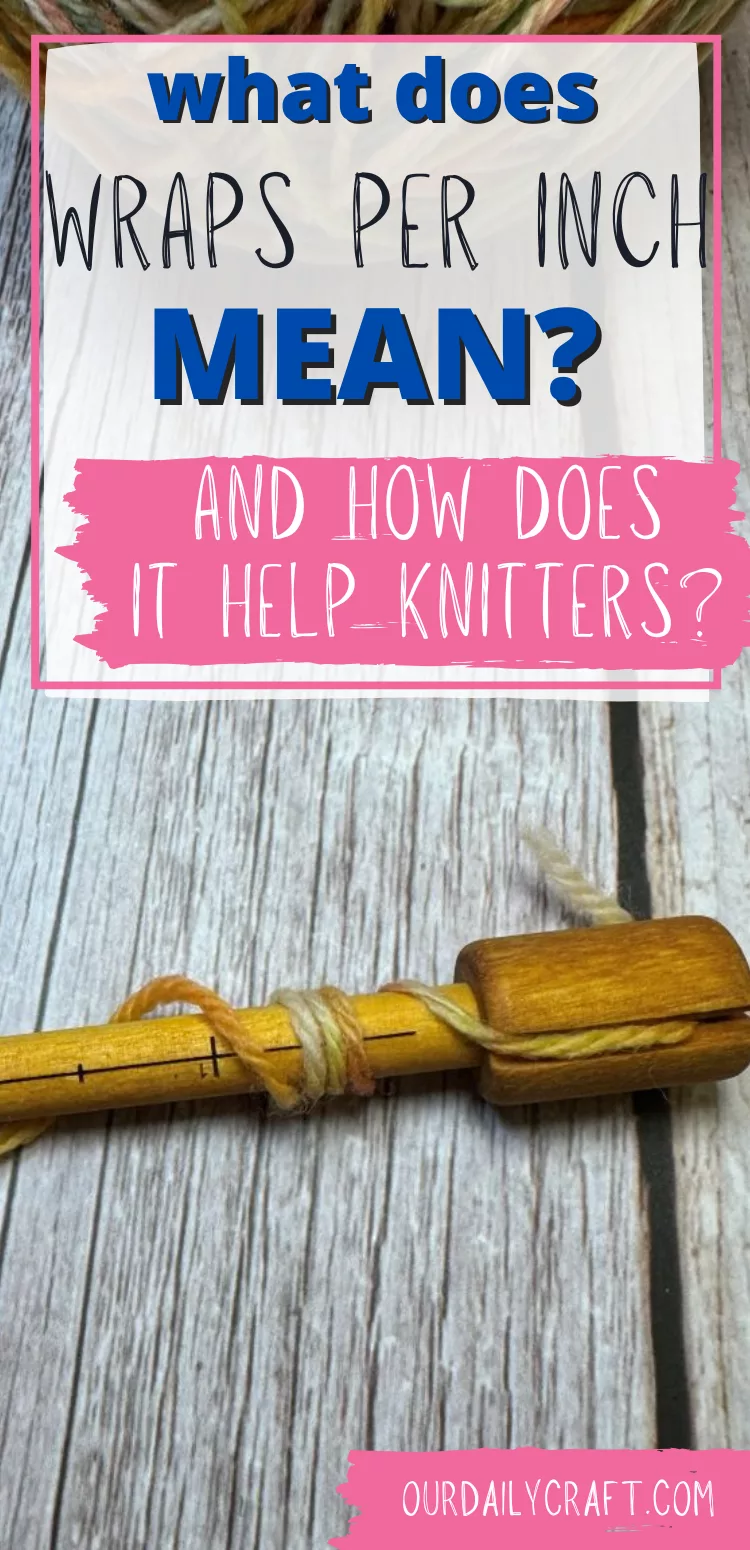
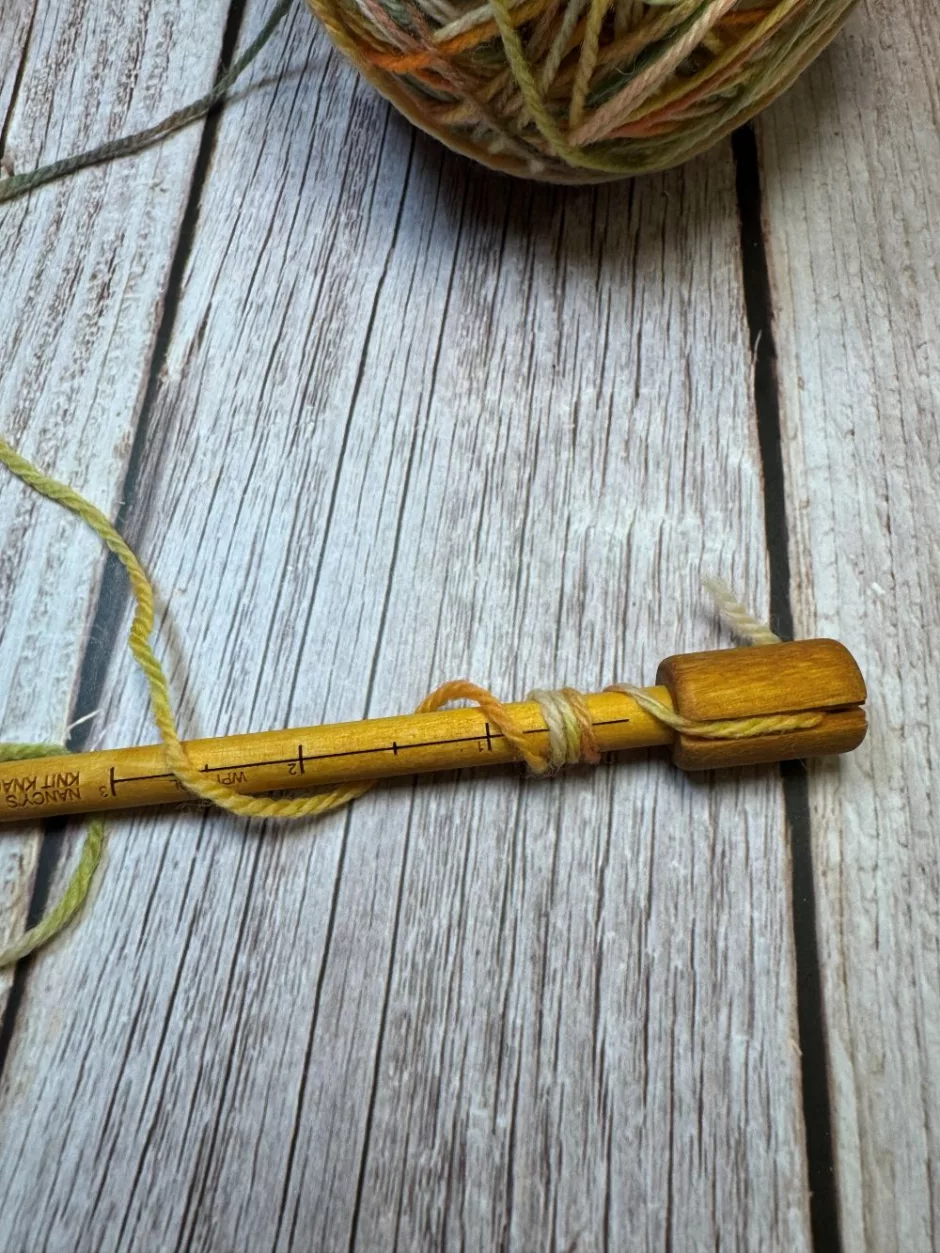
If you need to measure wraps per inch (also abbreviated as WPI) and you have a WPI tool, it’s quite easy to do. This one (which isn’t made any more) has a notch at the top you can slide the yarn through, then just wrap the yarn around the stick until you’ve got an inch of the stick covered where an inch is marked. Many of the ones now available (I like this one from Holly Berry Designs) just have an inch wide notch you can wrap the yarn into.
One of the problems with measuring wraps per inch is that it’s not very accurate because you can easily wrap tighter or more loosely, or squish or stretch the yarn as you are counting. But the idea is to wrap it so the yarn is touching but not overlapping, and not pulled too tightly around the tool.
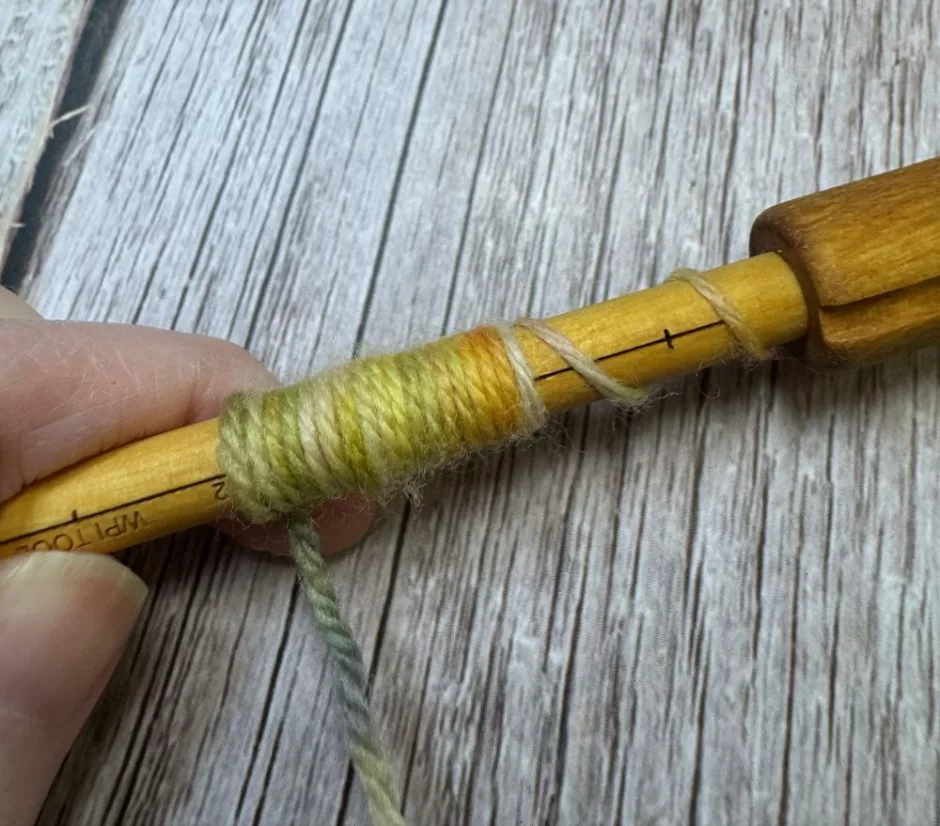
Here I have a mystery yarn that I measured as 17 wraps per inch using my tool, which, according to the CYC, could be anything from super fine to light (1 to 3). The card that came with my tool would call it super fine/1; I’m pretty sure it’s a sock/sport/weight 2.
Measuring without a WPI Tool
If you don’t have a specific tool for measuring WPI, you can wrap your yarn around anything that’s consistent in circumference, such as a pencil or marker.
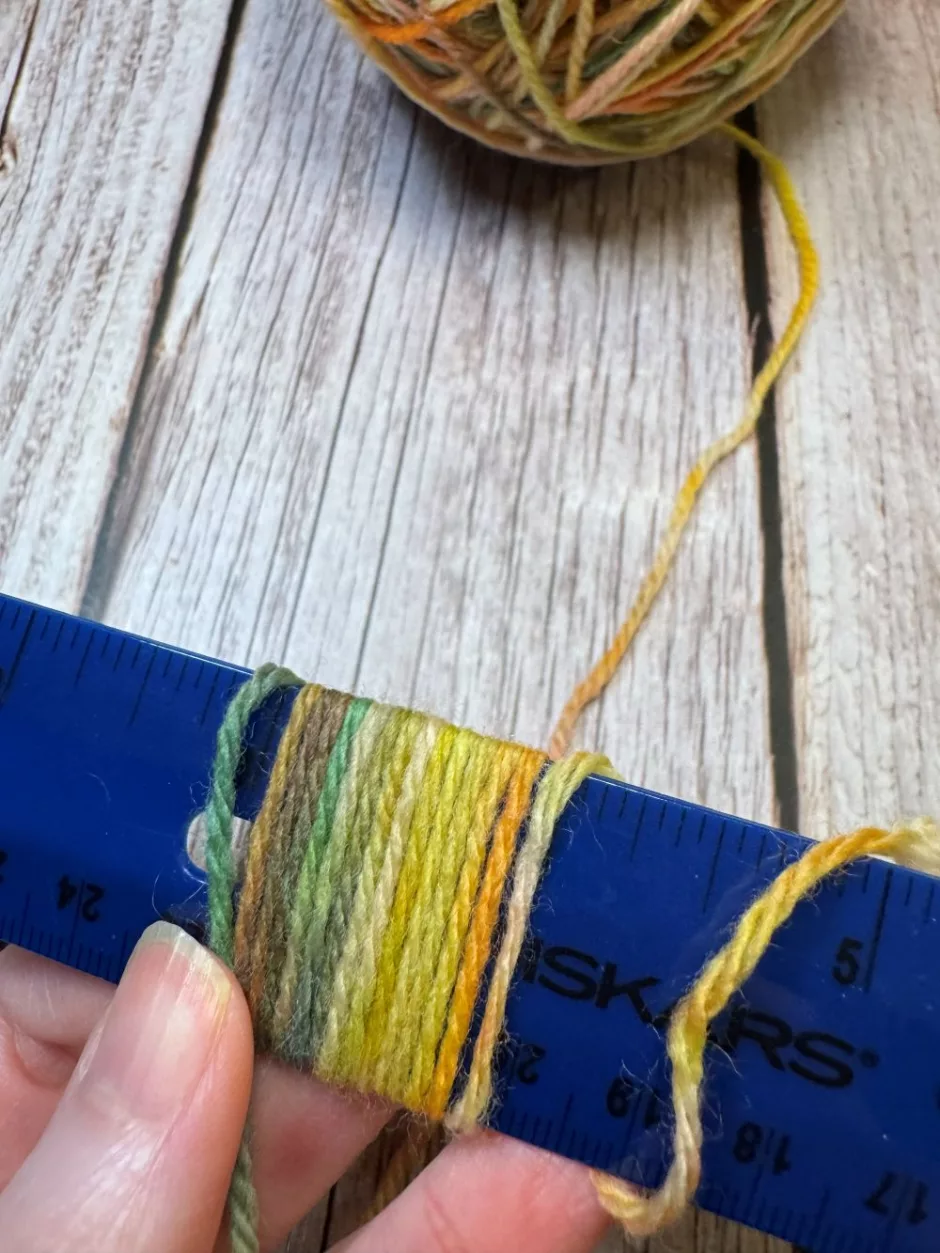
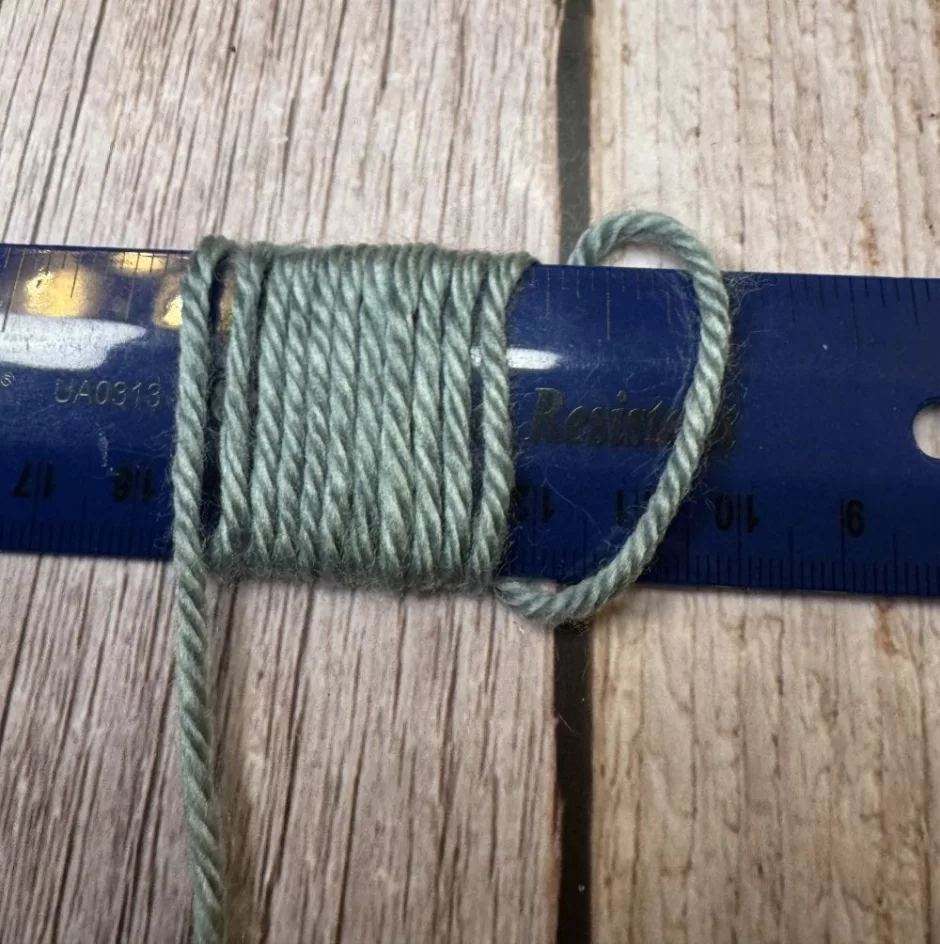
Here I skipped the tool altogether and just wrapped around the ruler itself. With the same yarn as above I got 15 wraps per inch wrapping around the ruler, so again, not super accurate but we’re in the ballpark.
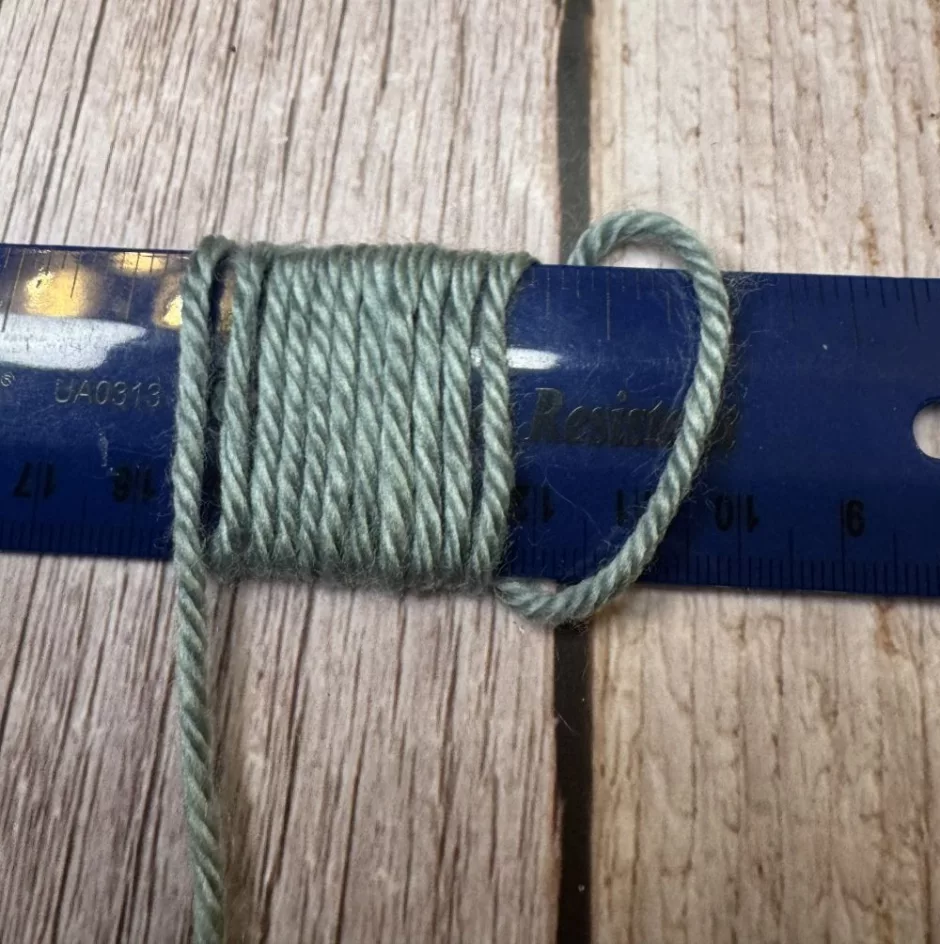
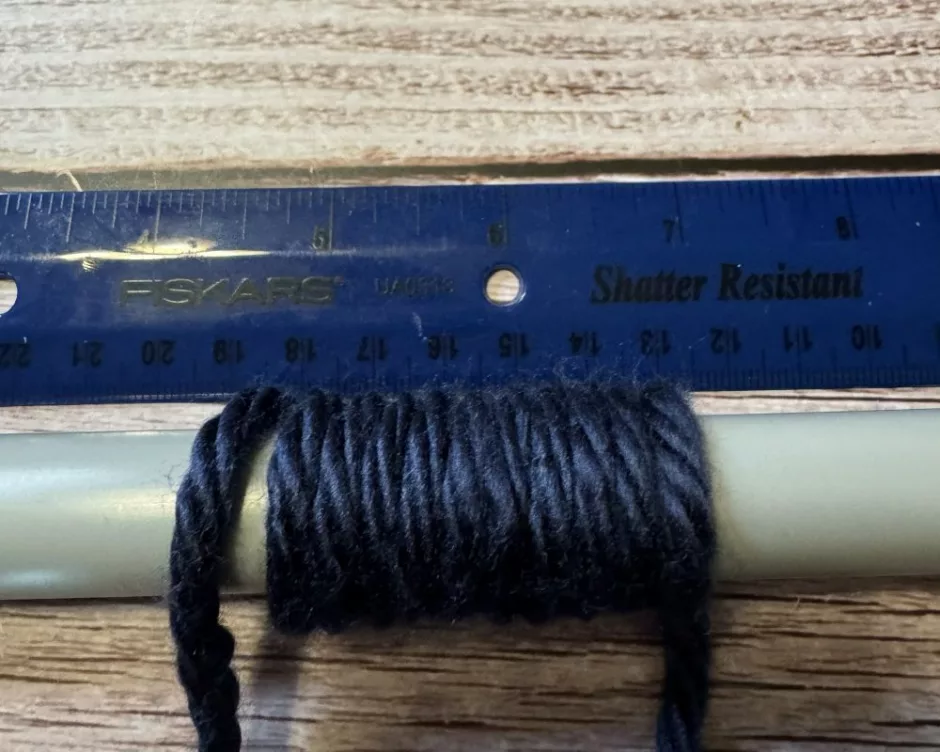
With this yarn that I know is worsted weight (it’s Lion Brand Heartland), I got 12 using the WPI tool and a little more than 10 using the ruler. It’s a good idea to take a couple of measurements or use a couple of tools and see if you’re getting similar readings.
What Does WPI Tell You?
Now that you’ve got your wraps per inch number you can consult a WPI chart to determine your yarn weight, or at least get you close to it.
Of course you will want to knit or crochet a gauge swatch with the needle/hook size suggested by your yarn weight measurement to make sure you like the look of it before you choose to use that yarn for a project.
If you find that your gauge is wildly off from what the standards suggest for that yarn weight (beyond what you would consider normal for yourself) try measuring again or go up or down a size of needle/hook as the case may be. Again, WPI isn’t totally accurate so if you’re on the cusp you may find you need to experiment a bit to find the ideal gauge for that yarn.
Still, knowing how to measure wraps per inch and how to interpret that is a big help if you have a lot of odd balls you want to use but aren’t sure how they’ll work alone or with other yarn you already know the weight of.