Affiliate links may be included for your convenience. View our privacy and affiliates policy for details.
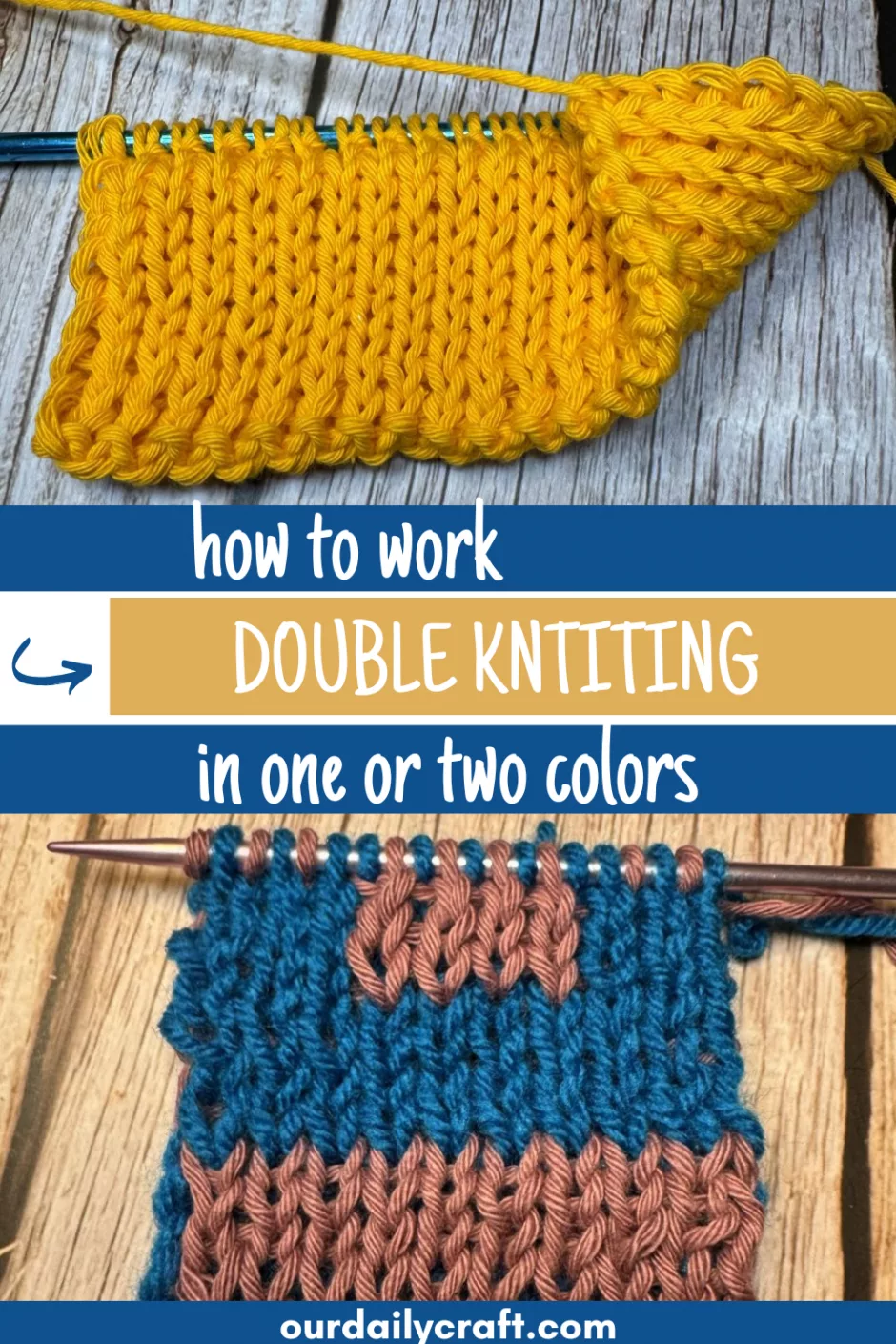
Double knitting, also sometimes called double stockinette stitch, is a two-sided fabric that’s worked flat and produces a fabric with stockinette stitch on both sides.
It can be worked as a solid color, solid but different colors on each side, or in color blocks, stripes or designs where one color shows on one side and the other color on the other side.
Materials for Double Knitting
All you need to work double knitting is yarn and knitting needles. If you are working a single color, the same size needle you typically use for that weight of yarn is fine. If you’re working two colors, you’ll want to go down a couple of sizes to prevent the second color from showing through on the either side.
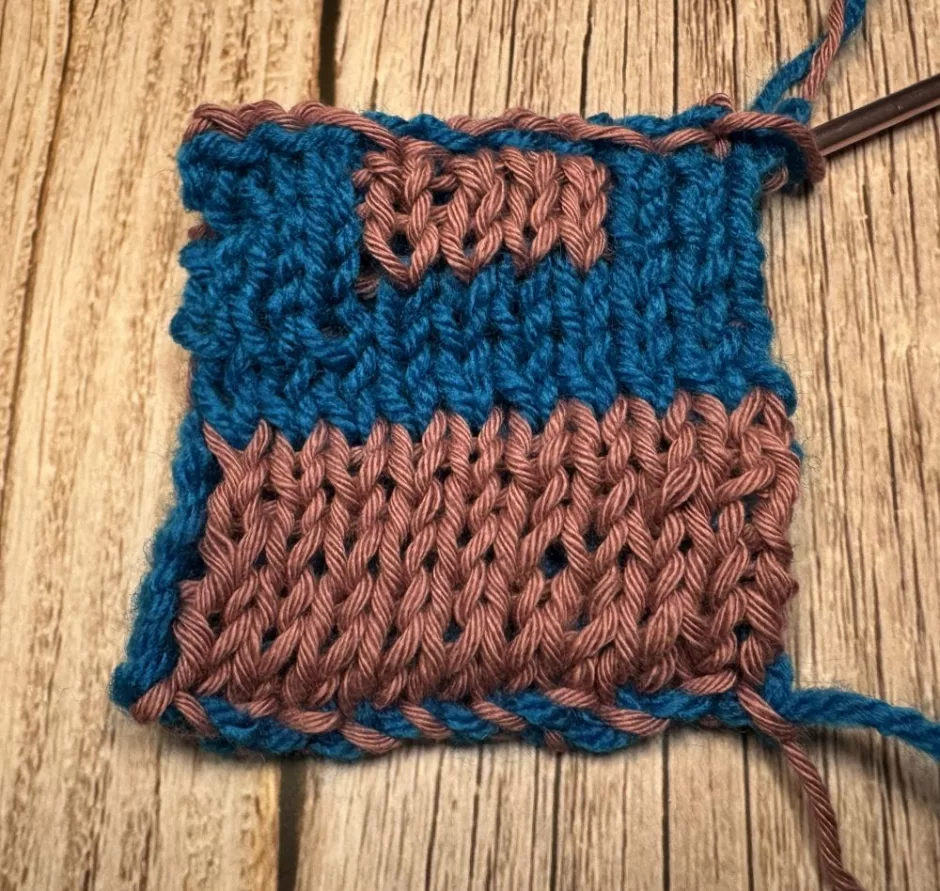
This swatch is worked with worsted weight/medium/yarn weight 4 yarn, which I would normally use size 7 or 8 US (4.5 or 5 mm) knitting needles on. Here I used a size 6 US or 4 mm and especially in the pink stitches you can see the blue coming through a bit. If this had been a real project I might have tried an even smaller needle, but for our purposes this is fine.
Double Stockinette in One Color
To get the basics of double knitting, you can work a piece that’s the same color on each side.
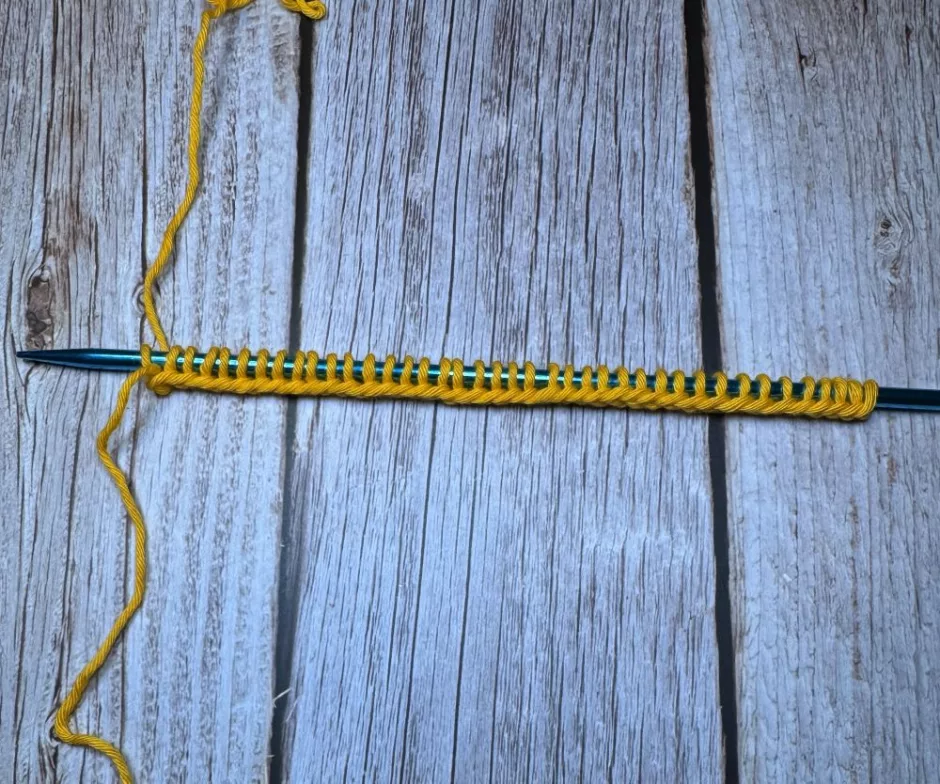
To do this, cast on an even number of stitches. Bear in mind that the finished knit piece will be half as wide as the number of stitches you cast on, because half of the stitches go to each side. Here I cast on 40 and my finished piece is about 5 inches/12.7 cm wide. I used the long tail cast on but you can use whatever you like.
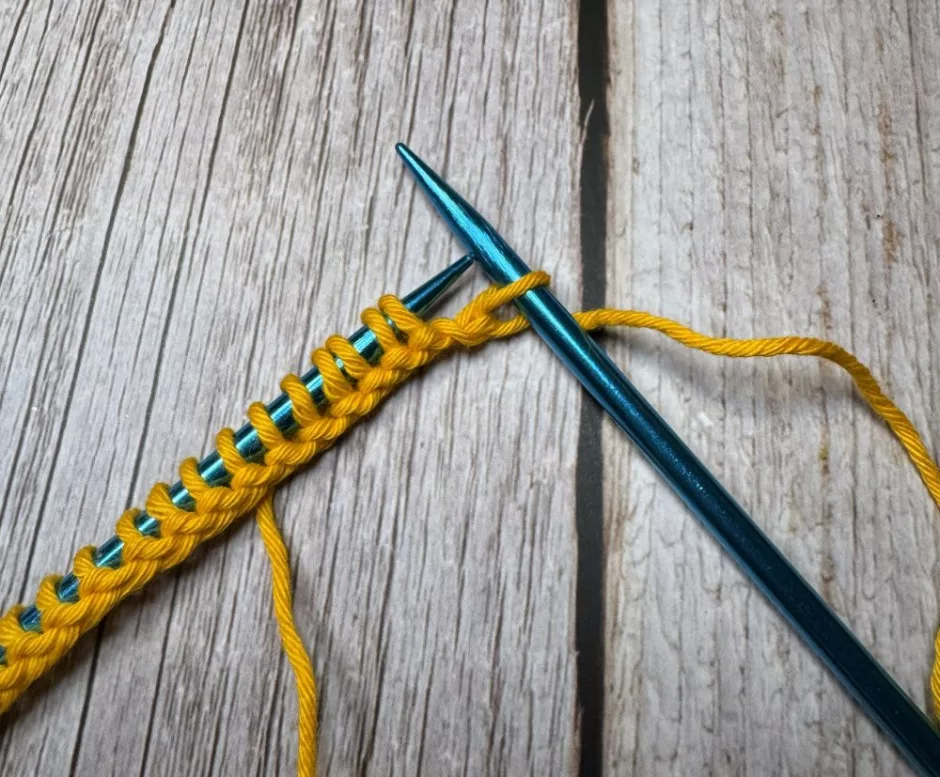
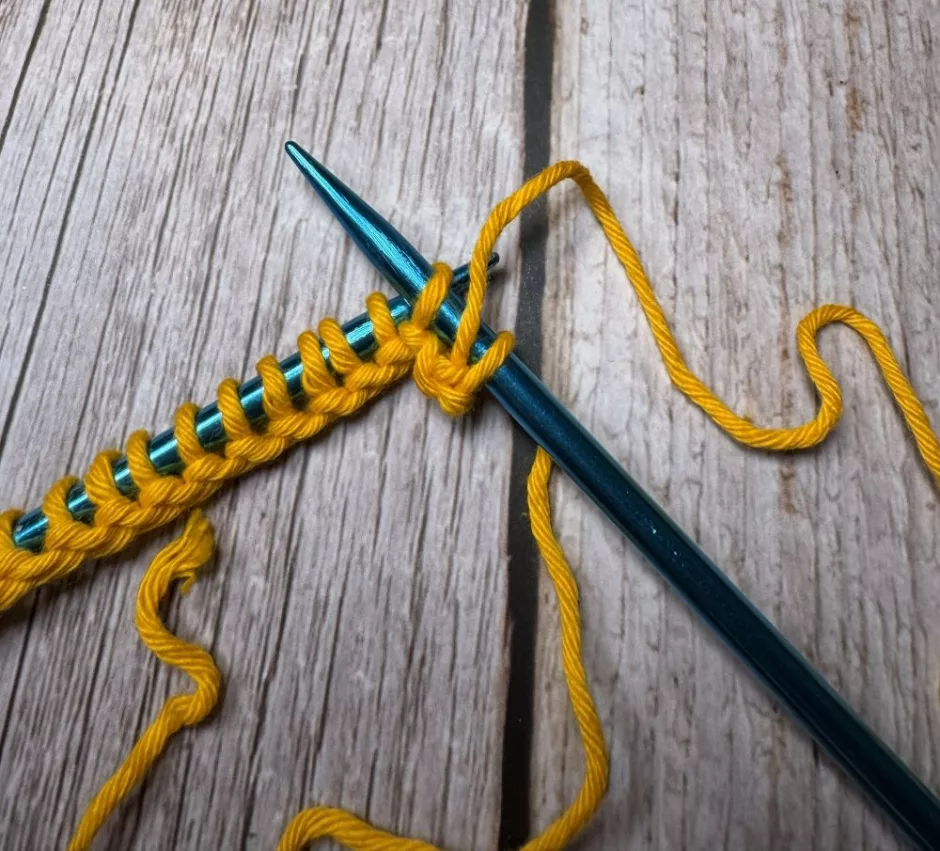
*Knit 1. Slip 1 with the yarn in front, as if you were going to purl the stitch.
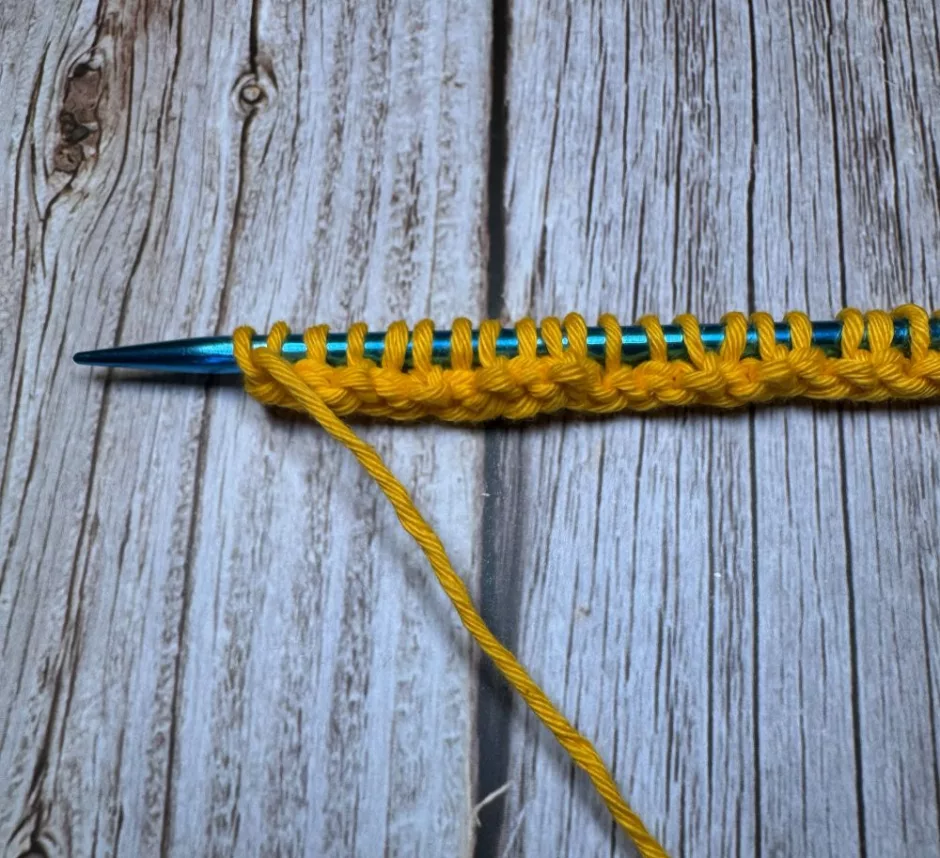
Repeat from * across.
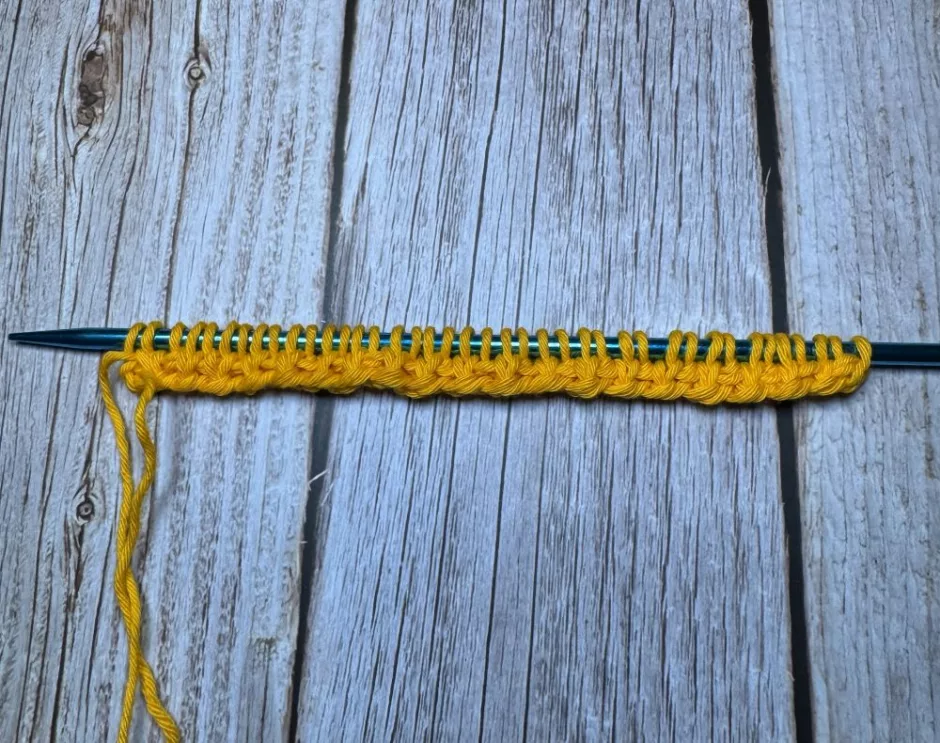
Turn the work over and repeat. The over and back counts as one row.
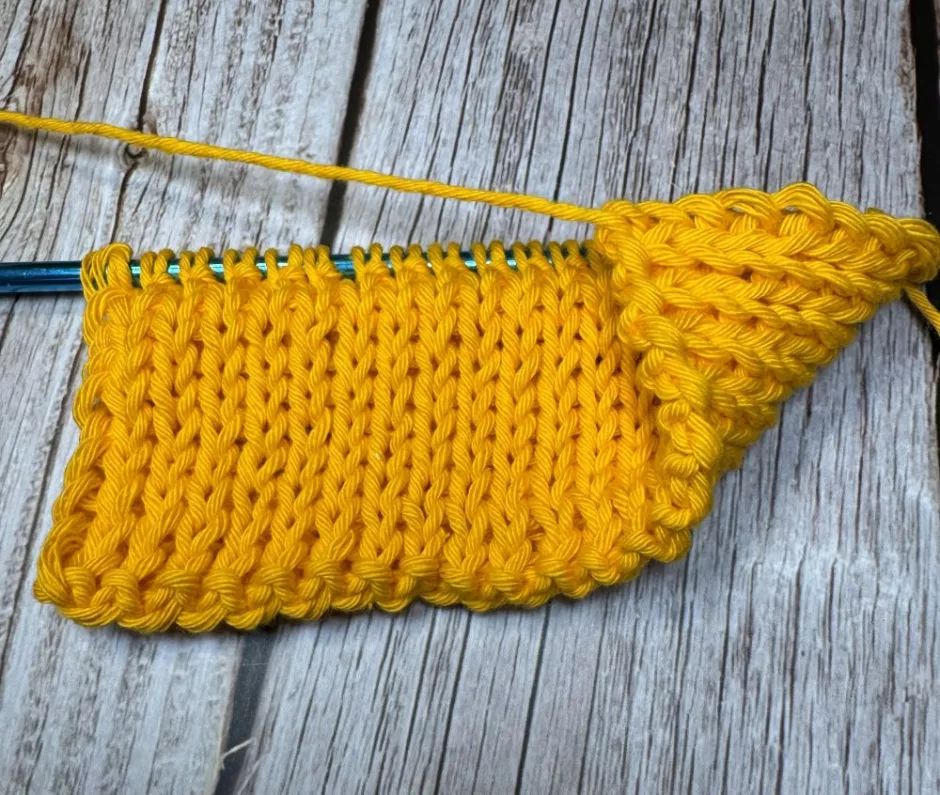
Repeat this row as long as you want.
Note that because the last stitch of each row is slipped, it’s easy to pull too tight on the working yarn when you start the next row, so be mindful of keeping that stitch loose enough for the edge to lie flat.
If you want to keep your practice swatch, you can use the standard bind off on double knit fabric.
I made mine into a double knit washcloth, which is a great practice piece!
Double Knitting with Two Colors
It’s also easy to work double stockinette in two colors, which gives you a different color on each side of your project.
Here you still need an even number of stitches, but the technique is a bit different.
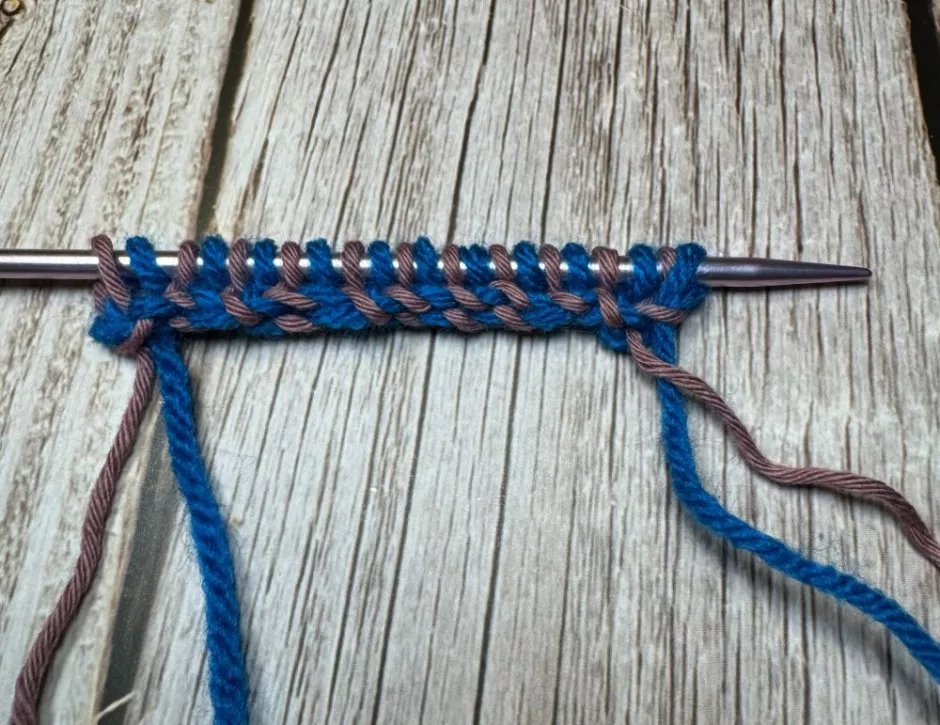
I cast on for this sample using the knit cast on, starting with a slip knot with both strands. Knit on a stitch in one color, then a stitch in the other color, to desired number (I had 20 total, or 10 in each color). Do not count the slip knot as a stitch.
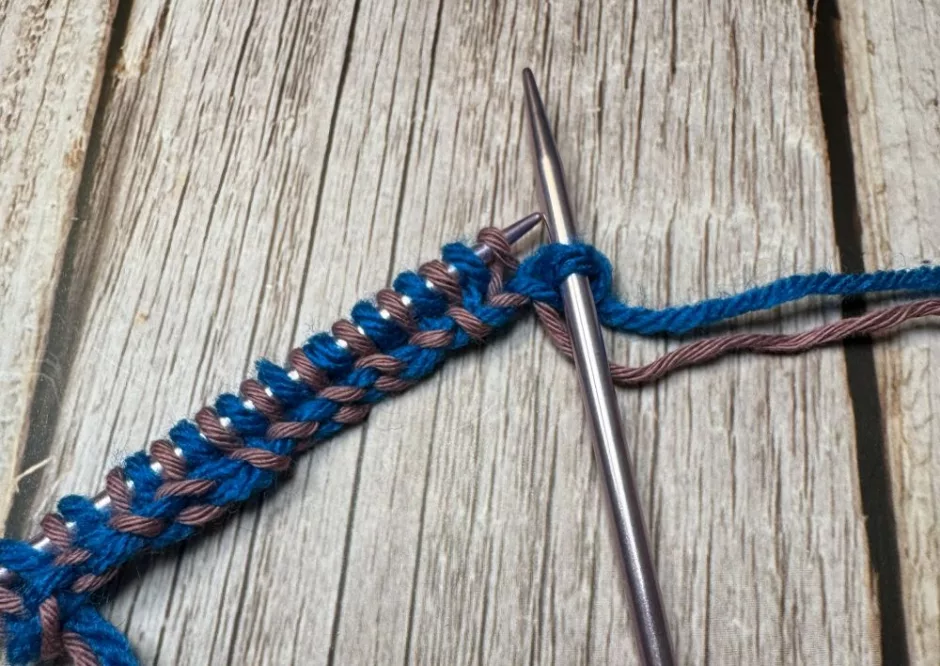
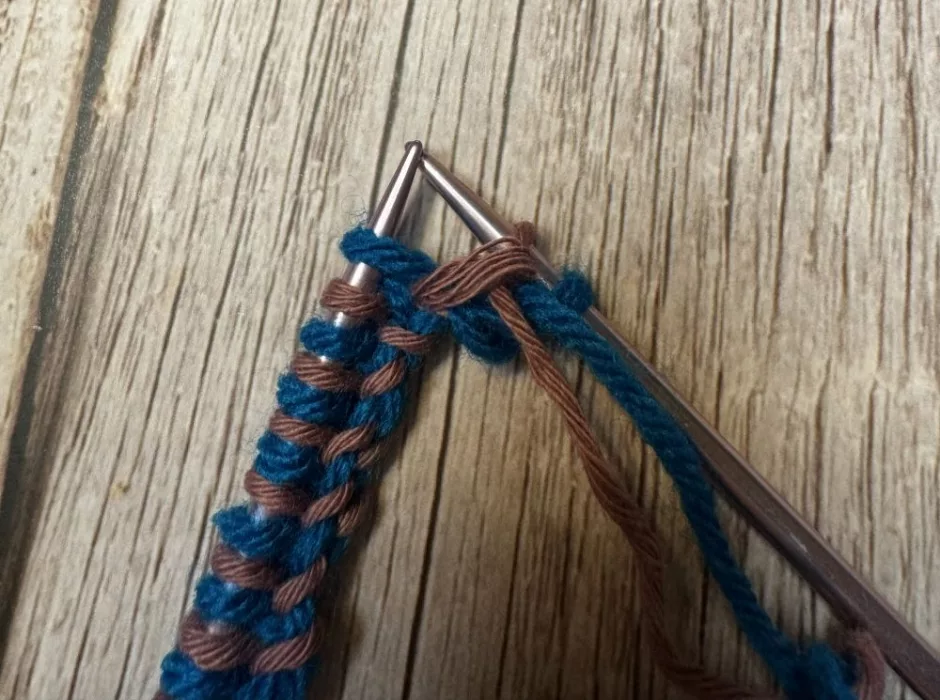
*With both color yarns at the back, knit the first stitch in the color that the cast on stitch is. Bring both yarns to the front and purl the next stitch, which should be in the second color. Repeat from * across.
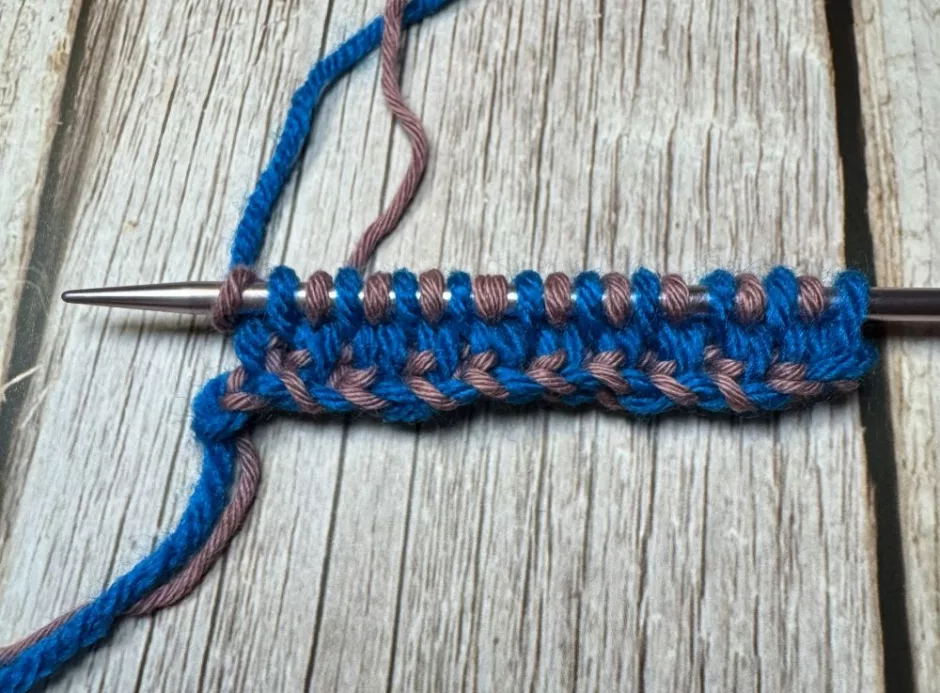
When you get to the slip knot, remove and unpick it.
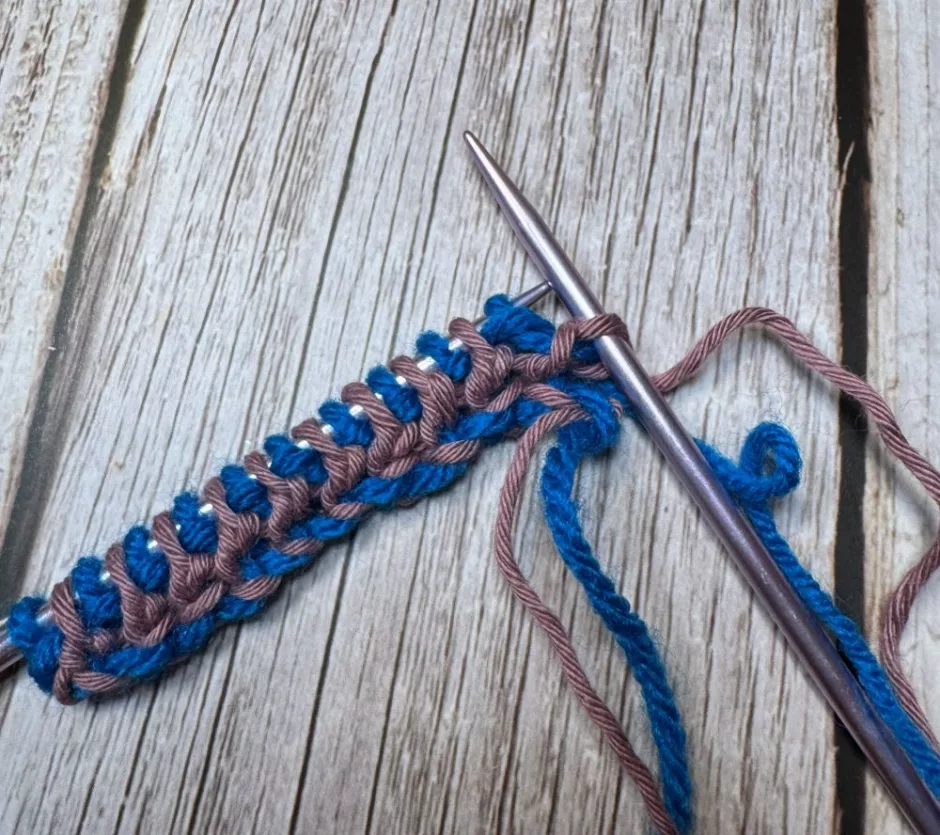
On the return, make sure you twist the yarns together (or work the first stitch with that yarn coming from underneath the other color) to ensure the two pieces of fabric you’re knitting will stay connected at the edges.
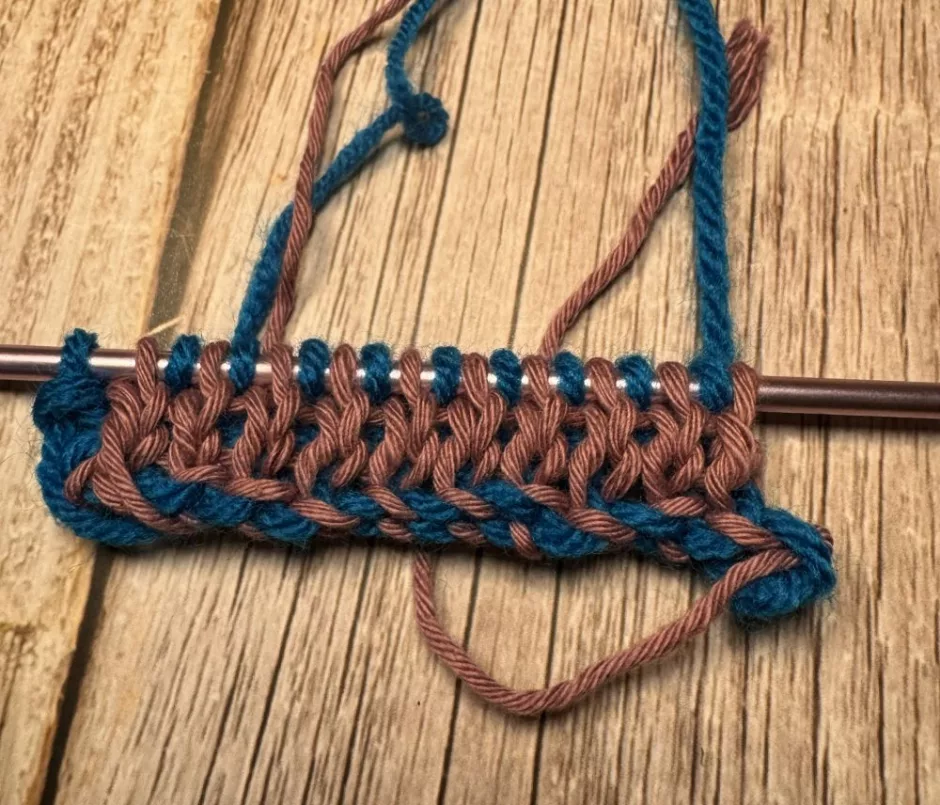
Now you’re knitting the stitches you purled and purling the stitches you knit, in the same color from the previous row. The instructions are the same, because you’ll have just purled a stitch in the second color on the first pass, which you will knit in the same color on the other side.
This is a helpful way of keeping track of where you are if you aren’t changing colors, because you always knit the stitches in the color they are and purl the stitches in the color they are, and you’re always working knit 1, purl 1 across.
Yarn Management in Double Stockinette
Maybe the trickiest part of double knitting is figuring out how you want to hold the yarn. If you predominantly knit with the yarn in your right or left hand, you’ll probably want to keep holding both yarns in that hand as you work, moving the yarn to get the right one in place to work the next stitch.
I tried holding one yarn in each hand, but since both yarns need to move after each stitch, this just made more work.
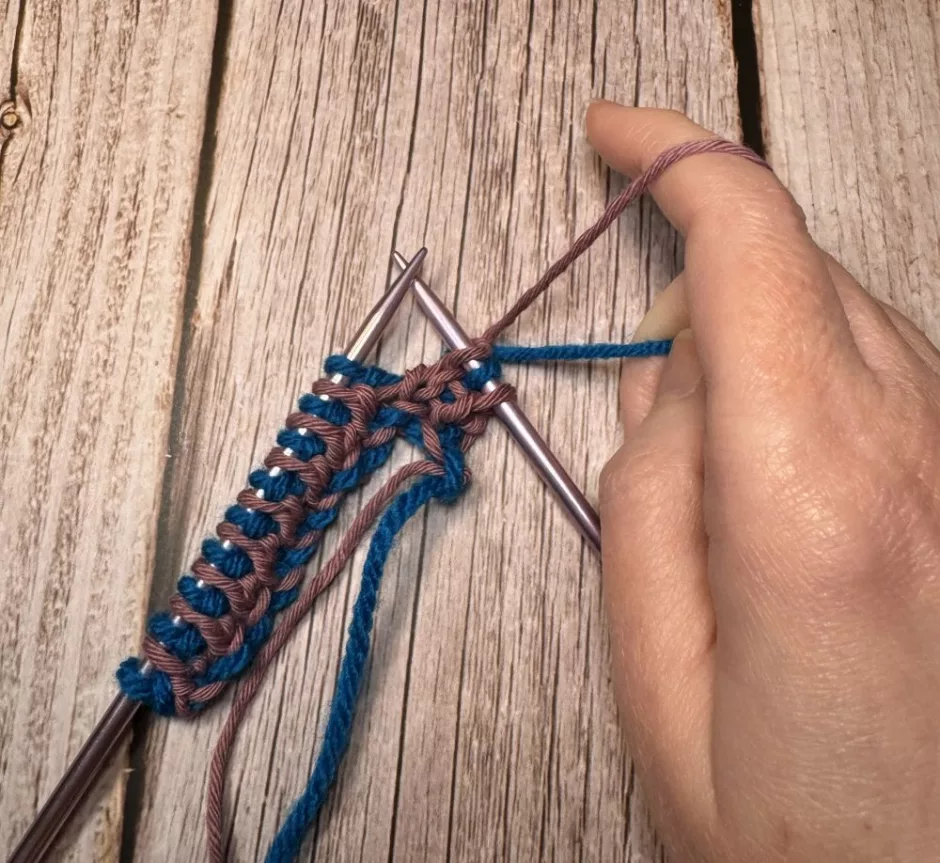
I also tried to hold the yarns one on each side of my index finger in the hope that would make working the stitches a little faster. It didn’t really.
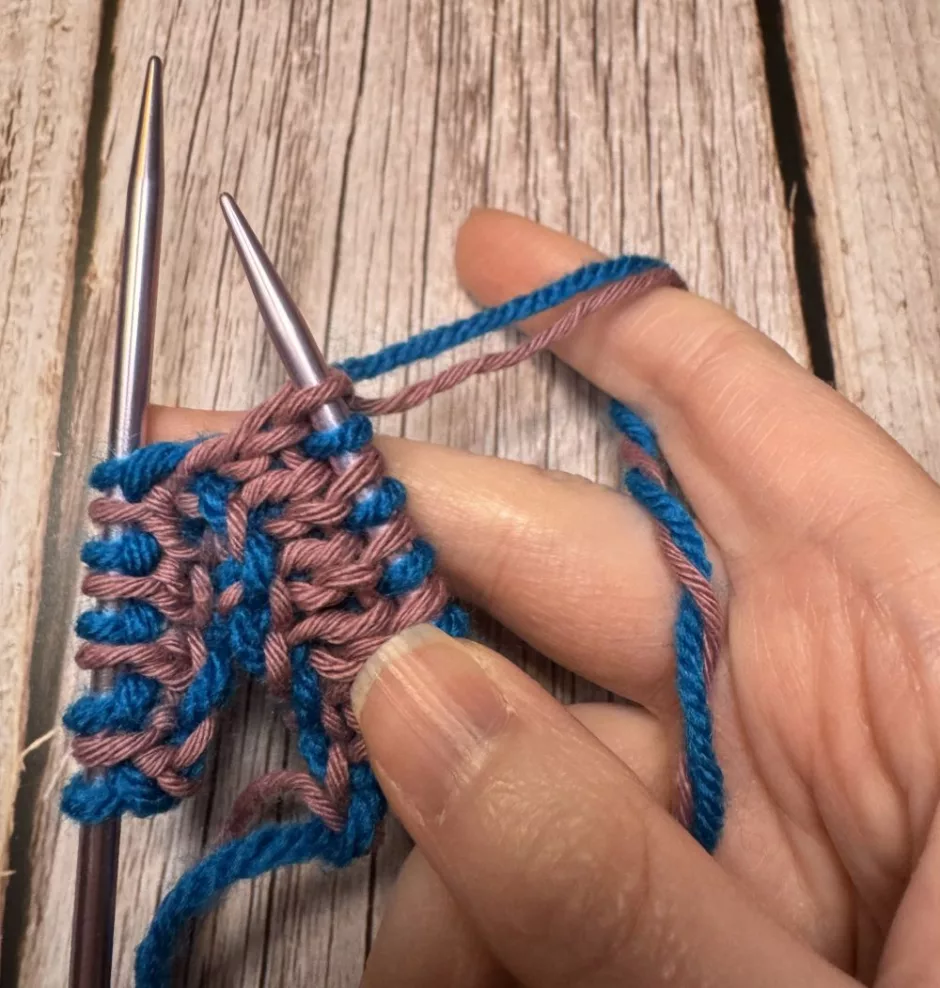
Just having them both on my index finger and adjusting which one I worked with as I needed it ended up being the best way for me.
As you practice double knitting you’ll figure out what works best for you.
Changing Colors on Each Side
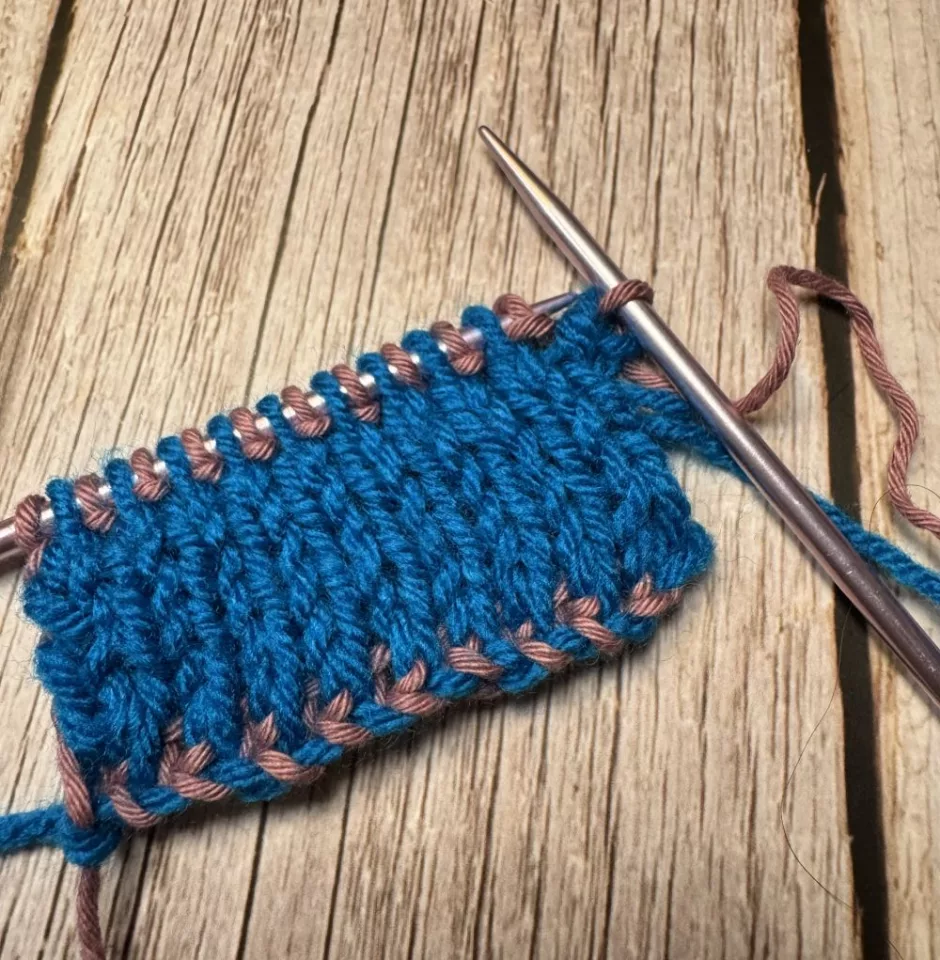
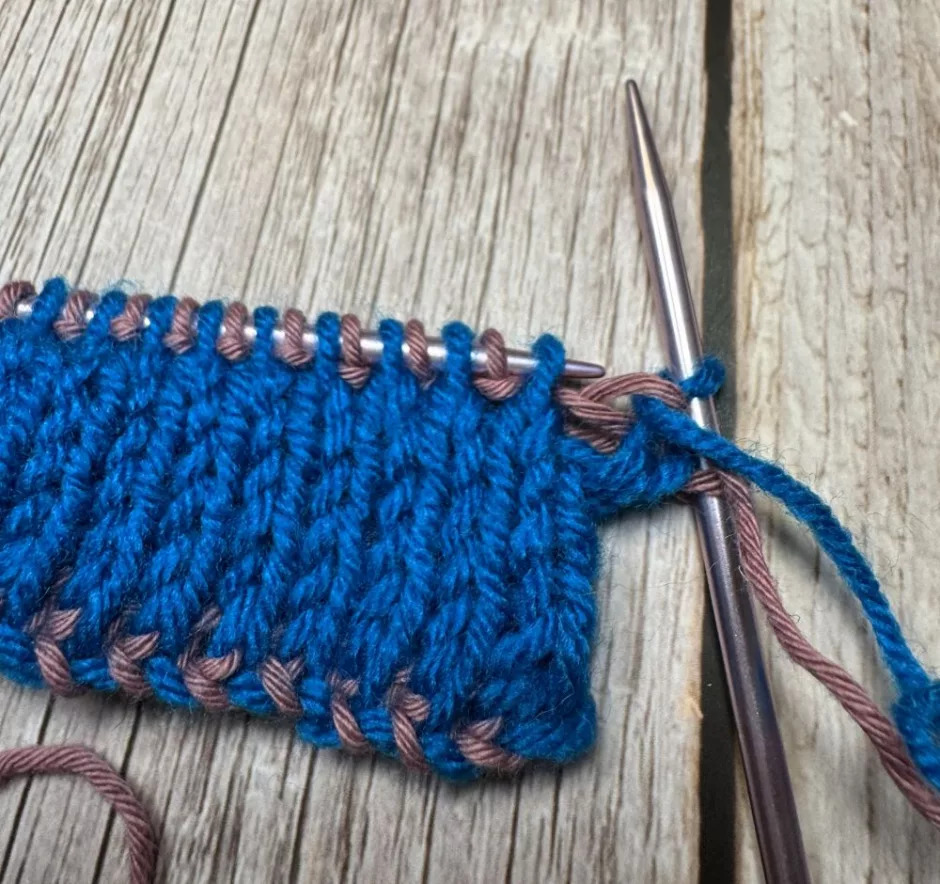
Once you’re comfortable double knitting with a single color on each side, try switching them. On the next first pass, knit the first stitch in the opposite color, then purl the second stitch in what had been your first color on this side. Repeat across.
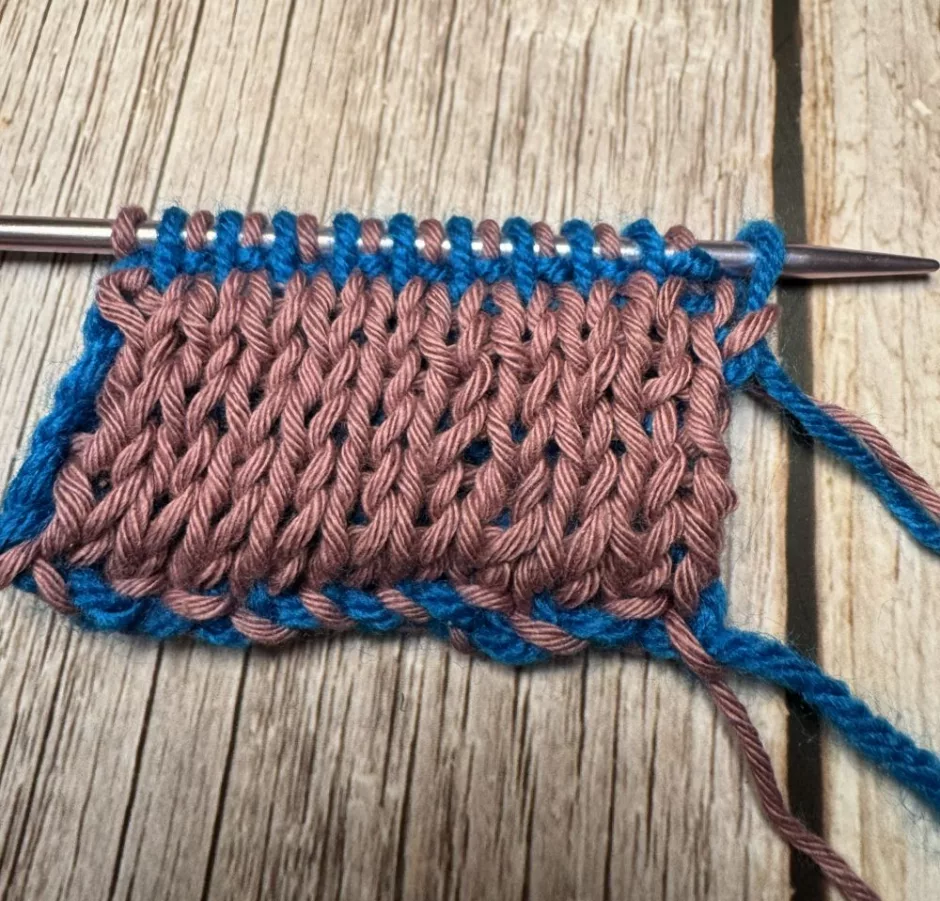
The return pass is all set to knit the knits and purl the purls as you see them, both in terms of stitch pattern and color.
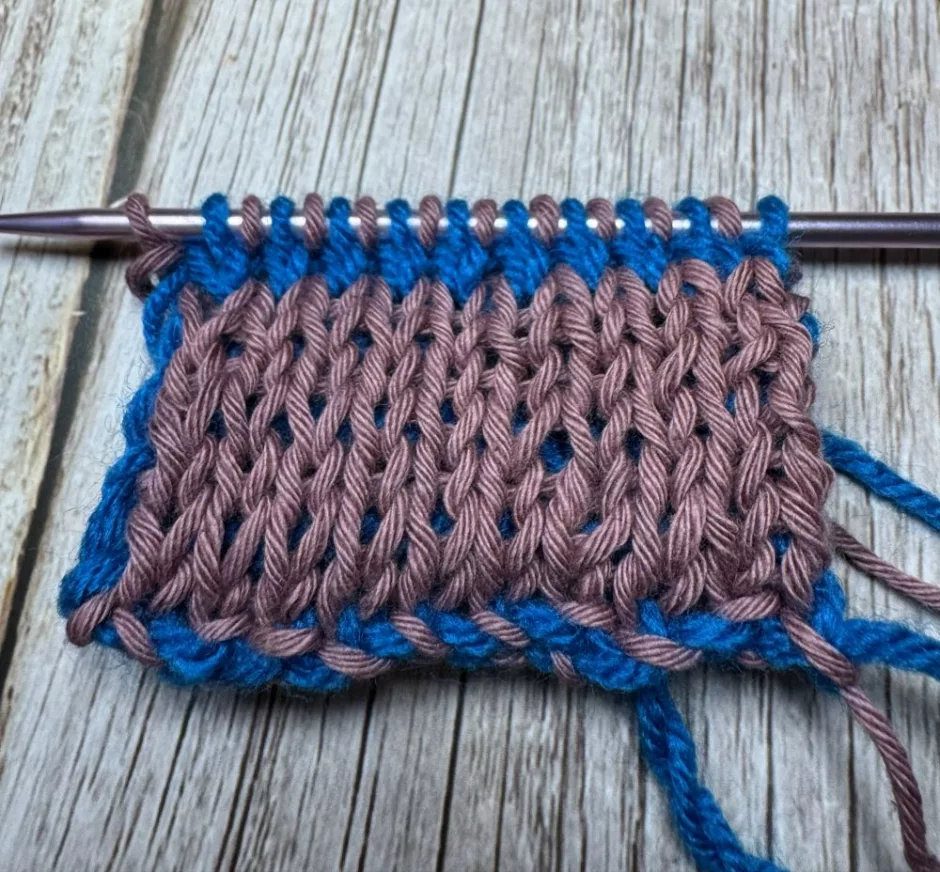
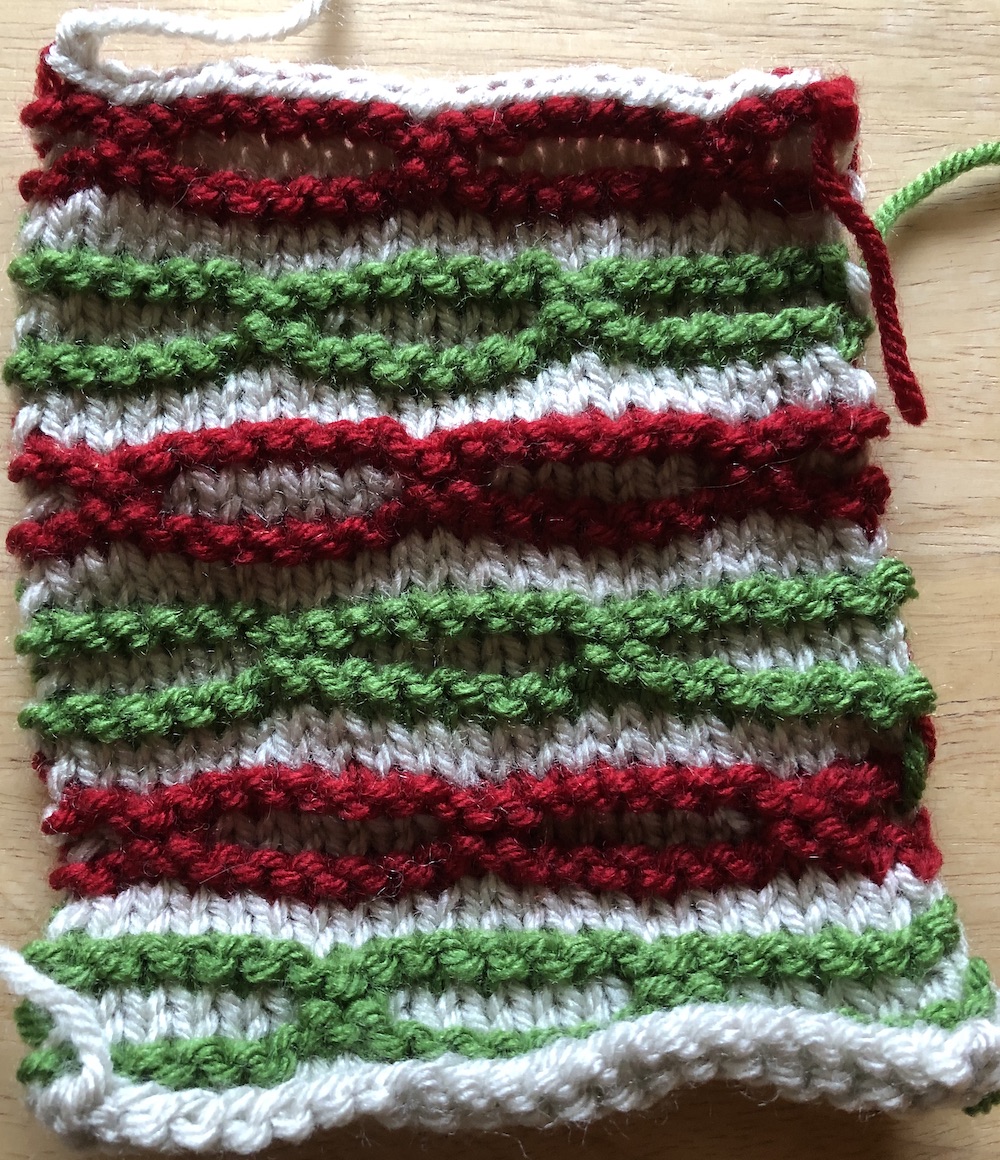
This is a fun way to add color blocking or stripes to a double stockinette project.
Making a Pattern
What if you want to make a colorful design other than stripes? You can change colors within a row and make any kind of design you like.
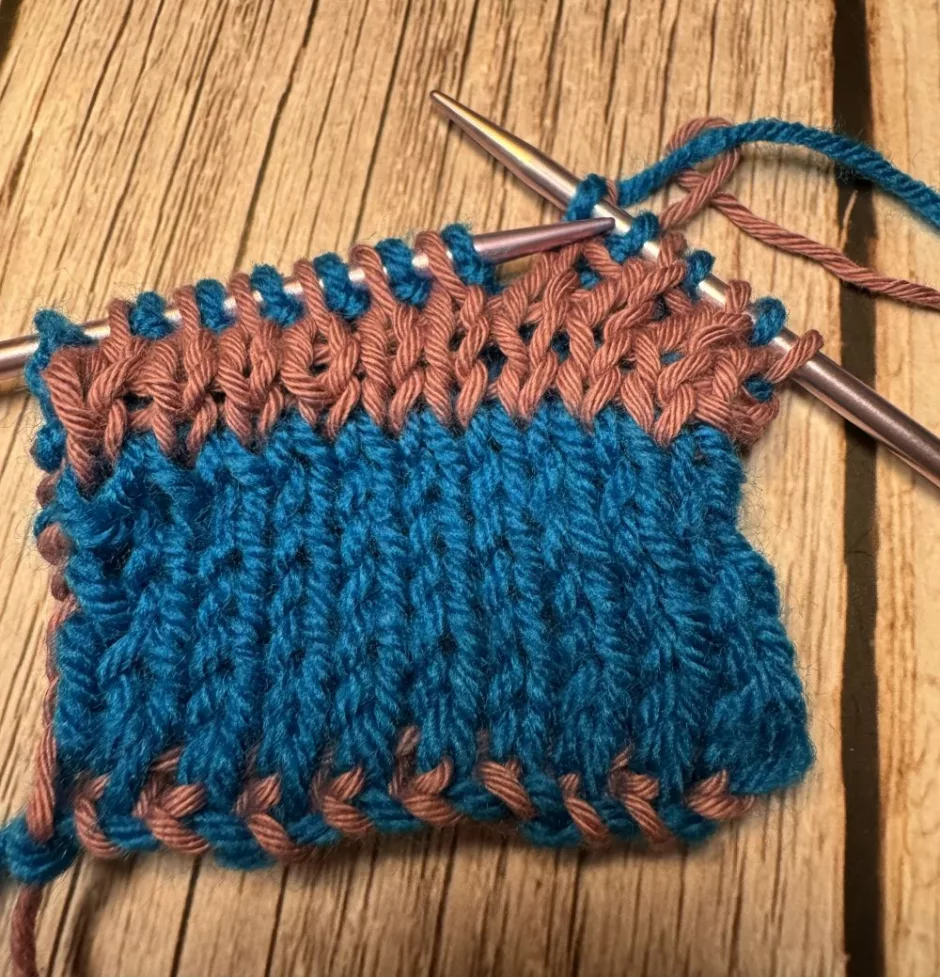
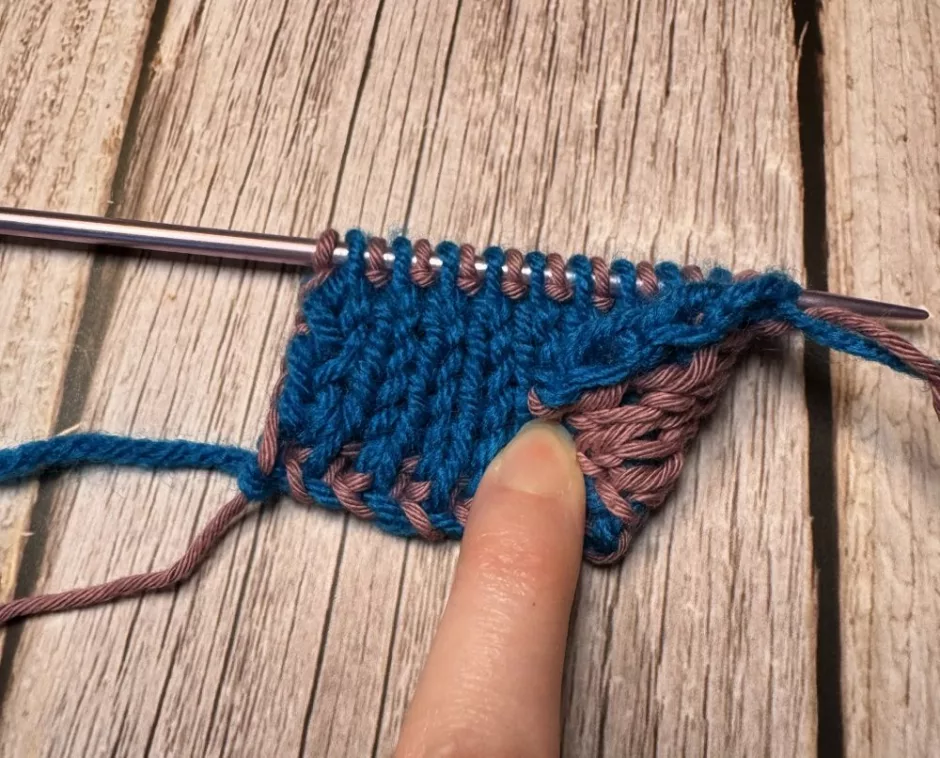
Here I went with a square just to show you how its done. Work to where you want to change colors and then work the next stitch in the new color. Here I just purled the blue stitch and knit the next blue stitch so the blue would show on what’s now the pink side.
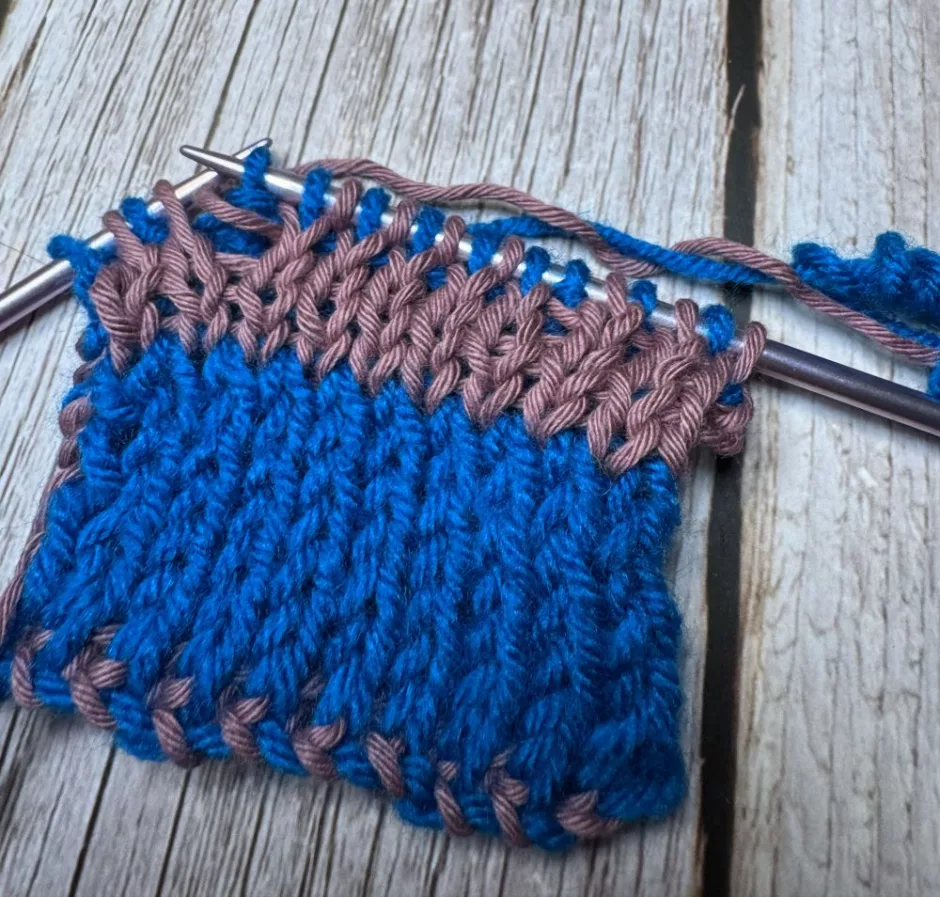
Then you’d purl the next stitch in pink so the color change happens on the other side, too. Repeat across as many stitches as you like.
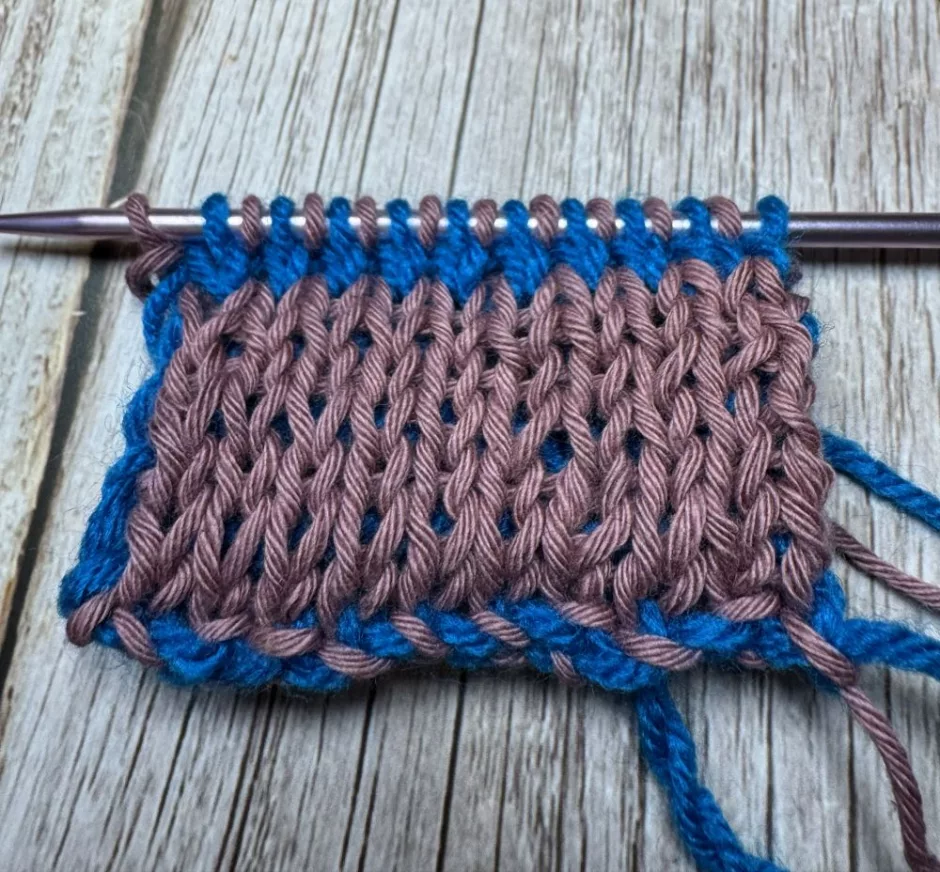
Just make sure as you’re doing this you continue to alternate colors (other than when changing back to the background color) and that you’re moving both yarns between each stitch.
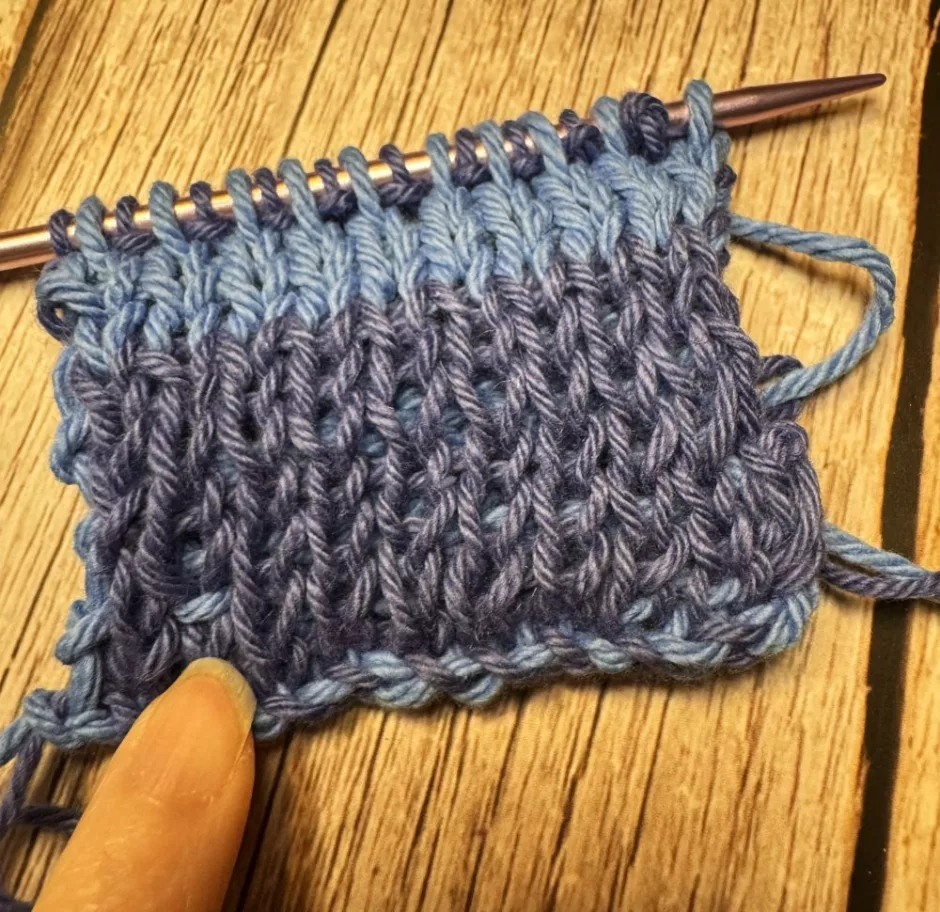
You can see on this swatch where I didn’t move the yarn correctly and the other side yarn is showing on this side.
Double knitting patterns are generally shown as a chart that only shows one side of the project. As usual, the return pass would be worked the same way, unless you’re knitting a project that is different on each side, which is possible, if a bit mind-bending.
Binding Off
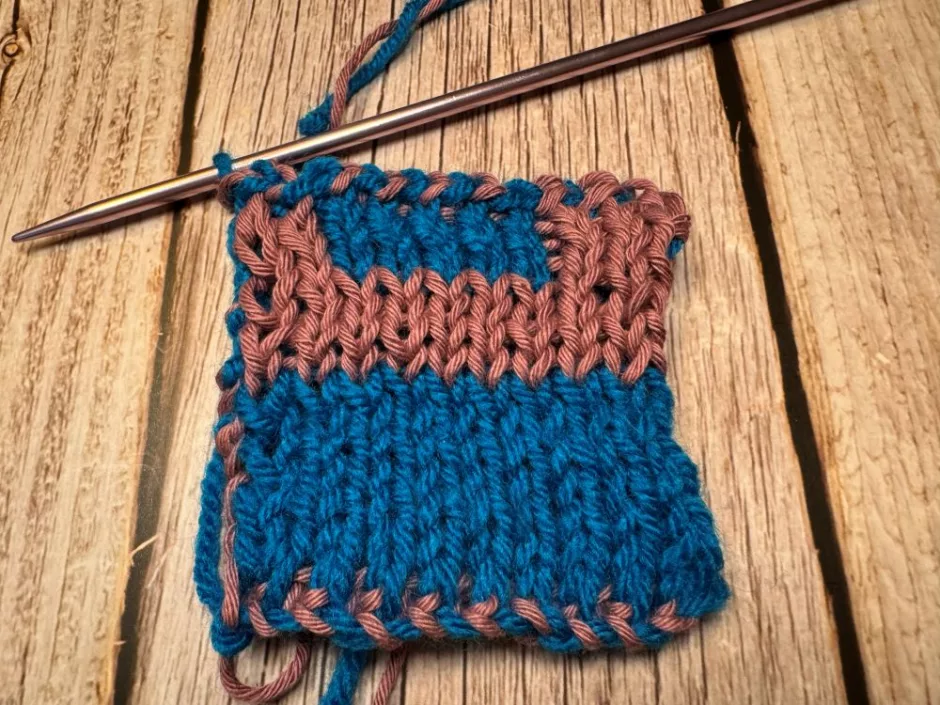
There are lots of options for binding off double stockinette fabric. Here I just did a standard bind off, working each stitch in the color it was in the previous row. This makes a kind of two-color chain that’s similar to the cast on I used.
You can play with different options and see what you like best, or if you’re knitting a project from a pattern in double knitting it may suggest the designer’s preferred methods for casting on and binding off to give the look they want.
2 Comments
Hey, thank you for the explanation 🙂 I just recently started knitting and was wondering how to add new yarn to the double stockinette stitch. Currently working on a scarf with one color but I would like to add stripes later on, with the same color on the front and back. No tutorial I looked at has shown that so far.
If you’re changing yarn but it’s the same color I think you would just change it the same way you would any other time you’re adding new yarn of the same color. I’d try to do it at the edge so you can just hide the ends in the middle instead of trying to weave them in the middle of a row. (Or if it’s wool do a felted join.) If you’re changing to a new color, just start it as usual at the beginning of a row (and if you’re changing colors on both sides at the same time it would be the same, just work the one side stitches in one color and the other in the other as shown here).