Affiliate links may be included for your convenience. View our privacy and affiliates policy for details.
Learning how to knit with double pointed knitting needles is often the first exposure knitters have to knitting in the round. While it’s not the easiest method to learn for circular knitting, it does come in handy to know how to do it.
What Are Double Pointed Knitting Needles?
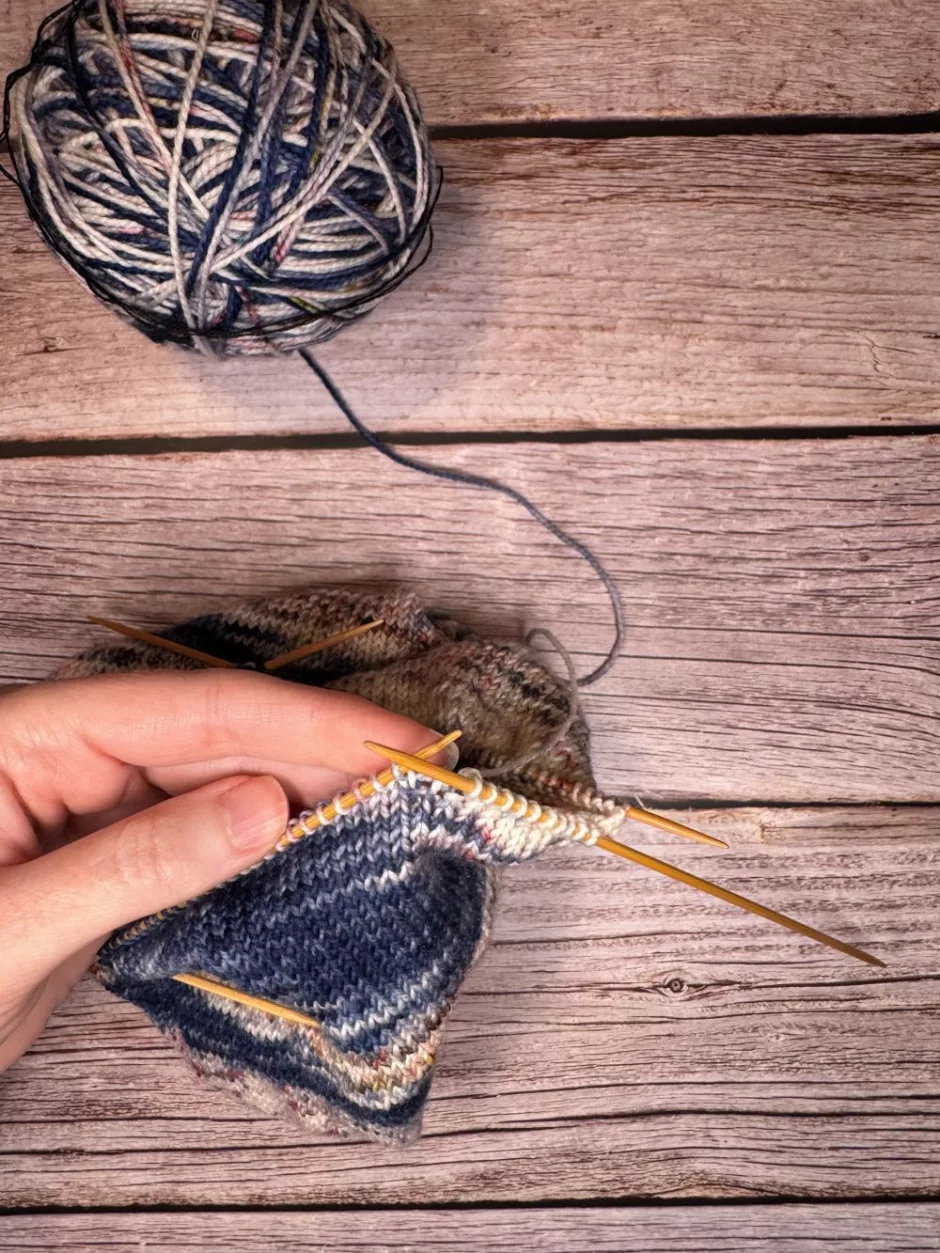
Double pointed knitting needles, also known as DPNs, are generally short knitting needles that are straight and have points on both ends. They can be made of the same materials used for straight or circular knitting needles, including wood and bamboo, aluminum and plastic, to name a few.
You can buy one size knitting needle at a time (they’re typically sold in sets of four or five needles) or buy a set of DPNs with several sizes at once.
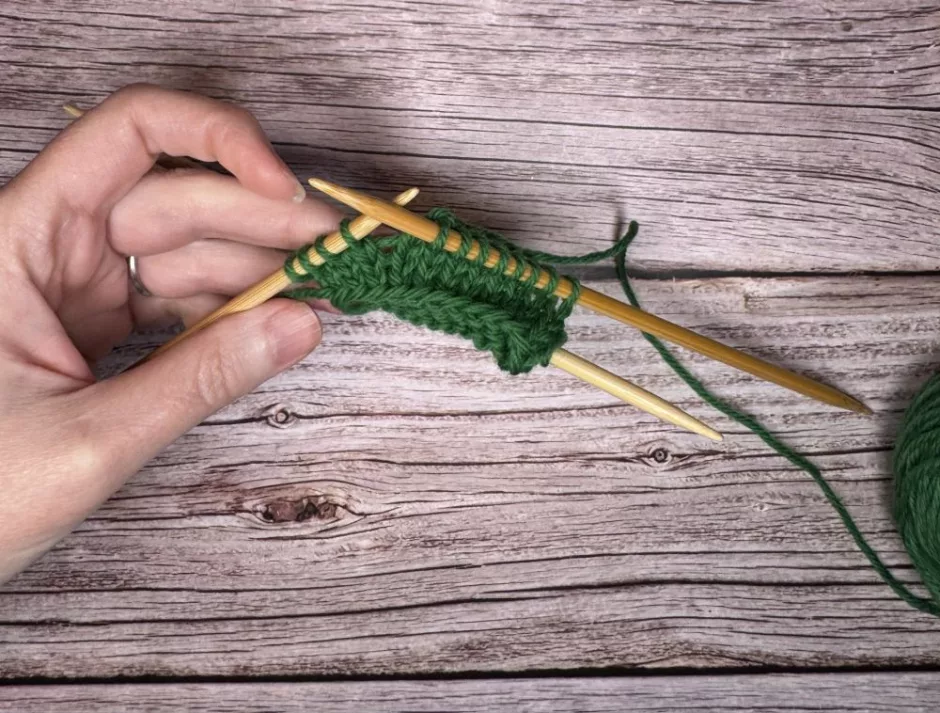
When you knit with double pointed knitting needles, the stitches are distributed on a few (usually between two and four) knitting needles and you have an additional needle to knit with. As you work the stitches from one needle to another, then you start knitting with the empty needle on the next needle with stitches.
The potential issues with double pointed needles are that they can be awkward to knit with, stitches can slide off the needles while you’re knitting or when your project is at rest, and sometimes you’ll get laddering, which is where you see a strand of yarn between the stitches where you change needles.
How to Knit with Double Pointed Knitting Needles
Still, knitting with double pointed needles is a good option for some projects. This is the needle configuration used in a lot of sock knitting patterns, for example (though you can of course use any needles you like regardless of what the pattern says).
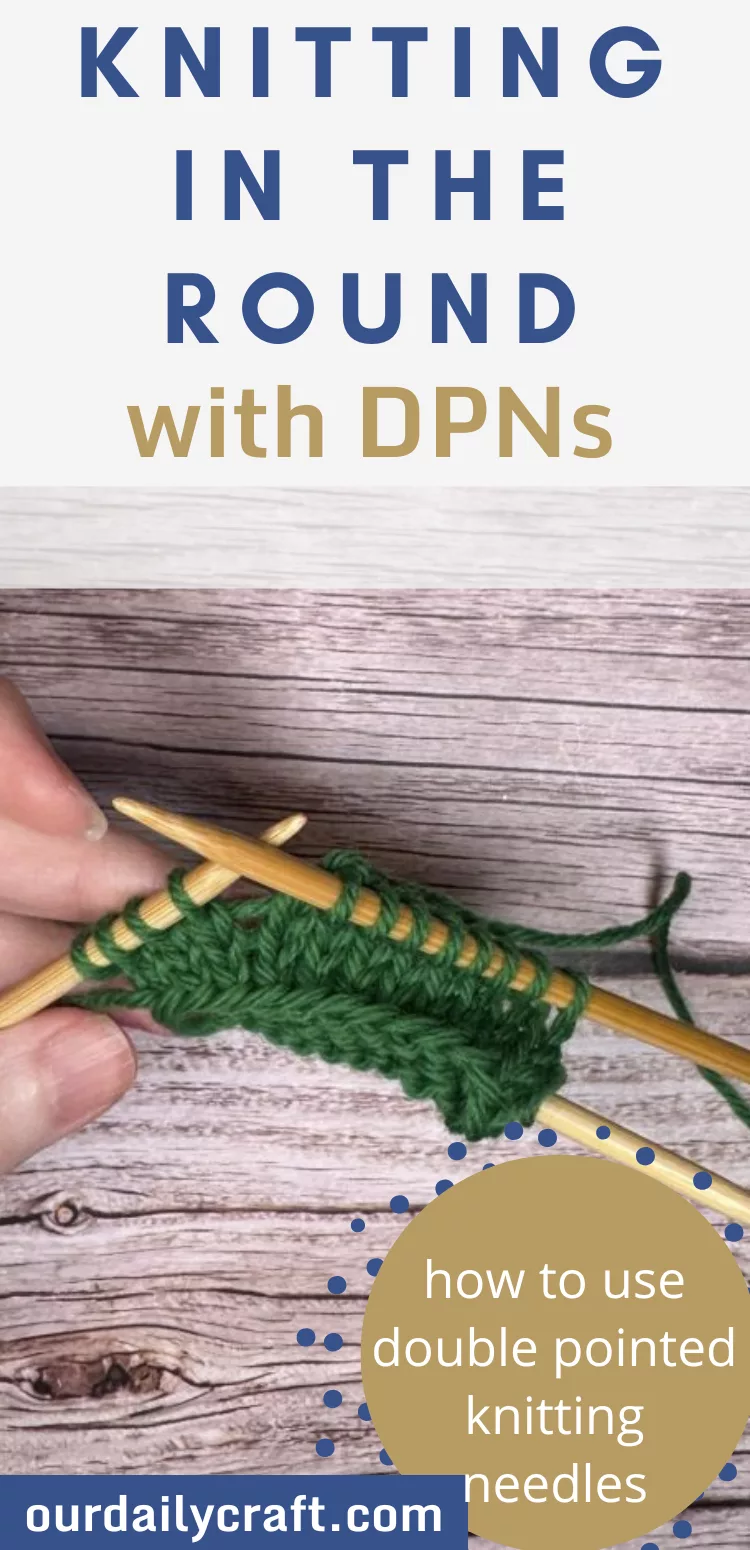
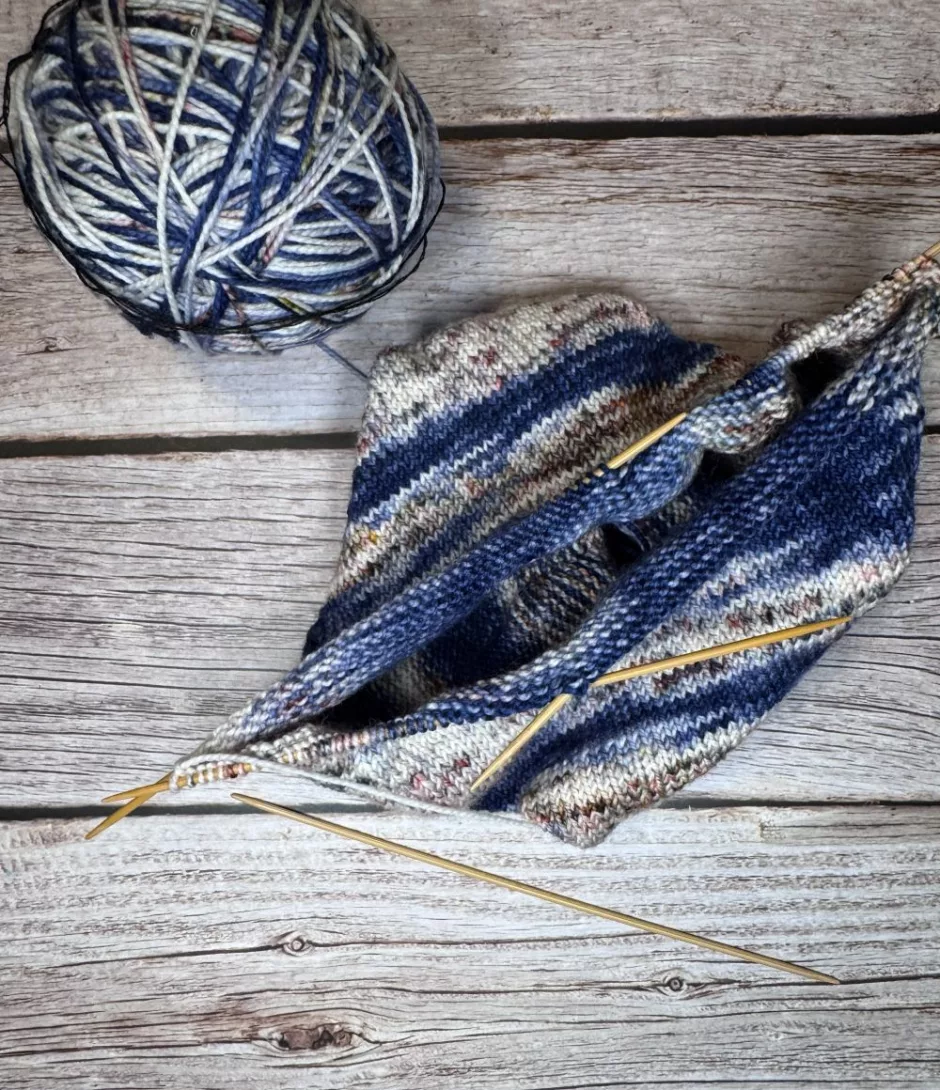
Here I’m using three needles, with the stitches on two needles and knitting with a third. If you are using more needles, the process is the same.
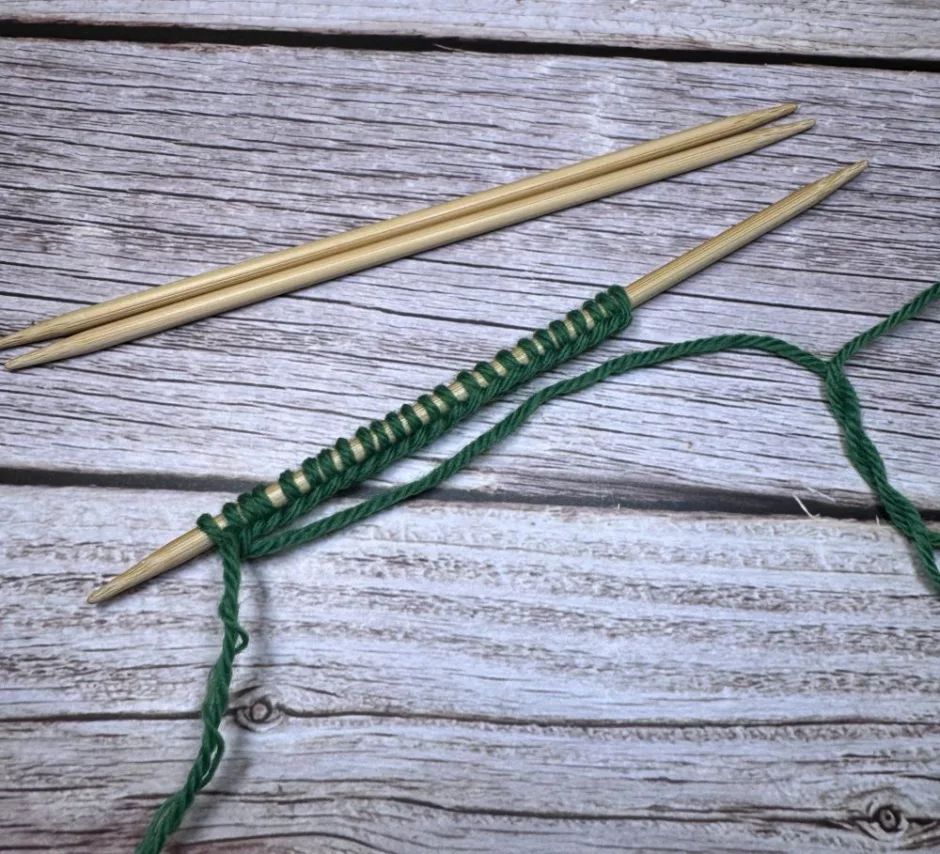
Cast on your stitches onto one needle. I have 24 stitches.
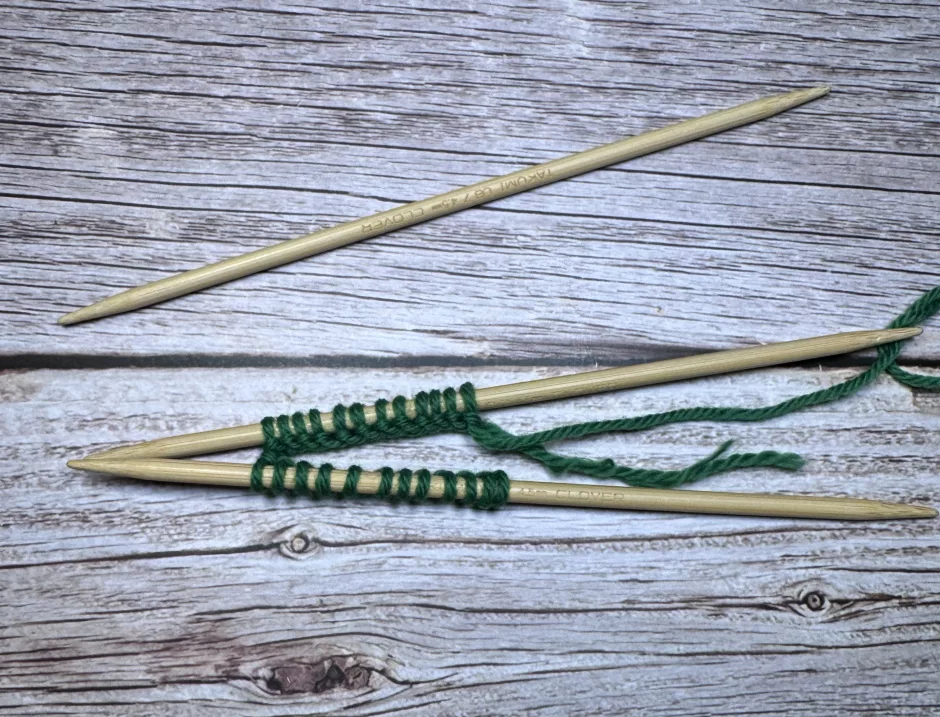
Divide onto all but one of your needles by slipping stitches off on needle onto another. Slip as if to knit, and start from the first stitches you cast on.
It’s usually good to distribute them as evenly as possible. Sometimes a pattern written for DPNs will tell you how many stitches to put on each needle if they aren’t able to be distributed evenly or it doesn’t make sense for the pattern to do so.
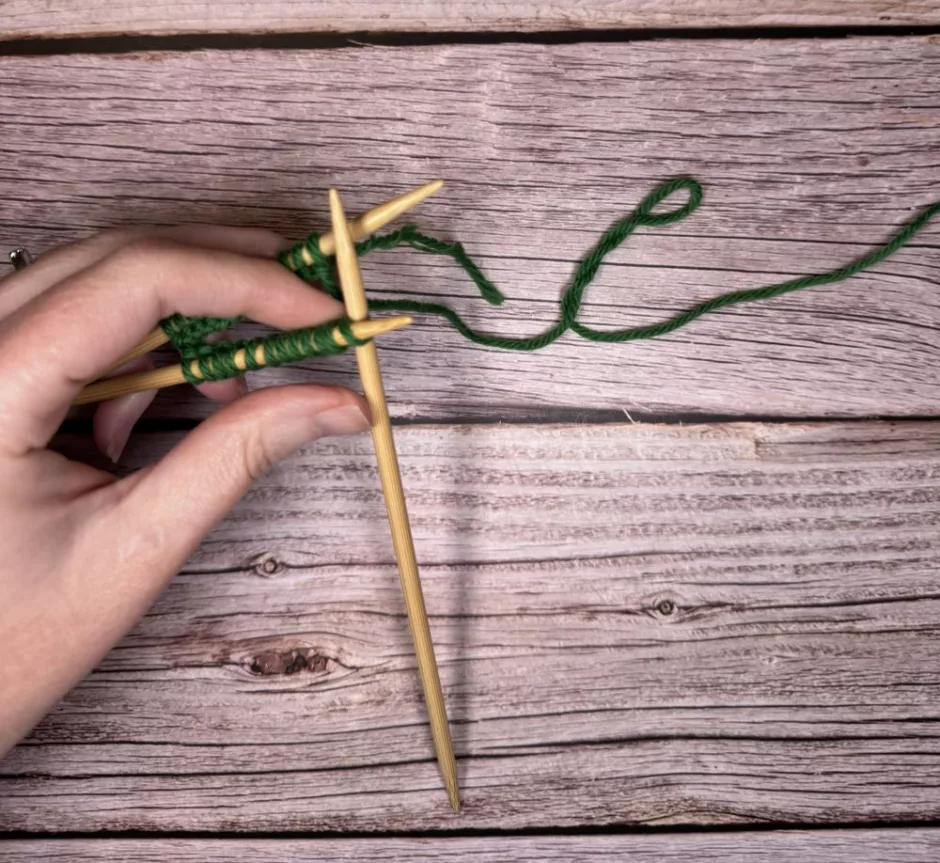
Turn your needles so the working yarn is at the back and knitting the first stitch on the first needle will join the stitches in the round.
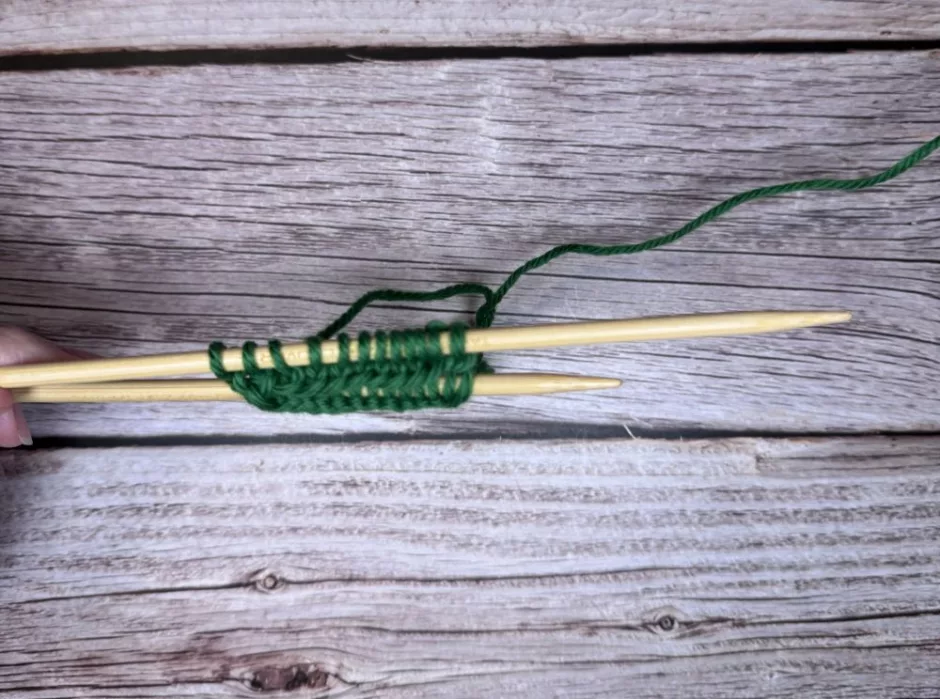
Knit across the first needle.
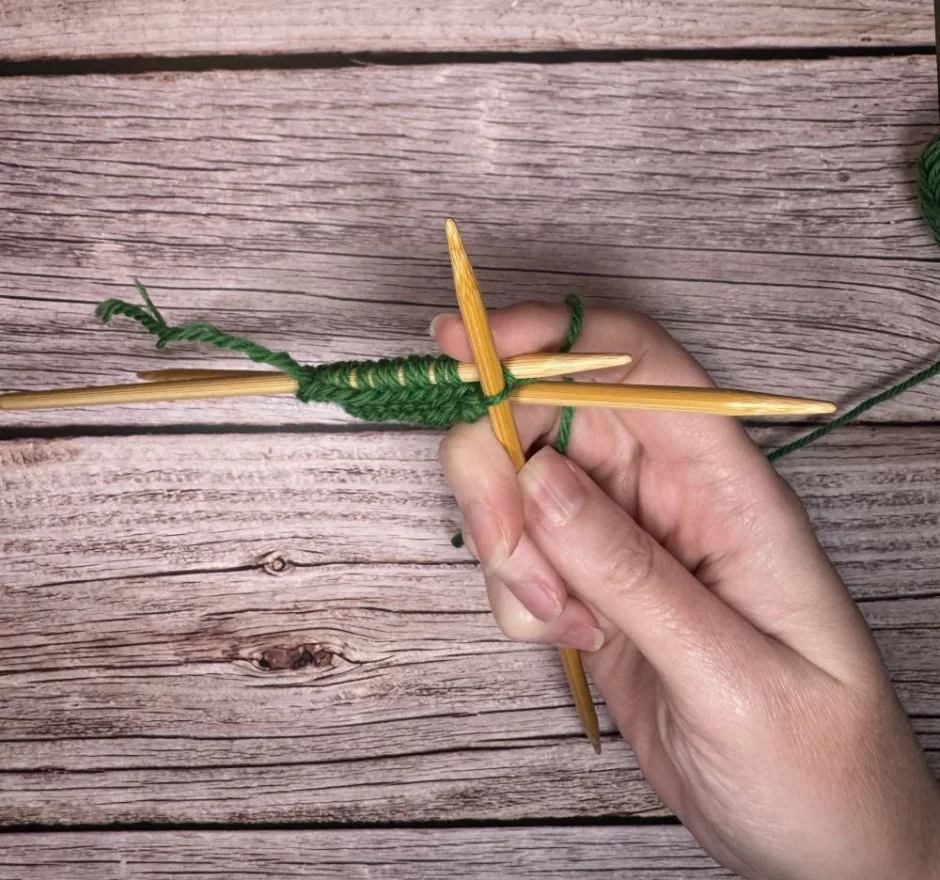
Turn the work counter clockwise to get the next needle where you can work the stitches. Knit onto the now empty needle.
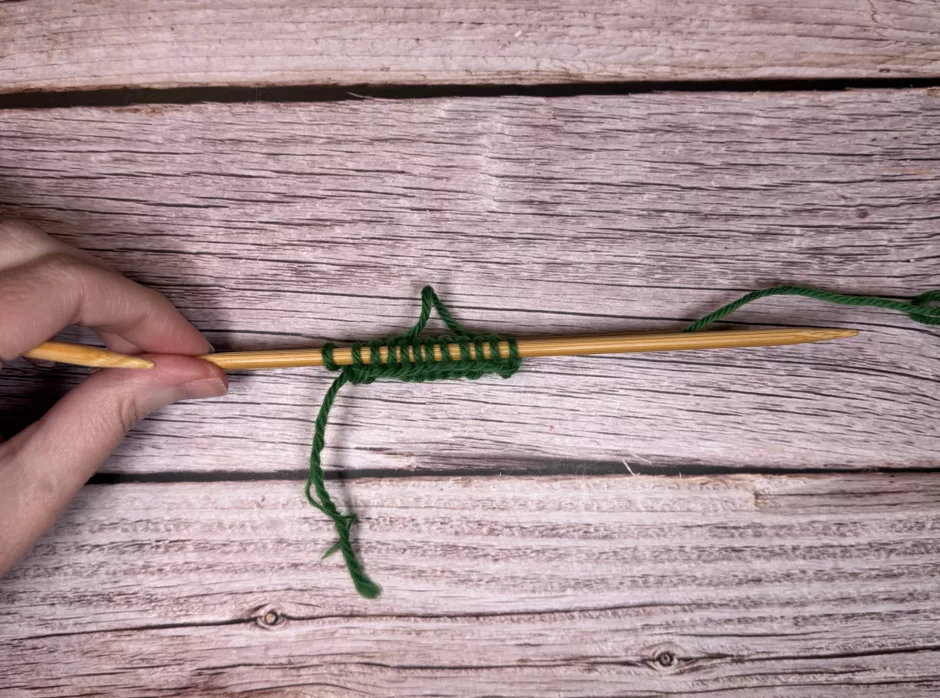
The tail of the yarn sits at the end of the row, but you can also add a stitch marker to mark the end of the row.
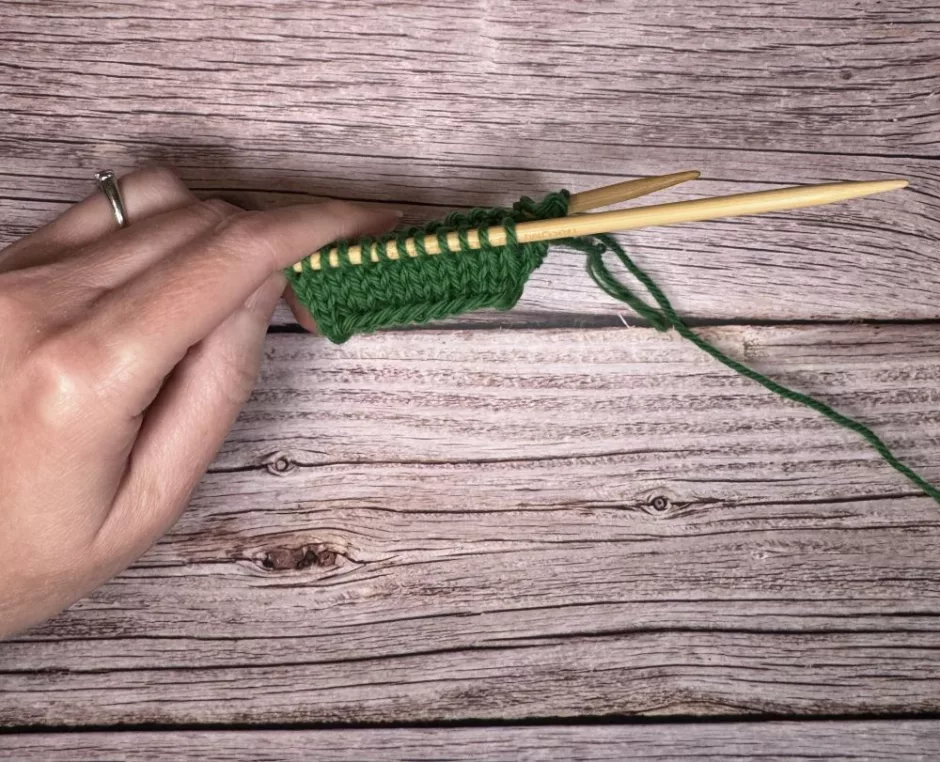
Continue in this manner to knit in the round with double pointed knitting needles.
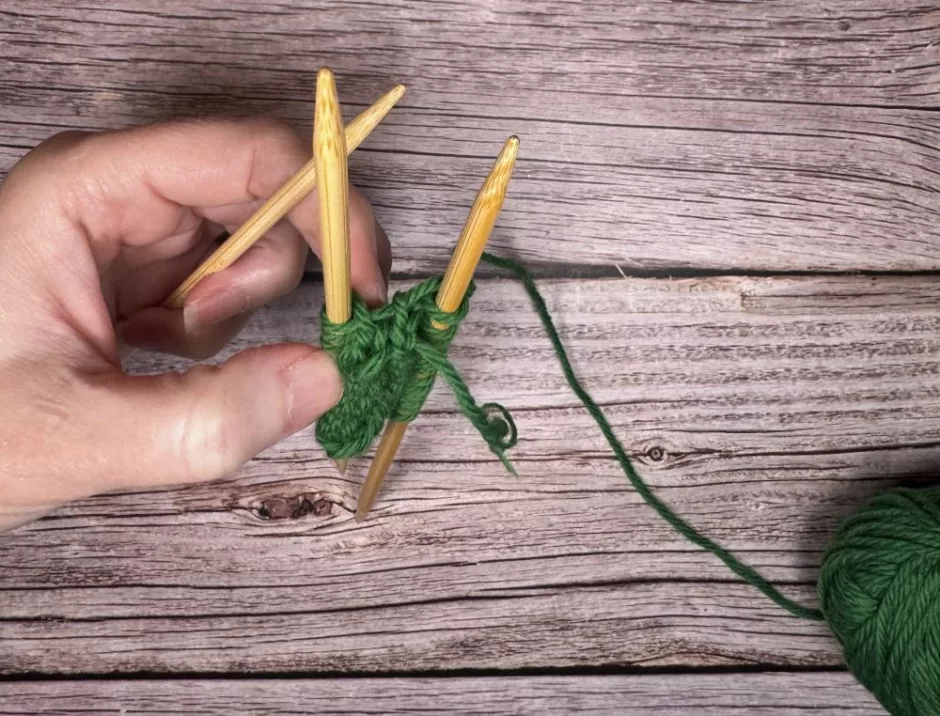
Here you can see that I’m not really ladders between my needles. The best way to prevent them is to pull the working yarn a little more tightly for the first couple of stitches on each needle.
Want to try a different way of knitting in the round? Check out how to work with two circular knitting needles and the magic loop method.