Affiliate links may be included for your convenience. View our privacy and affiliates policy for details.
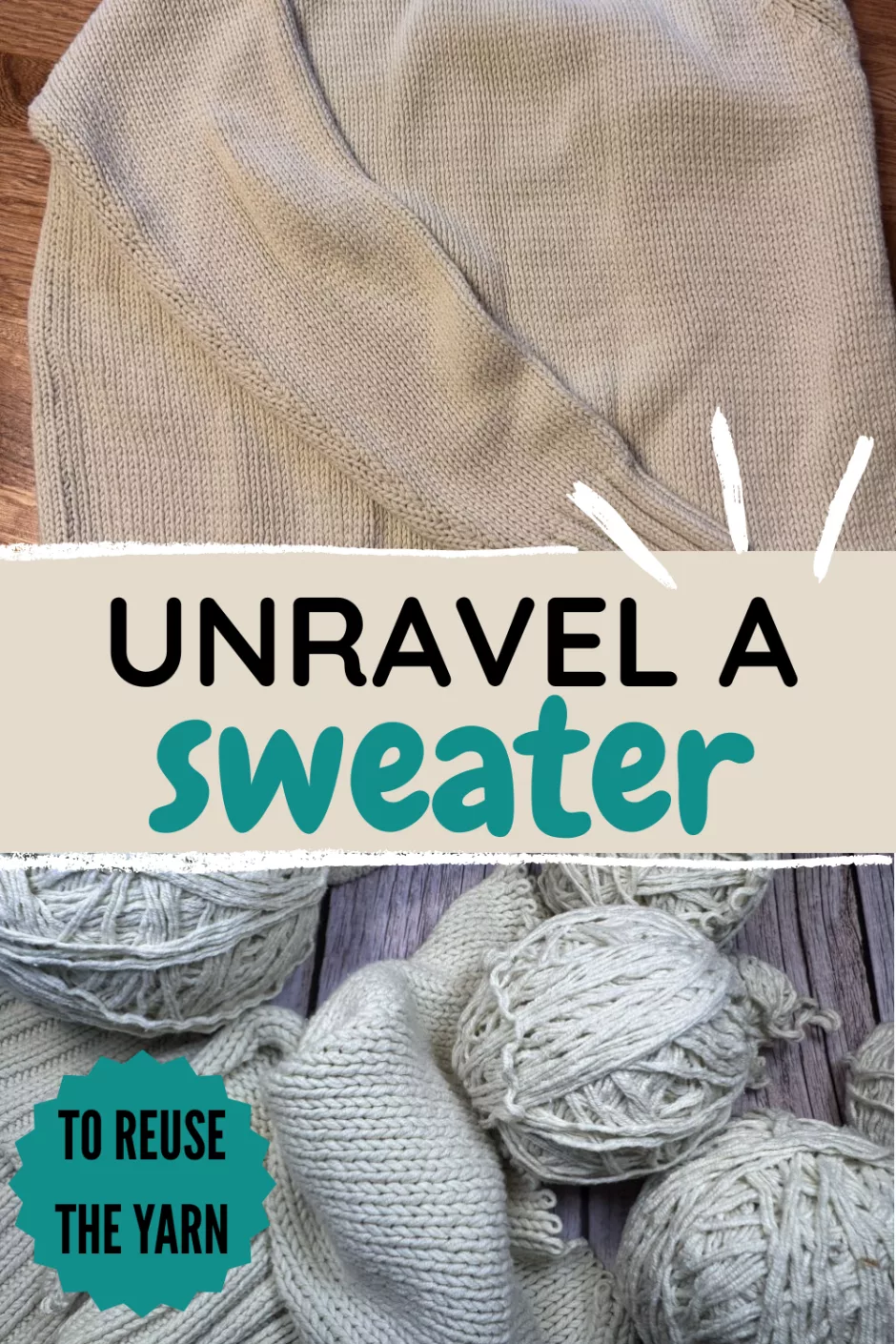
If you have a sweater you’re not wearing or buy sweaters from the thrift store to reuse the yarn, here’s how to unravel a sweater for yarn.
I’ve written before about how to take apart a sweater you knit, and the process is basically the same when working with a store bought sweater, but there are some things to look out for that might be a little different.
Choosing Sweaters to Take Apart
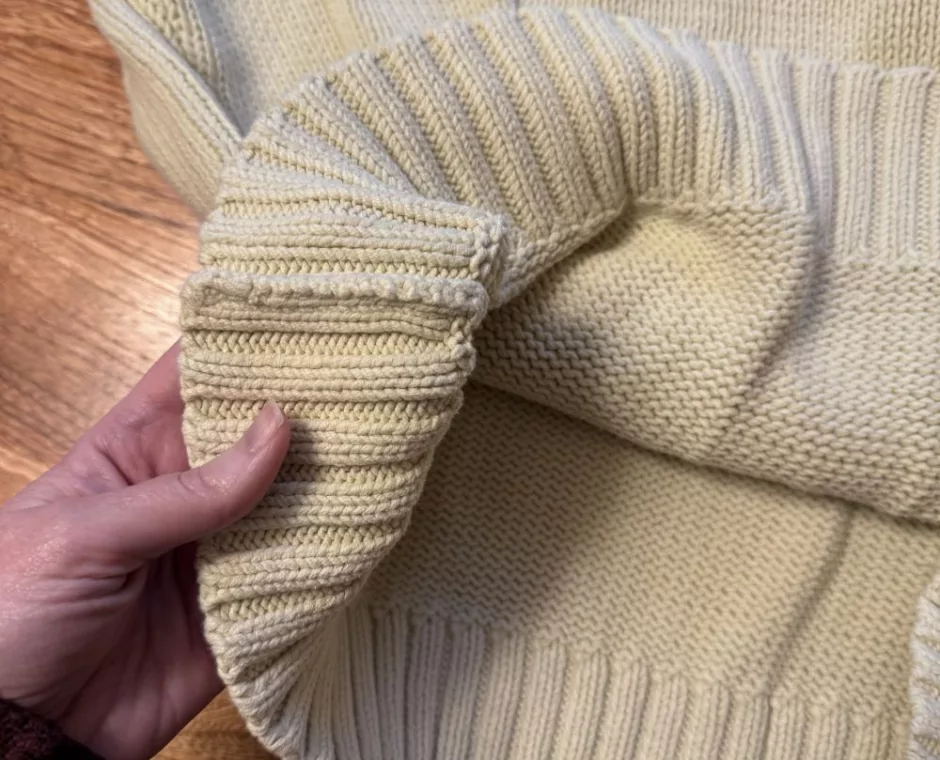
Before you unravel a sweater for yarn, it pays to take a closer look at what you have. Look at the seams inside the sweater you’re considering unraveling. If you can see that the seam is sewn in and there are knit stitches showing in the seam, that’s a good sign.
In this case you’ll be able to pick out or cut the seam and come away with separate whole pieces you can unravel.
Some fast fashion sweaters might have serged seams on the inside (more like a T-shirt), which will be harder to remove and more damaging to the fabric underneath.
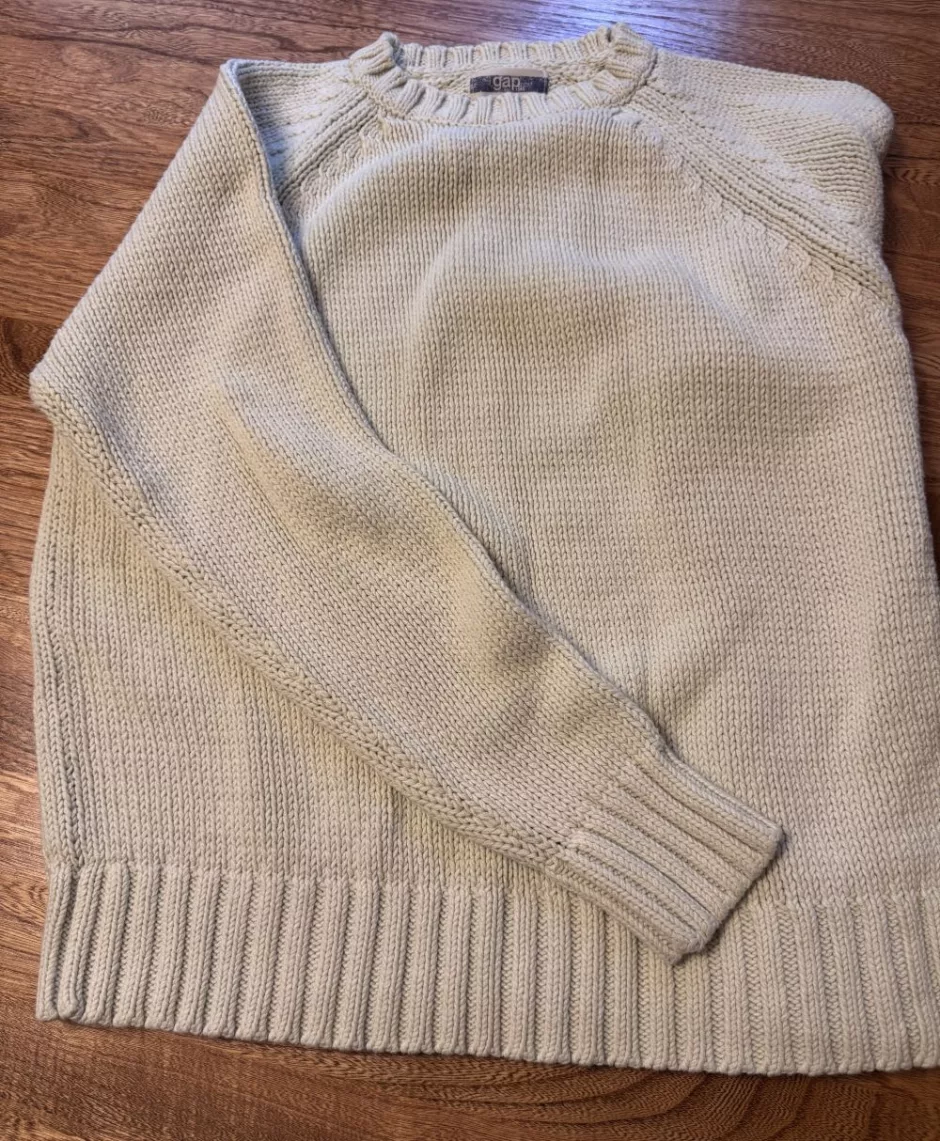
The sweater I’m taking apart for this tutorial is a men’s size medium raglan crewneck from the Gap, probably early 2000s vintage. It is 60 percent cotton and 40 percent acrylic.
How to Take Apart a Sweater
When I’m planning to unravel a sweater for yarn, I like to start by removing the side seams.
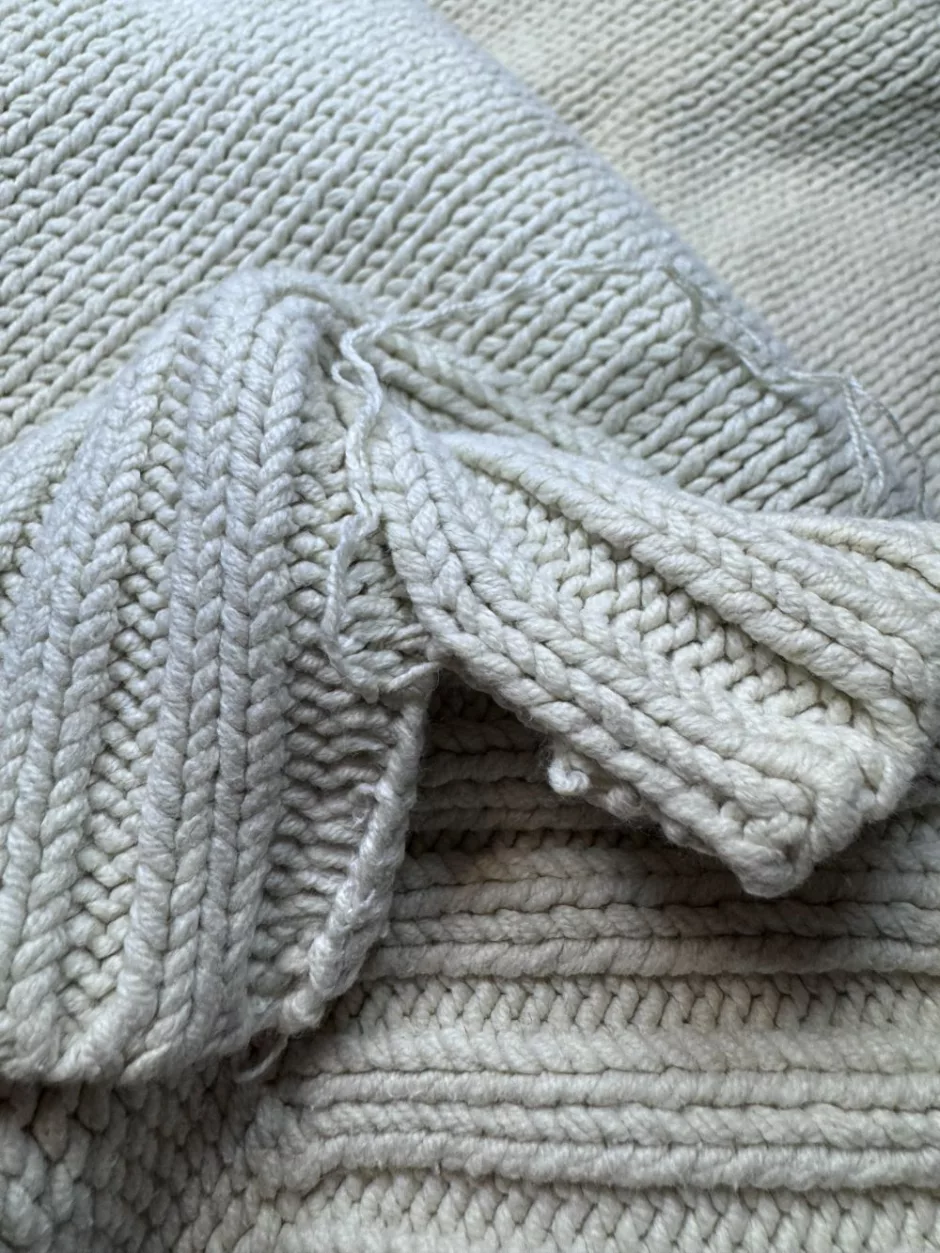
Here I started picking out the seam stitch by stitch, but as you can imagine this is a tedious process and you’re probably not going to want to reuse that yarn anyway since it won’t be very long and had a lot of strain on it in the original sweater.
Also in my case this yarn is really two strands of yarn held together (not really even plied) so they didn’t always pull out evenly and it just didn’t seem like yarn I wanted to reuse.
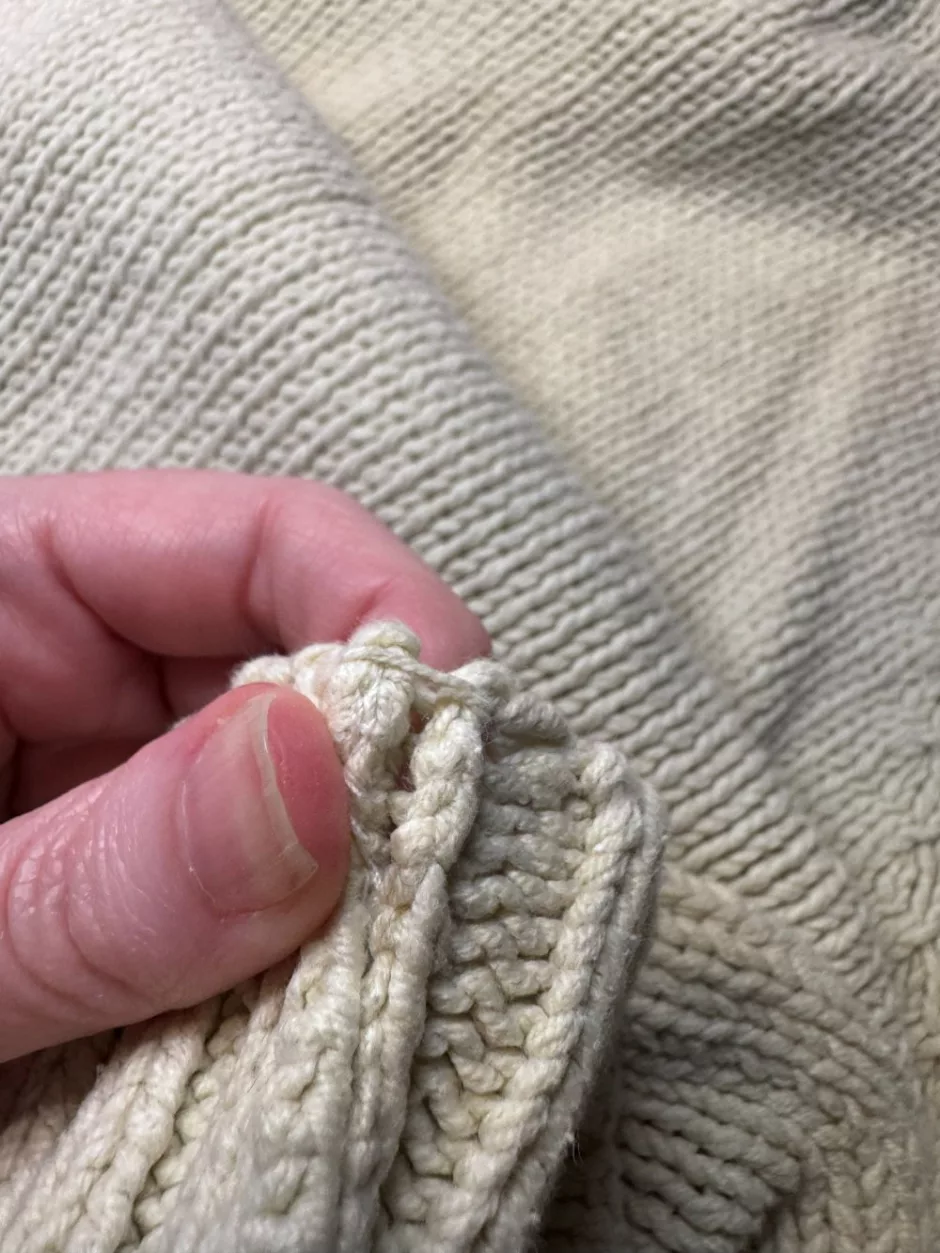
Because of that, on the second side seam I decided to just cut the pieces apart by gently pulling at the seam and cutting the yarn I could see holding the pieces together.
This is messier, but a lot faster, so do it whichever way you like.
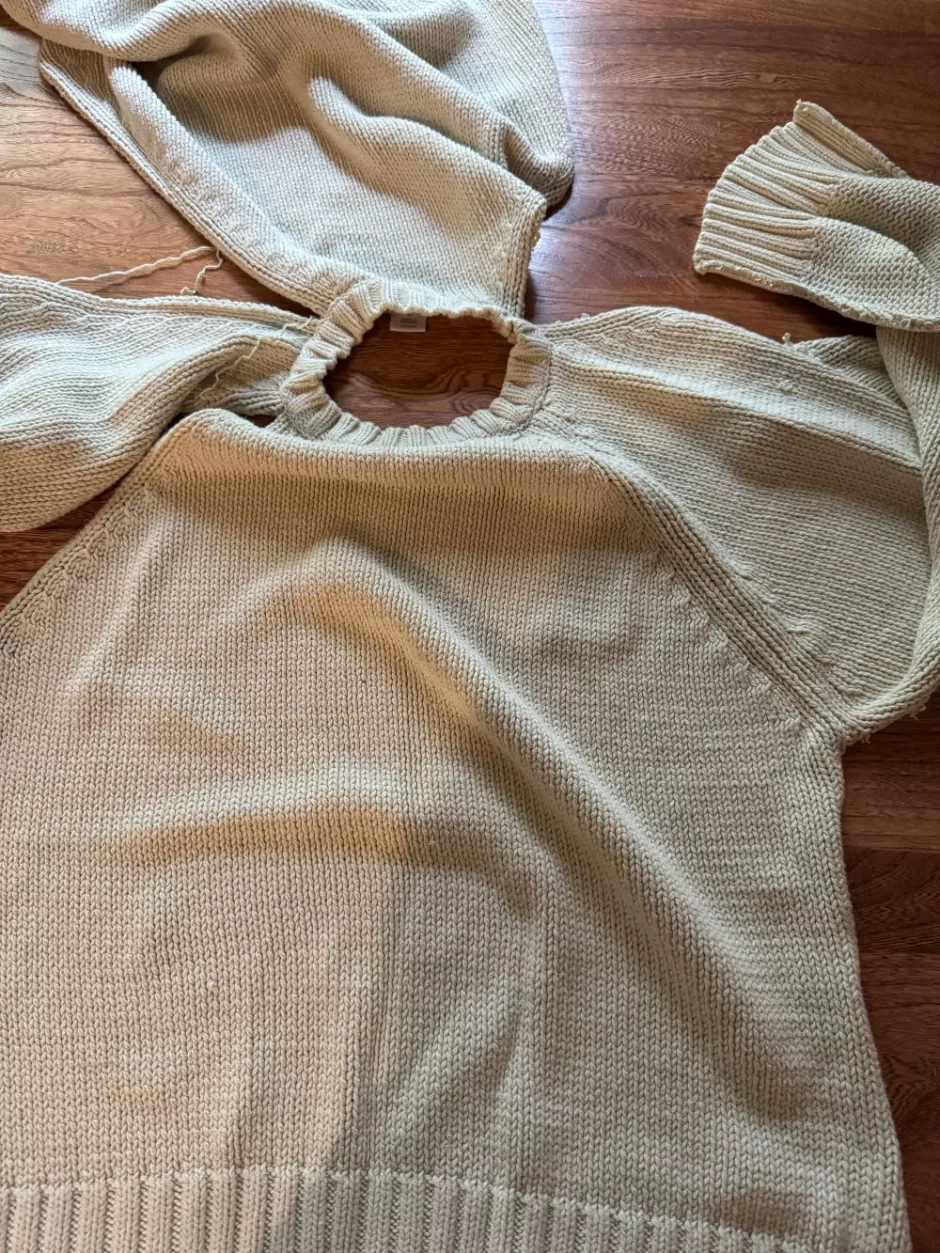
Because this sweater was a raglan, pulling out the side seams got us all the way to the neckline.
Next up, remove the seams from the sleeves the same way.
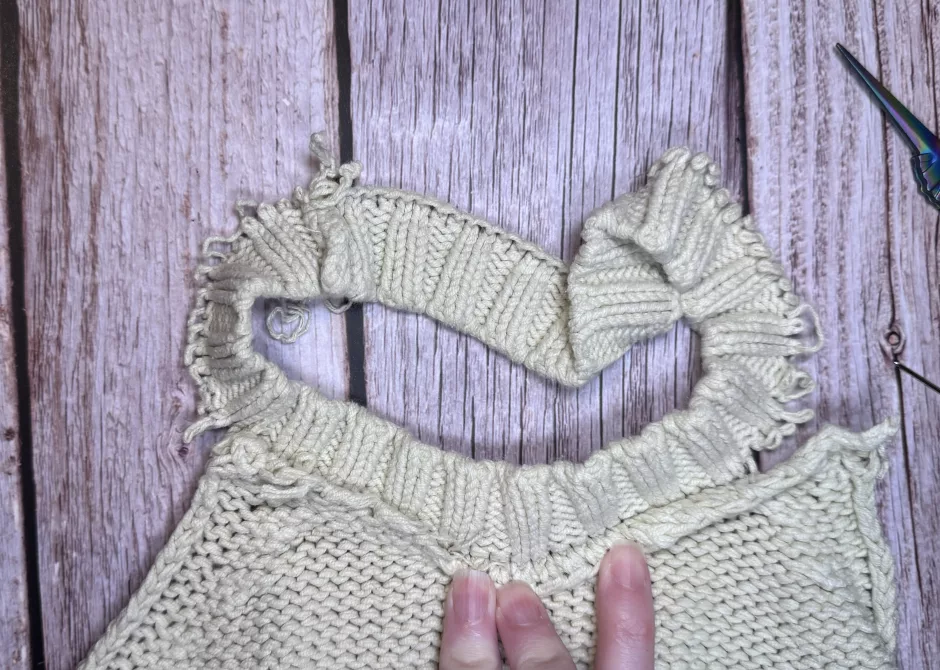
The neckline was a bit of a mess to undo, mostly by picking but there were actually several seams up there and the fabric from the sweater pieces wasn’t sewn in as evenly as it was on the sides. What your sweater looks like and how it comes apart will be different, but side seams, sleeve seams, neckline is probably going to be the easiest way to do it.
Unravel a Sweater for Yarn
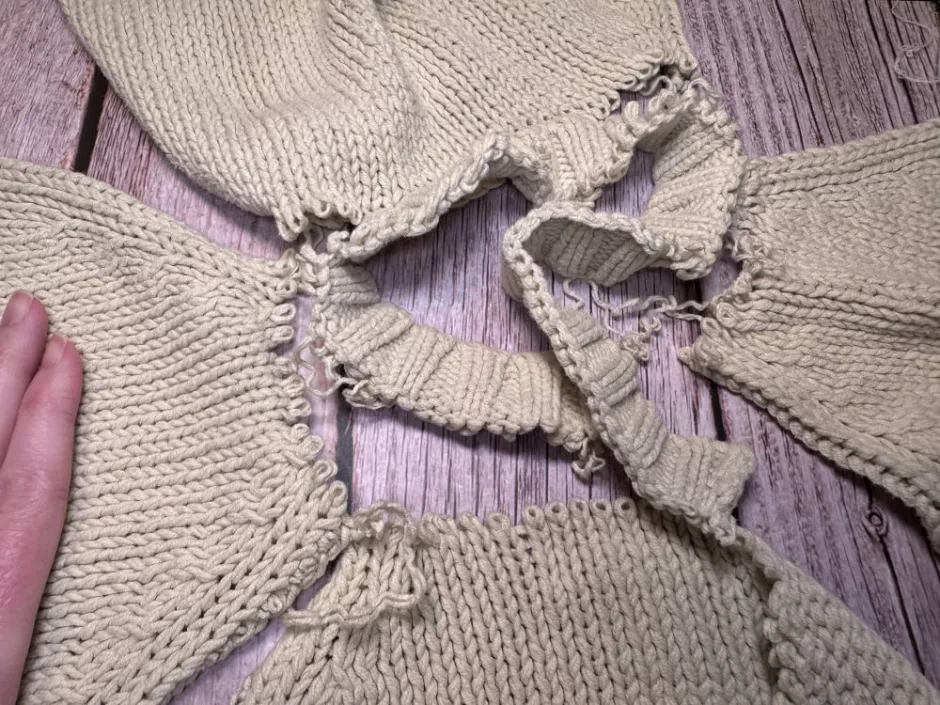
Now that you have all the pieces separate, you probably have some live stitches and can see how to unravel a sweater for yarn pretty easily from here.
Find the end of the yarn and begin to rip out the stitches, rolling the yarn into a ball as you go.
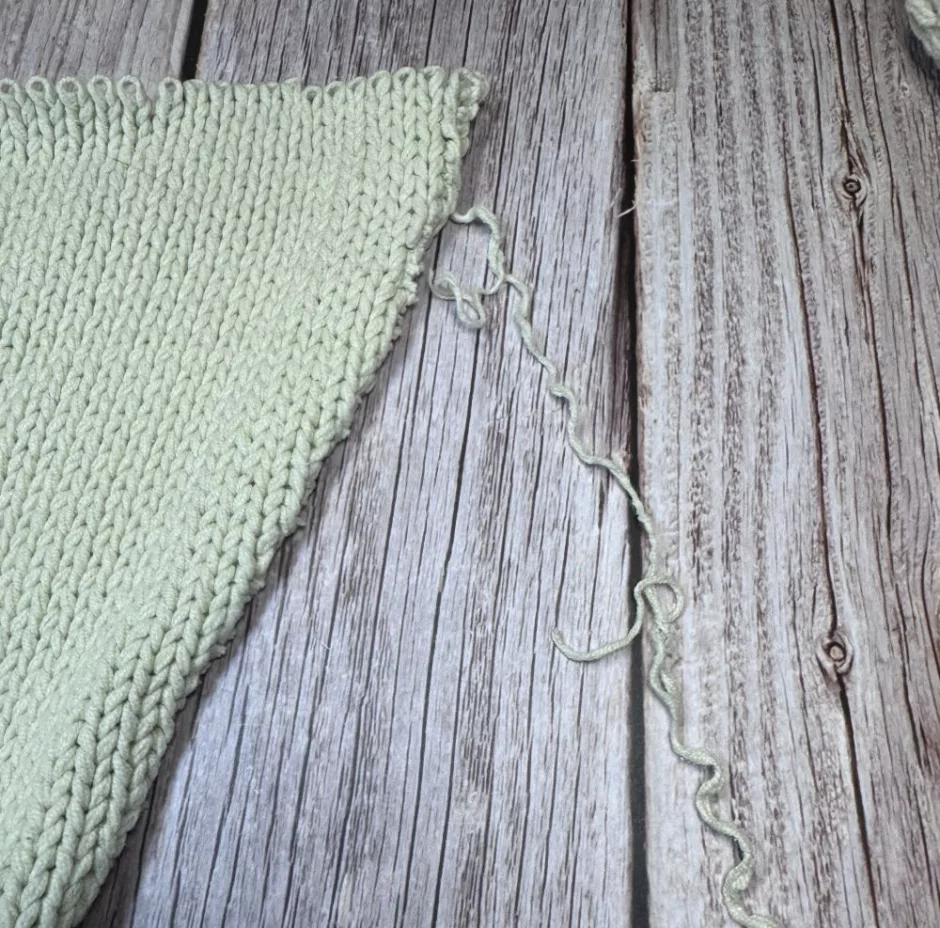
I happened to start with one of the sleeves, and it had a couple of places where there were knots, which I cut out. There were also places where one strand of my yarn got cut but not the other, so I cut those as well.
This sweater also has some edges (mostly in the ribbing) where a little sewing thread was used to reinforce the seams I guess. This may not be something you run into but just use a seam ripper or tiny scissors to cut any thread you see and do your best to unravel everything.
The neckline on this one was hard to tear out because of the thread and it broke apart into sections. I don’t know if I cut it (entirely possible) or if it was constructed that way. I’m not sure I’ll end up using it, but we’ll see.
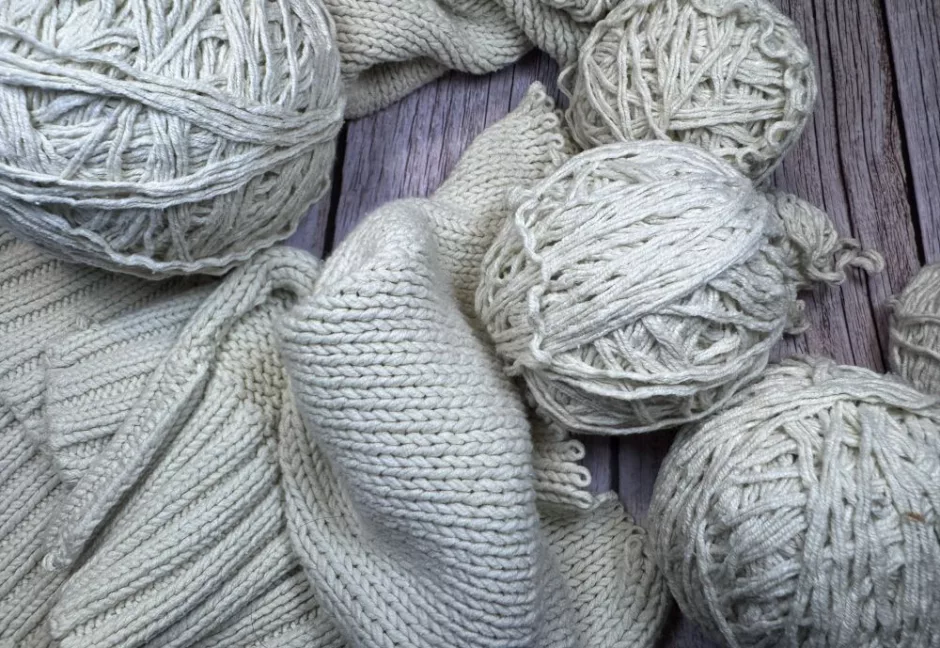
Determining What Yarn You Have
Because my sweater still had a label, I know the fiber content, but what about the weight? My impression in the sweater was that it was worsted, but as I unraveled it I thought maybe a heavy DK/light worsted.
I knew I wanted to try knitting it on a size 6 US/4 mm knitting needle.
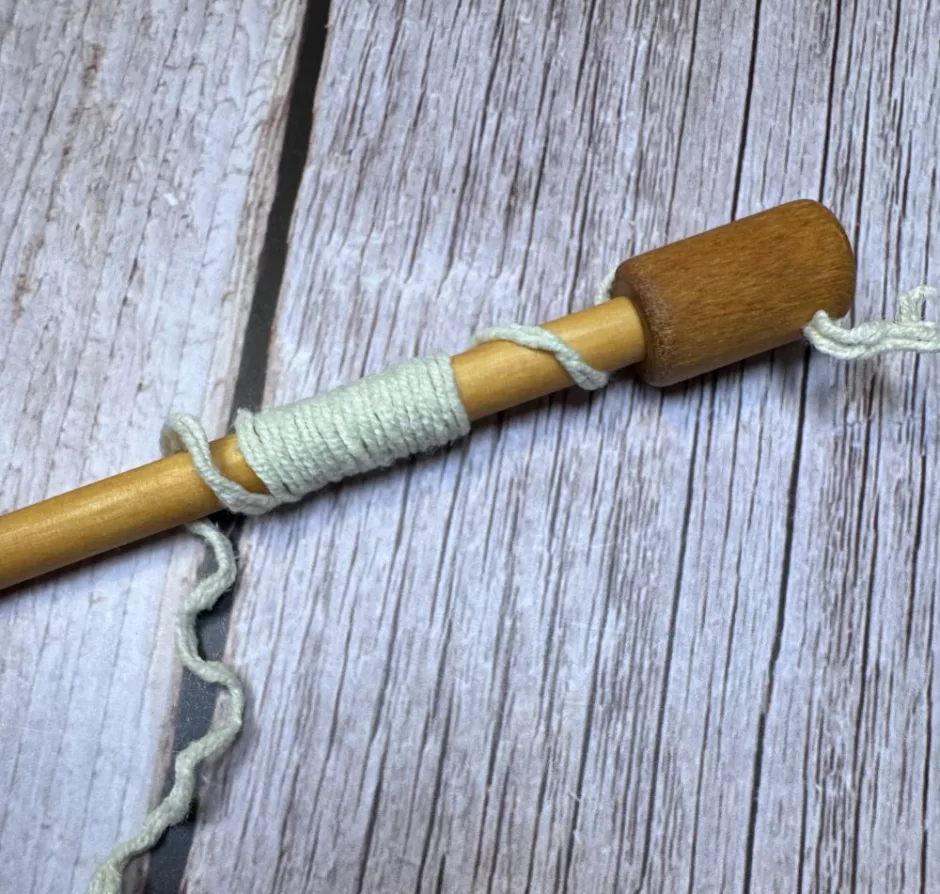
I also tested the wraps per inch and came up with 12, which would make it on the cusp of DK and worsted.
In addition to knowing the weight you’ll probably want to know the yardage that you have. Here’s how to figure that out.
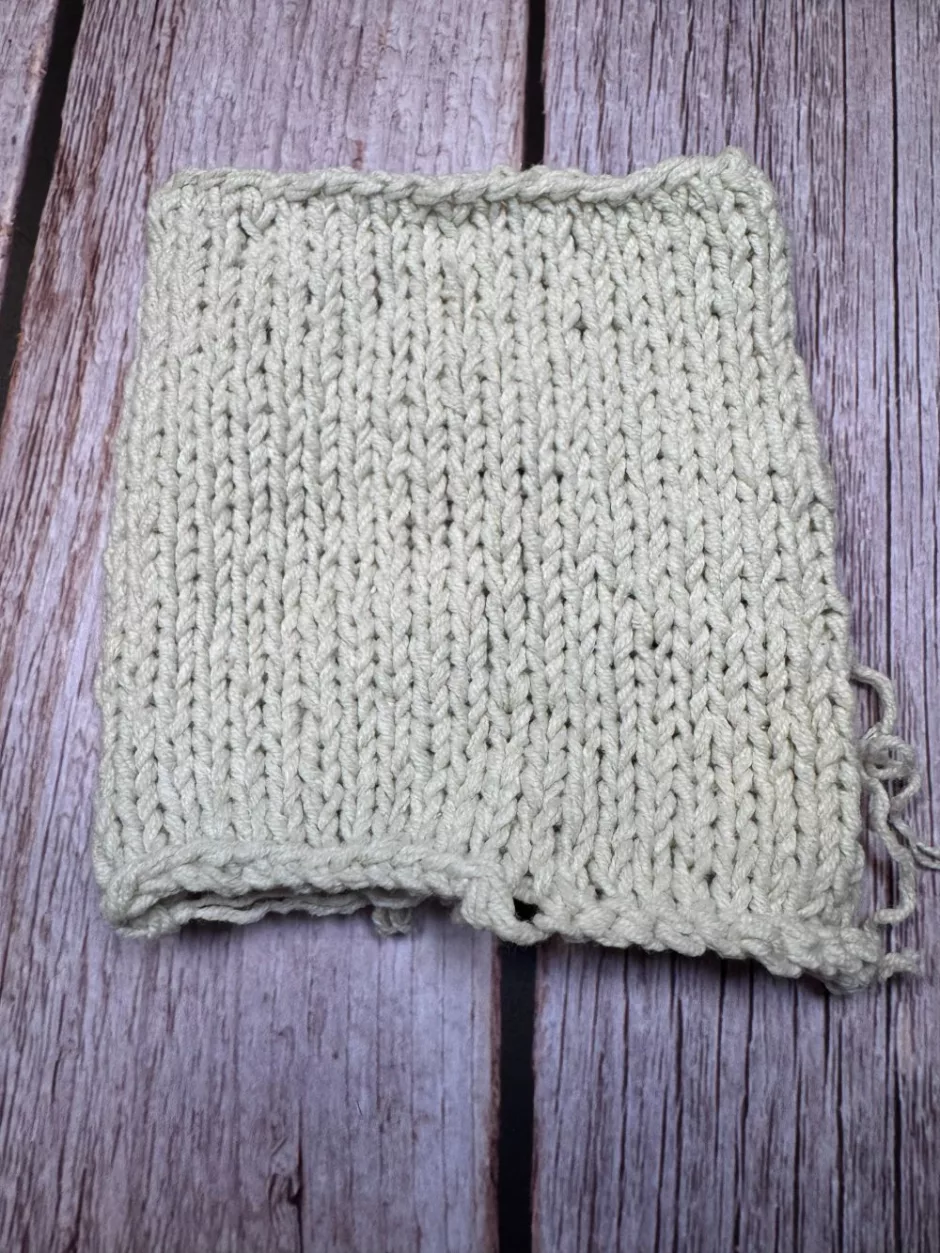
First, knit a swatch, since you’ll want to do that anyway. The little balls where you cut out flaws are great for this.
Measure the number of stitches and rows in four inches. You might also want to measure the full size of the swatch in inches/cm, and how many stitches and rows it contains.This can be helpful for calculating how much yarn you need for a project.
Wash the swatch as you normally would and allow to dry. Measure again to see if there’s any difference. Mine stayed the same, at 20 stitches and 27 rows per 4 inches/10 cm, and the full swatch is 24 stitches by 29 rows, and measured almost 5 inches/12.7 cm by 4.5 inches/11.4 cm.
Knowing that isn’t super useful for me because I knit my swatch as if I were working in the round so there’s a bunch of extra yarn on the back.
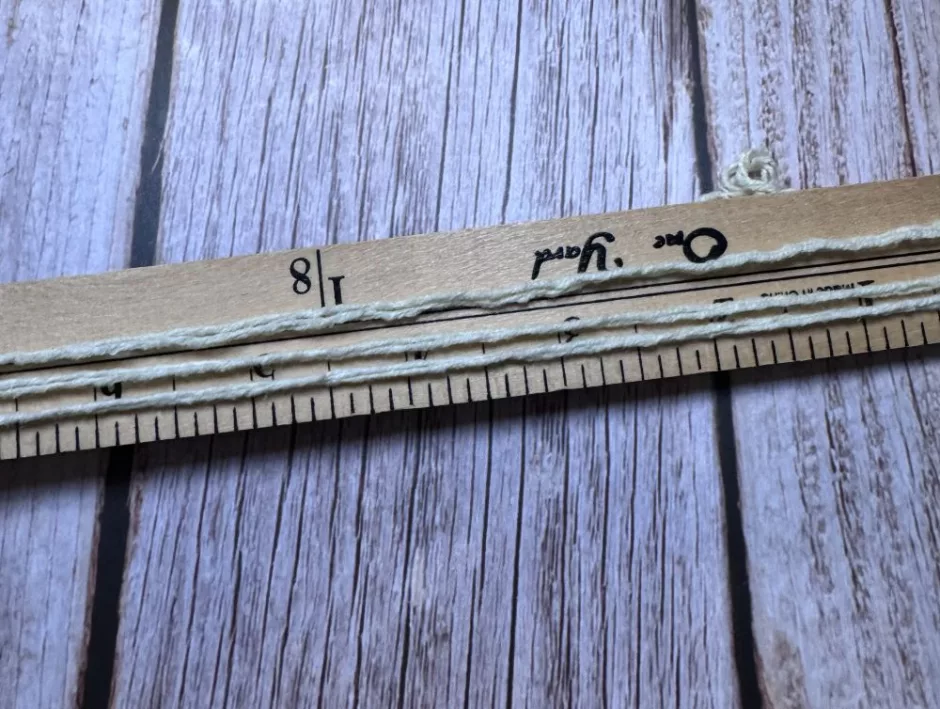
Weigh the swatch (mine is 11 grams) and then unravel the yarn and measure the yardage. Mine came out to 32.6 yards/29.8 meters.
Knowing that information you can determine there are about 3 yards per gram of yarn (32.6 divided by 11 is 2.9). My sweater weighs 533 grams, so that means I have about 1,546 yards of yarn to work with (533 times 2.9).
Should You Wash Your Yarn Before You Knit with it?
Another common question when you unravel a sweater for yarn is whether you need to/should wash the yarn before knitting with it again.
Used yarn holds the crimp of the stitches it was made into, which can change the texture of your knit fabric.
This is another reason to knit and wash a swatch because you can look at the fabric after its been washed and decide if it looks and feels good to you.
If you’re still seeing or feeling bumpiness, you can absolutely wash your yarn before you use it.
I decided mine smoothed out enough in the washing that I’m fine with it, but you may make a different choice.
Now that you know how to unravel a sweater for yarn, you’re ready to hit the thrift store (or your husband’s closet) to reclaim and reuse all the yarn.