Affiliate links may be included for your convenience. View our privacy and affiliates policy for details.
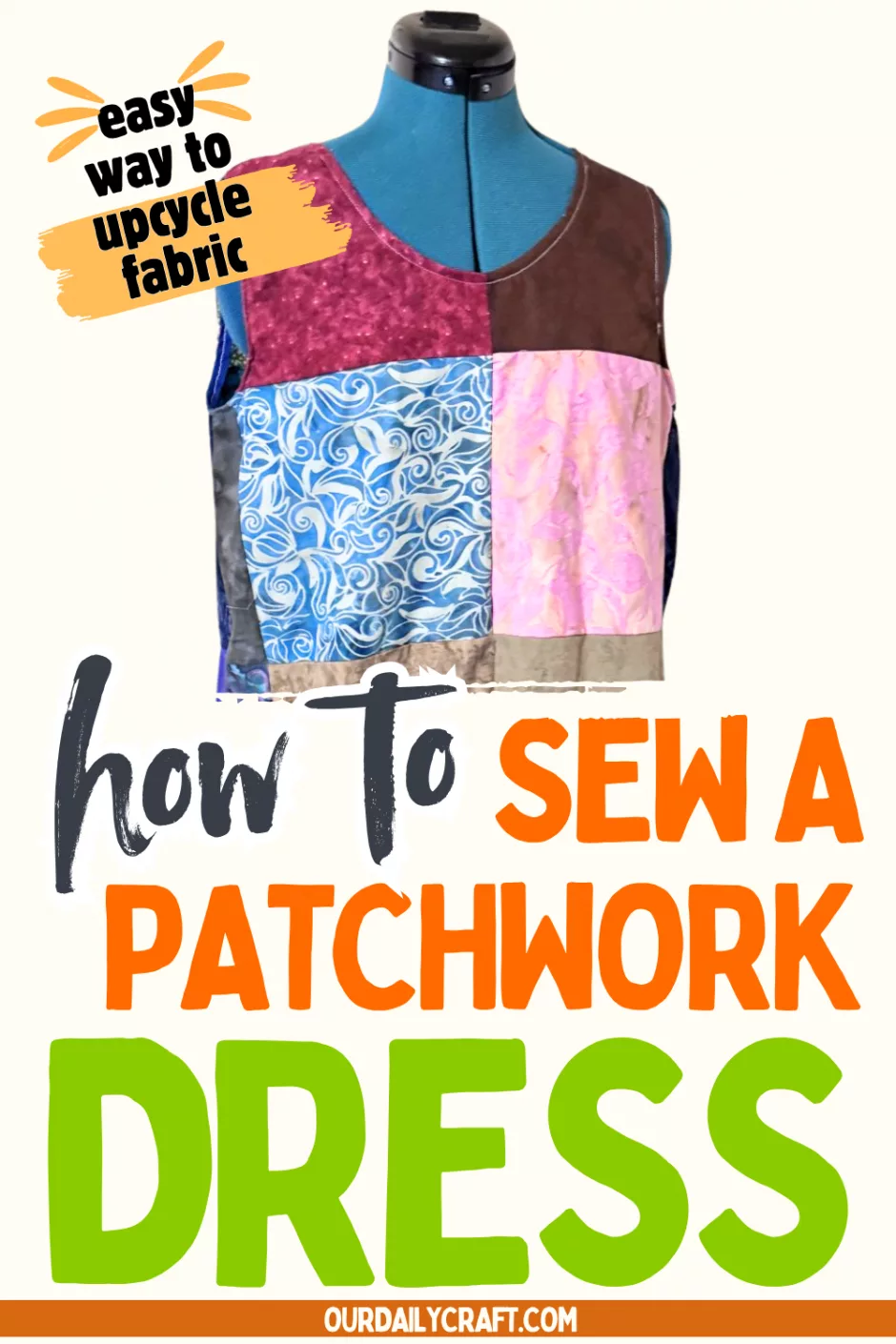
If you have a lot of large fabric scraps, knowing how to sew a patchwork dress is a fun and easy way to use a lot of them.
The Story of My Patches
A few months ago I went to an estate sale and the woman had an amazing craft room (or really a couple of rooms) with lots of fabric, old knitting magazines, notions and all sorts of crafty goodness.
One of the (many, if we’re being honest) things that caught my eye was a bag full of patchwork squares. Mostly batiks, from what I could see, there were different shapes cut out and sewn on top of squares with raw edges exposed.
I knew this fabric needed to be liberated by someone who would take good care of it, so the bag came home with me.
What I didn’t know until I opened it up was that about half the squares were just plain blocks without anything sewn onto them.
I’m still not sure what I want to do with the sewn blocks, but I knew I wanted to use the plain blocks to sew a patchwork dress.
Choosing a Pattern for a Patchwork Dress
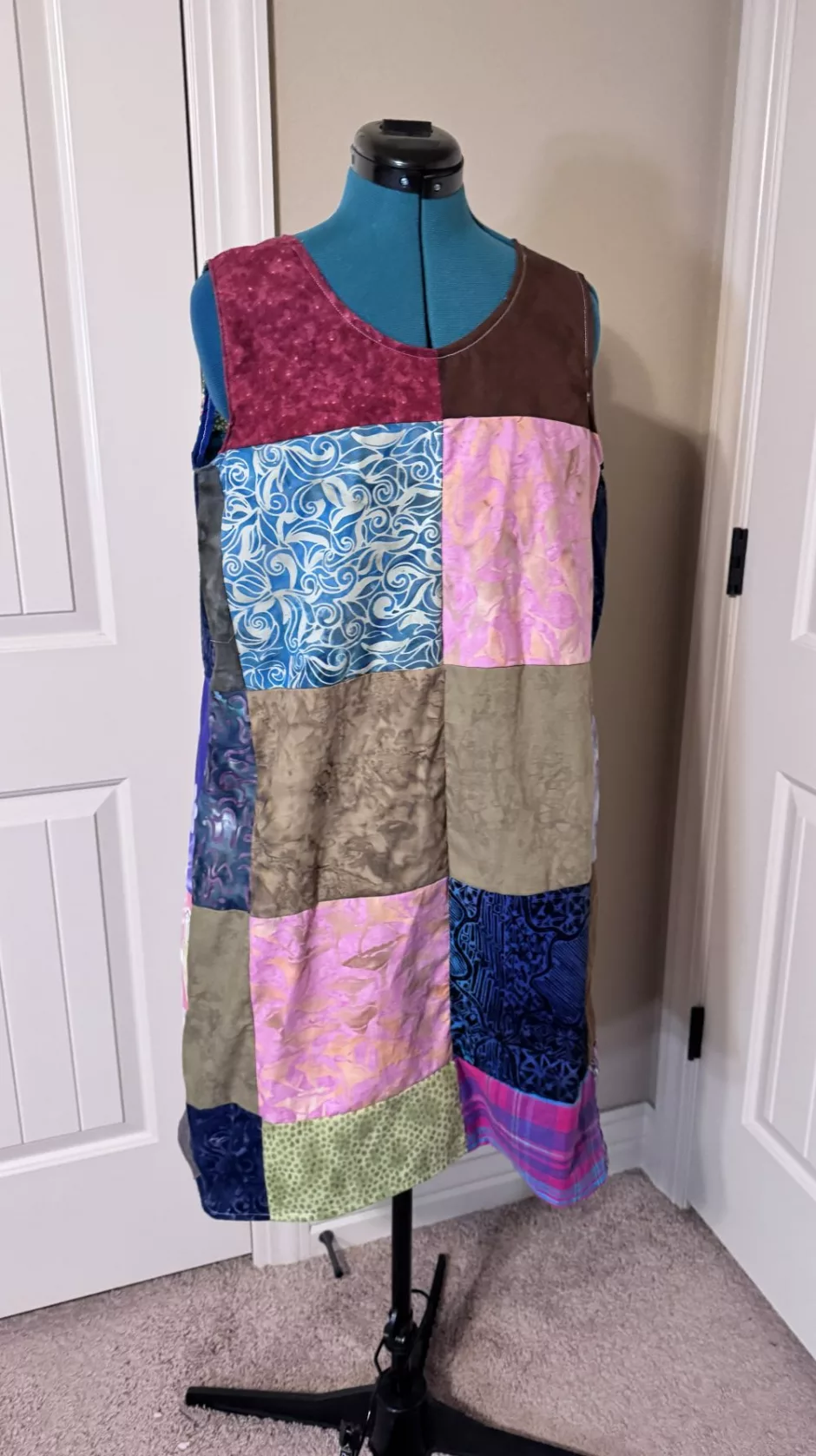
Of course you can use any pattern you like to make a patchwork dress, but for me, I think with the fabric being so busy it’s a good idea to choose a simple dress sewing pattern.
If you take a look at my post on dress sewing patterns, a lot of these would be good options. I love a shift dress or a tunic for patchwork fabric (that’s basically what I used), but a tiered dress could be fun, too, and I long to have enough patchwork fabric one day to make a kaftan.
For my patchwork dress I wanted something that could be front to back reversible because I might want to show off different fabrics at different times.
I ended up starting with the Dress No. 2 pattern from 100 Acts of Sewing (which you can buy direct, or if you have CreativeBug there’s a class on the dress that includes a copy of the pattern). I removed the sleeves and made it longer, continuing in an A-line style to the edge of my fabric, which ended up being a bit longer than I wanted my dress to be. More scraps!
Preparing Your Patchwork Fabric
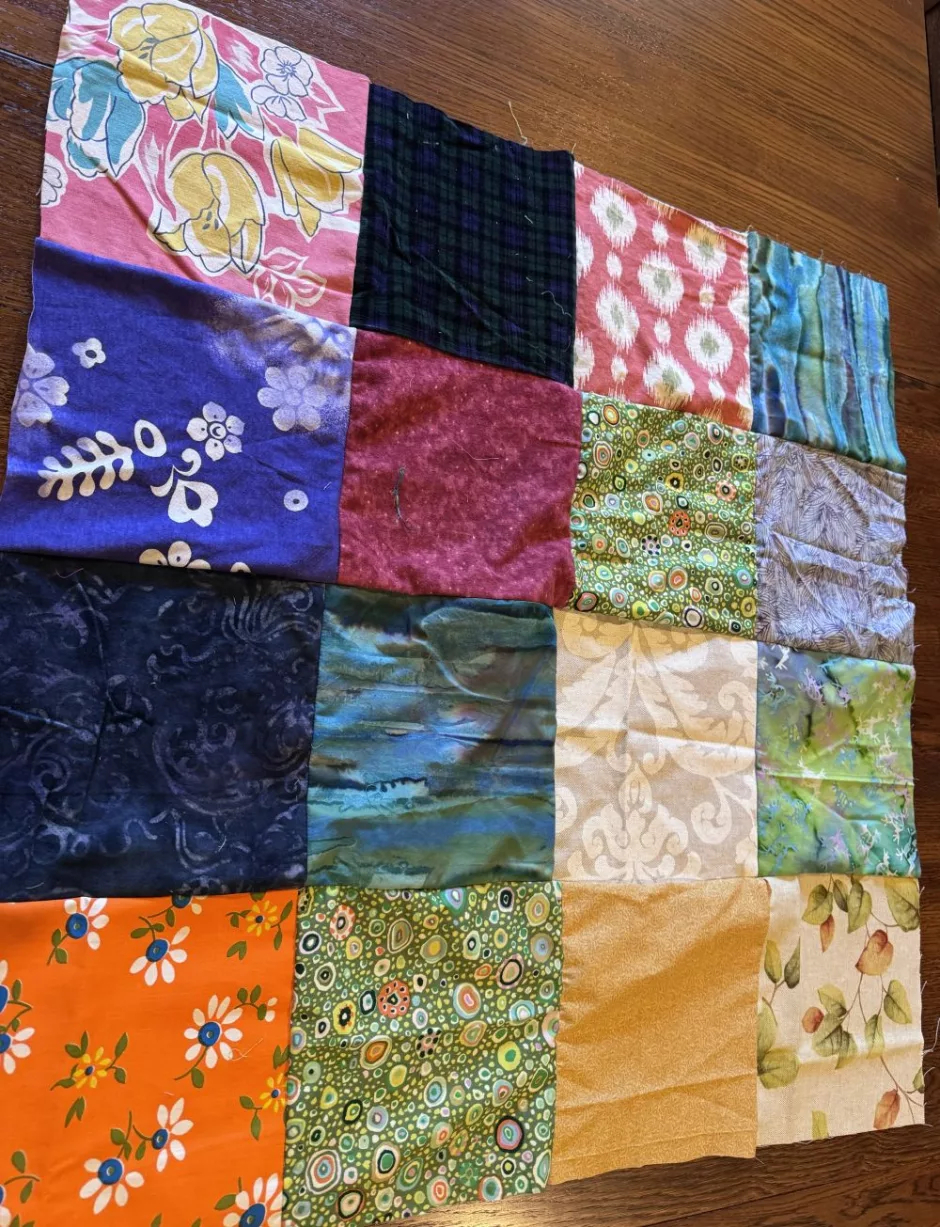
I usually have a rather haphazard approach to making patchwork fabric, but since I was starting with pre-cut blocks I just sewed them together into a big rectangle.
To be more specific I serged them together because I didn’t want to have to deal with finishing interior seams or losing fabric to seam allowances. For reasons I can’t explain, for this first part I only took videos, not photos.
Once I have the patchwork from the estate sale fabric made, I cut out the “front” of my dress and immediately realized I’d need another panel of the same size for the “back.”
A couple of the patches from the original piece were still whole, so I started with those and grabbed some of my own fabrics, as well as some other things I bought at the sale, and cut more squares the same size (these squares were about 9 inches/22.8 cm square for reference, but you can use whatever size you want).
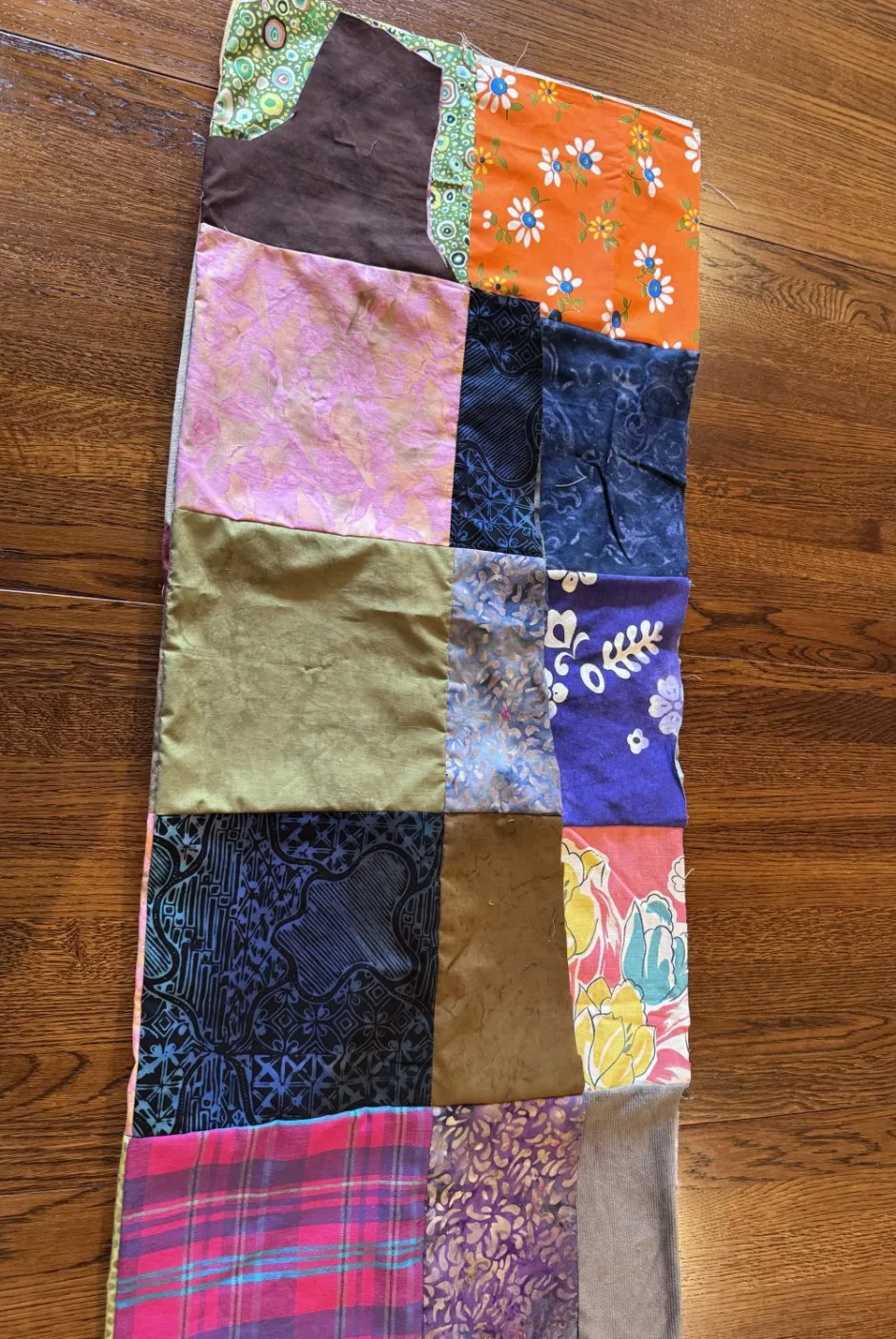
After sewing another panel I used the first dress panel as my pattern for the second one so they would have the same neckline, length and A-line shape.
How to Sew a Patchwork Dress
Because my patchwork dress was just two pieces, it was really quick and easy to sew. Making the patchwork probably took longer than sewing the dress itself did.
Of course your dress may vary slightly if it has more parts, but the basic order of operations is as follows.
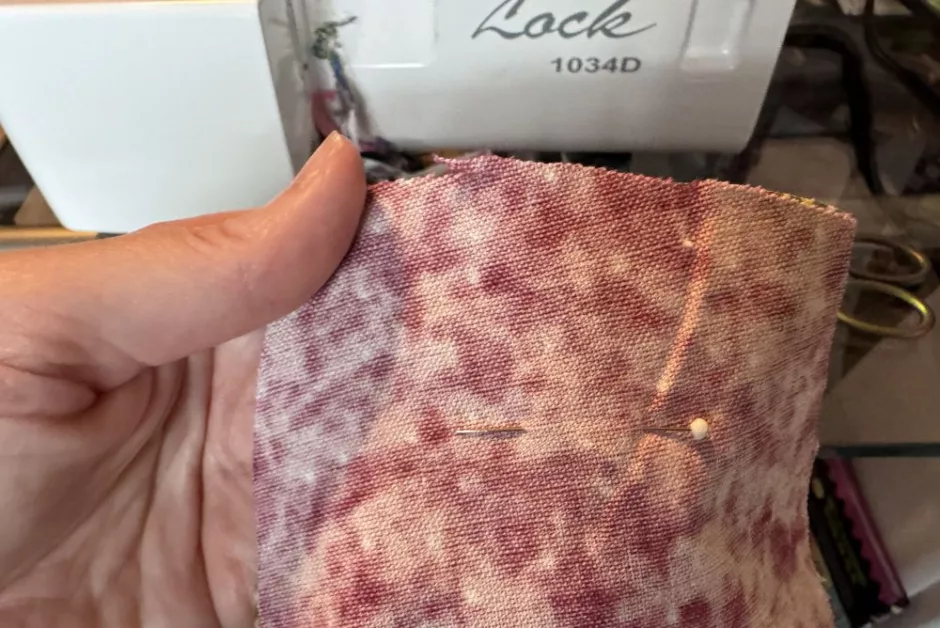
Sew the shoulder seams. Here again I used the serger but you don’t have to.
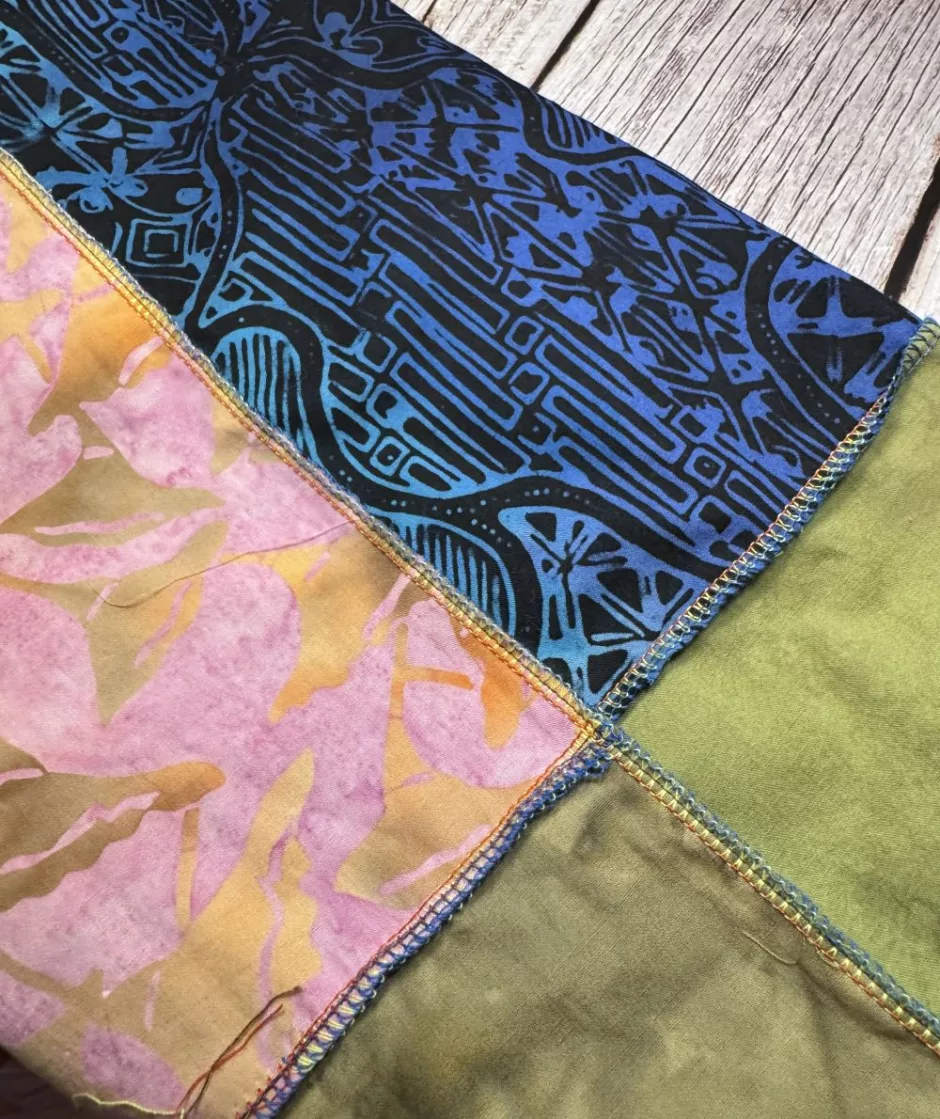
Sew or serge the side seams. Try it on and make sure you like the neckline and armhole configurations.
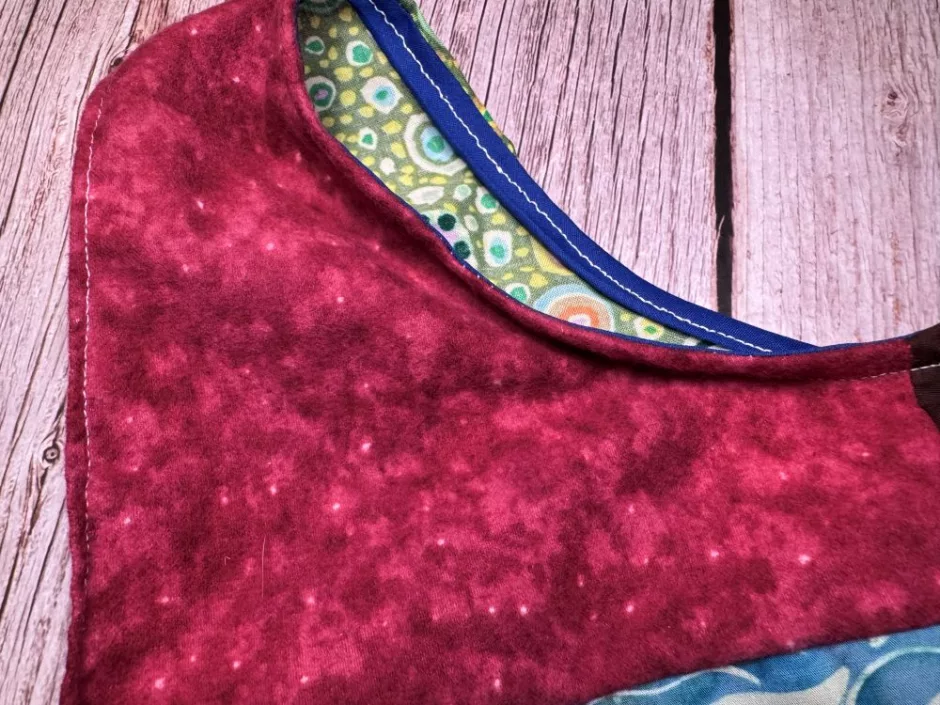
This dress uses bias tape to finish the neckline and armholes. I was planning to make my own bias tape from more of the fabric I bought but I kept messing it up. Then I found some wide double fold bias tape in my stash that I cut in half and re-ironed to make into single fold bias tape.
The bias tape is sewn to the edge, then folded over the edge and to the inside of the fabric, and then you top stitch to hold it down. Cutting some notches in the fabric of the seam allowance on the curves of your seams will make it stretch a bit more and make it easier to sew smoothly.
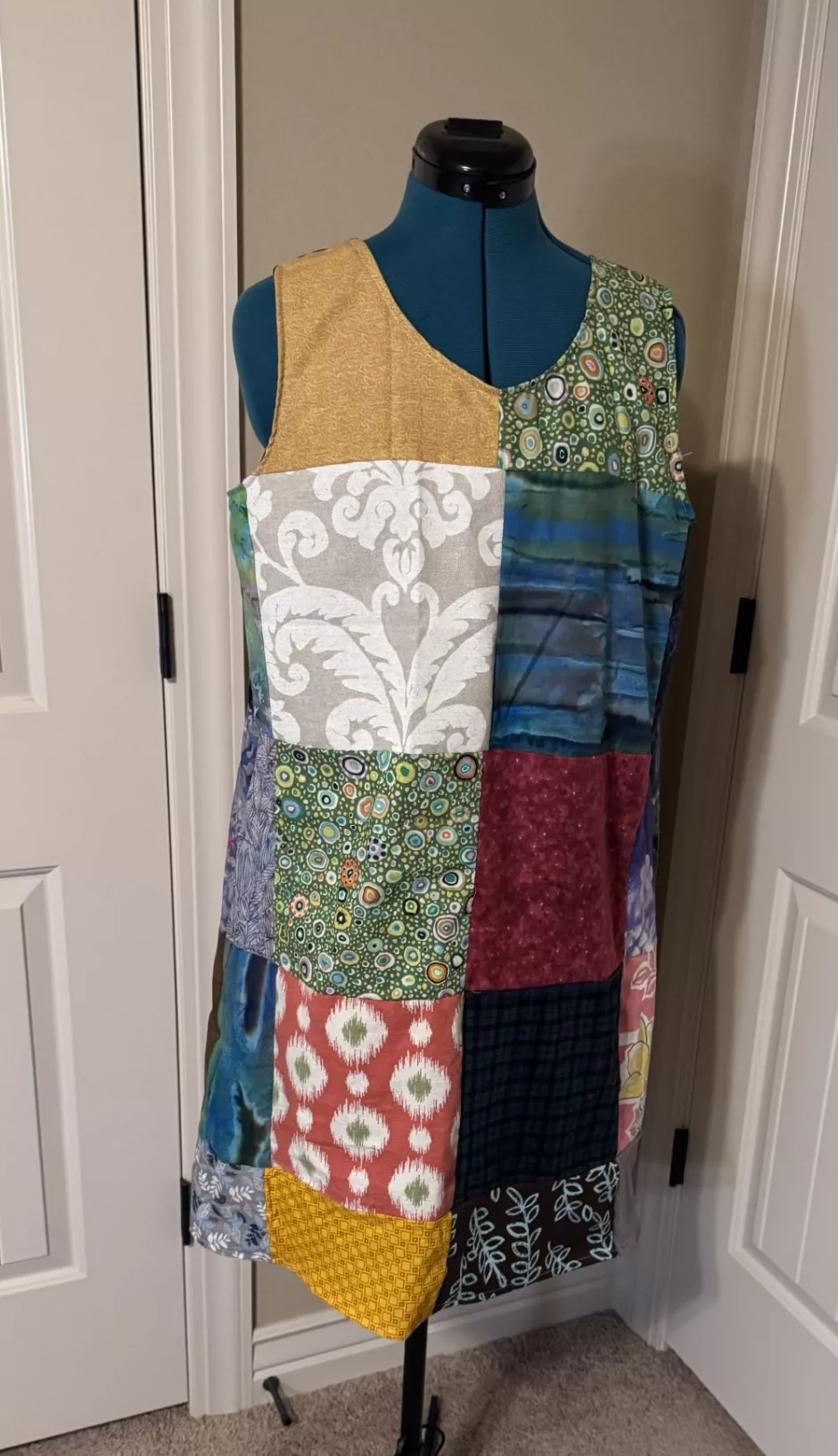
Try your dress on again and see how you like the length. Mine fell awkwardly about an inch below my knee so I ended up folding the last squares roughly in half and seaming the fabric there. I might want it to be shorter but I’ll never want it longer so I cut out the excess fabric leaving a little extra that I can pink if I decide I like this length.
If I ever want it shorter I can just fold the existing hem over and sew it again.
If you want yours longer you can add more patchwork fabric to the bottom.
I really like this patchwork dress and it was super easy to sew. I think it’s fun that I can wear it both ways and it’s a nice relaxed dress for summer.
If you sew a patchwork dress after seeing mine, I’d love to know how yours turns out!